

Aluminum Diethylphosphinate Manufacturer: Premium Flame Retardant Solutions for Advanced Polymers
2026-07-21
When it comes to safeguarding advanced polymers against fire, not all flame retardants are created equal. As a leading X.X.F.R aluminum diethylphosphinate manufacturer, we’ve seen firsthand how critical the right chemistry is—not just for meeting safety standards, but for preserving the mechanical and electrical properties that make high-performance materials so valuable. This article unpacks why premium diethylphosphinate solutions are becoming the go-to choice for engineers and compounders who won’t compromise on performance.
How Aluminum Diethylphosphinate Chemically Blocks Flames
Aluminum diethylphosphinate works primarily by releasing phosphorus-containing radicals when heated. These radicals disrupt the chain reactions that drive combustion, effectively slowing down the fire's progression. As the material decomposes, it forms a stable char layer on the surface, which acts as a physical barrier, limiting heat transfer and the release of flammable gases.
The aluminum component plays a crucial role in enhancing this char's stability. It promotes cross-linking within the polymer matrix, leading to a more robust and insulating shield. This dual action—gas-phase radical quenching and condensed-phase charring—makes the compound particularly efficient at low loadings, often outperforming traditional halogenated flame retardants.
Another advantage is its compatibility with a wide range of polymers, including engineering plastics like polyamides and polyesters. By interfering chemically rather than simply diluting the combustible material, aluminum diethylphosphinate provides long-term fire protection without significant compromise to mechanical properties or electrical performance.
Purity and Performance: What to Look for in a Flame Retardant
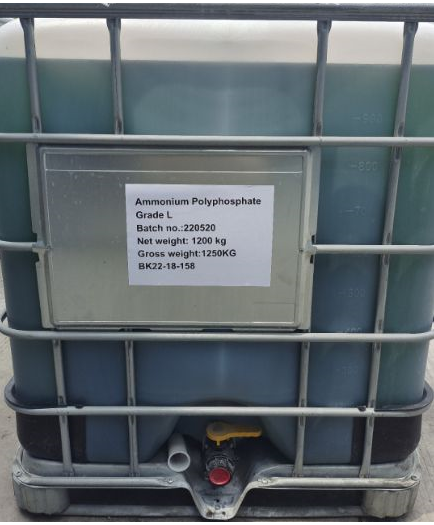
When selecting a flame retardant, purity isn’t just a technical detail—it’s a decisive factor that influences both safety and functionality. High-purity additives reduce the risk of unwanted side reactions during processing, such as equipment corrosion or discoloration of the final product. Impurities can also migrate to the surface over time, weakening the material’s flame resistance and leading to inconsistent performance. For sensitive applications, like electronics or medical devices, even trace contaminants can compromise reliability. That’s why suppliers who demonstrate batch-to-batch consistency through rigorous testing offer a clearer path to compliance without sacrificing material integrity.
Performance, on the other hand, goes beyond the basic ability to slow down ignition. It’s about how the flame retardant integrates with the host polymer without undermining mechanical strength, flexibility, or aesthetic qualities. A high-performance option works at lower loadings, preserving the original look and feel of the material while still meeting strict flammability standards. Real-world conditions—think prolonged heat exposure or repeated thermal cycling—reveal which formulations truly endure. Drawing on data from long-term aging studies can help separate additives that merely pass a lab test from those that hold up in demanding environments, giving manufacturers a genuine edge in durability.
The interplay between purity and performance often gets overlooked, yet it’s where the most practical value lies. A pristine additive that fails under mechanical stress is no better than a robust one riddled with contaminants. Forward-thinking buyers are now prioritizing transparent supply chains and collaborative technical support, moving away from a spec-sheet mentality toward holistic evaluations. By asking pointed questions about raw material sources and field performance history, it becomes possible to pinpoint a solution that not only checks regulatory boxes but also elevates the end product’s reputation for quality.
From EV Batteries to 5G: Protecting High-Tech Polymers
Polymers sit at the heart of modern technology, quietly enabling breakthroughs in electric vehicle batteries and 5G infrastructure. In EV batteries, specialty polymers act as binders, separators, and encapsulation materials—often operating under extreme voltage and temperature swings. A single microcrack or chemical degradation can compromise cell integrity, leading to performance loss or even thermal runaway. That’s why protective coatings and advanced stabilizer packages aren’t just add‑ons; they’re fundamental to long‑term reliability.
Shifting to 5G, the demands shift too. High‑frequency signals push polymers used in antenna radomes, circuit boards, and connectors to their dielectric limits. Materials must maintain low signal loss and stable dielectric constants across a range of temperatures and humidity levels, all while resisting UV exposure and mechanical stress on crowded urban rooftops. Formulators are blending fluoropolymers, liquid crystal polymers, and ceramic‑filled composites to strike a balance between electrical performance and environmental toughness.
The common thread across these applications is that protection isn’t a single layer—it’s a multilayered strategy. From molecular‑level antioxidant additives that combat thermal oxidation to hydrophobic surface treatments that repel moisture, engineers are tailoring solutions to the specific failure modes each polymer faces. Accelerated aging tests that simulate years of thermal cycling or salt‑spray exposure are now standard practice, helping to validate that these materials won’t quietly degrade when no one is watching. As EVs and 5G networks scale, the quiet work of polymer protection will define how durable—and how safe—our connected world really is.
Custom Formulations That Tackle the Toughest Fire Safety Standards
Meeting stringent fire safety regulations isn’t just about ticking boxes—it’s about engineering materials that perform under extreme conditions. Our custom formulations are built from the ground up to address the most demanding standards, whether it’s low smoke toxicity, high oxygen index, or resistance to jet fire and hydrocarbon pool fires. By precisely controlling the chemistry of flame retardants and polymer matrices, we create solutions that don’t compromise on mechanical strength or weatherability, even when the testing protocols push far beyond typical commercial requirements.
What sets these formulations apart is the iterative collaboration between our material scientists and your engineering team. We dive deep into the application environment—temperature fluctuations, UV exposure, chemical contact—and tune the formulation down to the molecular level. This isn’t an off-the-shelf product; every additive loading, crosslink density, and co-agent is selected to pass tests like EN 45545 for rail or FAR 25.853 for aerospace, while still processing smoothly on your existing production lines.
The real test comes during full-scale burn demonstrations and third-party certification, where our materials consistently outperform standard alternatives. We’ve seen formulations that maintain circuit integrity for fire survival cables at 1000°C for two hours, and compounding that eliminates dripping entirely without sacrificing flexibility. These aren’t hypotheticals—they’re battle-tested results of a development philosophy that treats every compound as a unique challenge rather than a quick adjustment.
Eco-Conscious Fire Protection: Balancing Safety and Sustainability
Modern fire protection strategies can no longer ignore their environmental footprint. Traditional suppressants and flame retardants often contain chemicals with lasting ecological damage, from ozone-depleting halons to bioaccumulative PFAS. The challenge now is to maintain rigorous safety standards without trading one crisis for another. This means rethinking materials, deployment methods, and entire system lifecycles through a lens that values both immediate human protection and long-term planetary health.
Innovations are emerging that thread this needle. Water mist systems, for example, use significantly less water than conventional sprinklers while still effectively controlling fires, reducing runoff and water waste. Clean agents like Novec 1230 offer rapid suppression with near-zero global warming potential. Beyond active systems, passive measures—such as non-toxic intumescent coatings or naturally fire-resistant building materials like stone wool—embed safety into the structure itself without leaching harmful substances over time.
Genuine eco-conscious fire protection also extends to the operational phase and end-of-life. Regular testing that minimizes water discharge, reusable containment systems, and responsible disposal or recycling of agents and equipment are all part of the equation. Certification programs that recognize holistic performance—not just single attributes—are pushing manufacturers and installers to adopt practices that safeguard both buildings and ecosystems. The goal isn't compromise; it's smarter integration where safety and sustainability reinforce each other.
Why Manufacturing Precision Is the Key to Reliable Flame Retardancy
In flame-retardant materials, the margin between effective protection and catastrophic failure often comes down to how evenly fire-inhibiting additives are dispersed. Even a slight clustering of particles can create weak points where combustion initiates and spreads unchecked. Manufacturing precision ensures that each batch is mixed and extruded under tightly controlled conditions, leaving no room for the random distribution that undermines safety.
Coatings and laminates demand similar exactness. A fraction of a millimeter’s variation in thickness can drastically alter the time it takes for a surface to reach critical temperature. Automated application systems with real-time feedback loops maintain consistency at speeds and accuracies that manual processes simply can’t match, turning variability into predictability.
Beyond physical uniformity, chemical processes like cross-linking and polymer orientation require careful calibration. Subtle shifts in residence time or temperature during production can change a material’s char-forming ability, directly impacting its resistance to heat flux. It’s this layer of micro-level control that separates materials that merely slow fire from those that reliably stop it.
FAQ
It's a halogen-free flame retardant based on phosphinate chemistry. When exposed to heat, it decomposes to form a stable char layer that insulates the underlying material, while also releasing phosphorus-containing radicals that interrupt the combustion cycle in the gas phase.
Unlike brominated options, it doesn't produce corrosive or toxic smoke, making it safer for electronics and enclosed spaces. Compared to common minerals like ATH or MDH, you need far lower loadings to achieve the same fire rating, so mechanical properties and processing aren't sacrificed.
It's particularly effective in engineering thermoplastics like polyamides (nylon 6 and 6,6), polyesters (PBT, PET), and high-temperature nylons. It also works exceptionally well in thermoplastic elastomers and epoxy resins for demanding electrical and automotive applications.
Our manufacturing process ensures a consistent, ultra-fine particle size that disperses evenly without agglomeration. This results in smoother surfaces, better colorability, and reliable UL 94 V-0 performance batch after batch. We also offer tailored surface treatments for enhanced compatibility with specific polymer matrices.
Absolutely. We provide hands-on formulation guidance, including synergist recommendations and processing condition optimization. Our application labs can run trial compounds and fire tests for your specific polymer grade before you commit to large-scale sampling.
Simply reach out through the contact form or direct email, and we'll ship no-cost evaluation samples within 48 hours. For production quantities, we maintain stock in key regions and can typically deliver standard grades in under two weeks globally, with emergency shipments available upon request.
Yes, it's designed to meet RoHS, REACH, and WEEE standards. It's non-bioaccumulative and does not contain any Substances of Very High Concern. Our product is also fully compatible with recycling streams for many engineering thermoplastics without compromising material integrity.
Conclusion
Aluminum diethylphosphinate has become a cornerstone of flame retardant technology for high-performance polymers, standing out due to its unique chemical mechanism and manufacturing precision. Unlike traditional halogenated additives, it intervenes directly in the combustion cycle through a dual-phase action: in the gas phase, it releases phosphorus-based radicals that quench the reactive species sustaining the flame, while in the condensed phase, it promotes char formation, creating a robust, insulating barrier that starves the underlying material of heat and oxygen. This synergy not only extinguishes flames more efficiently but also minimizes smoke and toxic off-gassing—critical for enclosed spaces like electric vehicle battery housings and interior electronics. The effectiveness, however, hinges on exceedingly high purity levels, as even trace impurities can disrupt the delicate balance of radical trapping and char morphology, compromising the material's UL-94 V-0 rating or glow wire ignition resistance. For industries driving electrification and connectivity—namely EVs and 5G infrastructure—this reliability is non-negotiable. These advanced polymers must withstand thermal runaway events, high-voltage arcs, and prolonged exposure to elevated temperatures without warping or losing mechanical integrity, demands that only a meticulously synthesized, tightly specified grade of aluminum diethylphosphinate can meet.
Beyond performance, the modern flame retardant landscape demands a sophisticated blend of environmental stewardship and regulatory compliance. Leading manufacturers are pioneering custom formulations that not only meet but exceed the toughest fire safety standards—such as EN 45545-2 for rail, FAR 25.853 for aerospace, and IEC 62620 for battery cells—while avoiding substances of concern that would conflict with REACH or RoHS directives. This eco-conscious approach extends to life-cycle analysis, where the product’s durability and non-leaching nature contribute to long-term polymer stability, reducing the need for frequent replacement and ultimately lowering the carbon footprint of end applications. Precision in manufacturing is the thread that ties all these attributes together: consistent particle size distribution ensures homogeneous dispersion within the polymer matrix, avoiding performance hot spots or mechanical weaknesses; rigorous in-process controls and analytical traceability guarantee batch-to-batch uniformity, giving compounders the confidence to design thinner, lighter, and more intricate parts. It’s this marriage of advanced chemistry and process excellence that allows aluminum diethylphosphinate to protect both people and planet, enabling the next generation of sustainable, high-tech materials without compromise.
Contact Us
Contact Person: Guohua Wang
Email: [email protected]
Tel/WhatsApp: 8613003442895
Website: https://www.xxflameretard.com