

Best Forged Steel Ball Valve Designs for High Pressure Industrial Systems
2026-11-25
High-pressure industrial systems don't forgive weak links—especially not in valve selection. The difference between a reliable shutoff and a costly failure often comes down to forged steel ball valve design. In this post, we look at the configurations, materials, and sealing details that hold up when pressures climb. Along the way, you'll see why teams turn to CRXV for designs built around real operating conditions rather than catalog generic.
Where Cast Steel Falls Short and Forged Bodies Take Over
A poured steel body inherits the habits of its solidification. As the outer skin freezes against the mold, the last metal to cool pulls away from itself, leaving scattered micro-shrinkage, trapped gas, or slag that no amount of risering completely eliminates. Those discontinuities are easy to dismiss on a polished report, but under repeated pressure swings or sub-zero service they behave like small, patient cracks waiting for a load path.
Forging changes the conversation by working the steel while it is solid. The hammer or press closes internal voids, breaks up brittle dendritic networks, and forces non-metallic inclusions into thin, harmless stringers. More usefully, grain flow follows the contour of the body instead of stopping abruptly at a cast fillet. That is why a forged valve body can hold the same pressure class with less wall thickness, tighter geometry, and far fewer weld repairs.
The switch becomes almost automatic when the service is sour, high-cycle, or cryogenic. A cast body may still pass a hydrotest on day one and fail later from fatigue initiating at a hidden pore. A forged body carries fewer of those hidden starting points, and its predictable toughness makes inspection less of a guessing game. In short, casting remains economical where loads are modest, but the moment a failure becomes expensive or dangerous, the forged body stops being an upgrade and starts being the baseline.
How Trunnion Mounts Keep the Ball Stable During Pressure Spikes
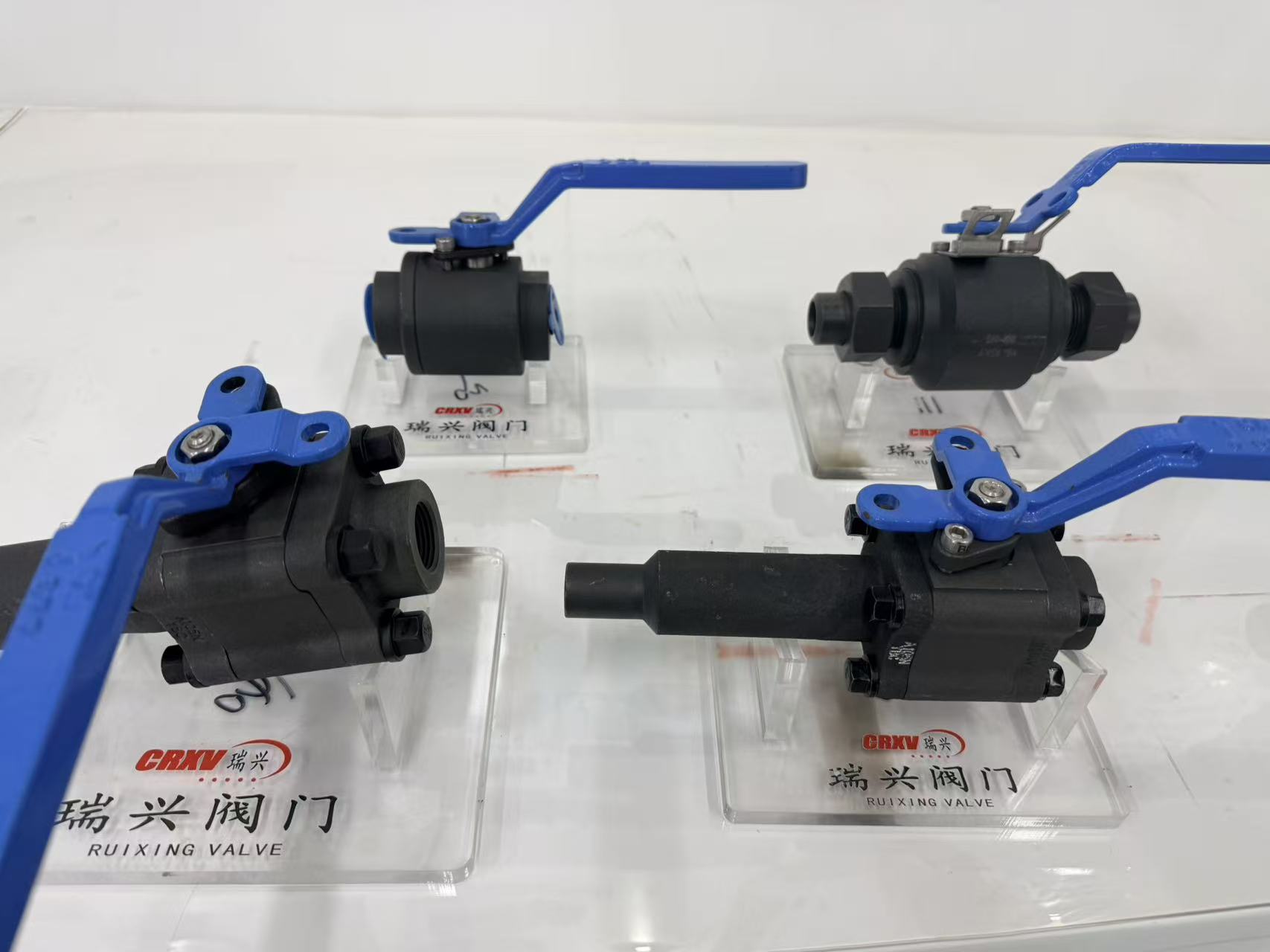
In a floating ball design, a sudden pressure spike shoves the ball hard against the downstream seat. The entire load lands on that one sealing surface, which can pinch the seat, raise operating torque, and open a leak path once the pressure drops. A trunnion mount changes that load path by capturing the ball on upper and lower stems. Instead of drifting with the pressure wave, the ball stays centered and transfers the thrust into the body and the trunnion, not into the seat.
That fixed position keeps the seat rings under predictable contact stress. During a spike, spring-loaded seats or seat cups can still press against the ball, but they no longer carry the full piston effect. The result is less seat deformation and a more stable seal right when the system sees abrupt surges from valve closure, pump starts, or thermal expansion.
There is also less chance of the ball rocking or twisting on the stem because the lower trunnion helps absorb side loads and keeps the axis of rotation aligned. This matters with high-pressure gas or rapid cycling, where small misalignments can turn into scuffed seats, uneven wear, and blow-by. With the ball pinned in place, the valve holds its sealing geometry even when the line pressure changes quickly and unevenly.
Seat Geometries That Hold a Tight Seal Without Driving Up Torque
Tight shutoff usually comes with a penalty: the harder you jam the sealing faces together, the more torque you need to cycle the valve. A few seat geometries break that trade-off by using contact stress more intelligently. Instead of relying on a broad interference fit, they concentrate sealing pressure in a narrow band near the seat edge. That local area deforms just enough to close off the leak path while the rest of the seat remains lightly loaded, so breakaway torque stays low.
Flexure-style seats push that idea further. A thin lip or cantilevered section bends under pressure rather than crushing the elastomer or polymer. When the valve closes, the lip deflects and stores only a small amount of strain energy. Most of the seating load comes from the process pressure acting on the lip, not from the operator fighting the stem. The result is a tighter seal as differential pressure rises, without a matching rise in handwheel or actuator torque.
Some designs also play with profile radius and draft angles. A slightly convex seat face can produce a controlled contact ellipse that reduces the total friction radius. When the seal is formed closer to the centerline of rotation, the torque arm is shorter, so the same friction force creates less resistance. These geometries are not exotic in appearance, but small differences in curvature and support stiffness are what let a valve seal at full rating with predictable, low operating torque.
Fire-Safe and Anti-Static Details That Go Beyond Standard Specs
Most buyers check the flame rating on paper and assume the material will hold up once cables, connectors, and airflow are added. We pushed further by validating how the housing behaves around real junction points, not just in a clean lab sample. Corners near power entry modules and low-voltage signal paths get a slightly denser glass-fiber fill, which slows heat transfer without turning brittle.
Static control tends to be treated as an afterthought, a cheap coating that wears off after a few maintenance cycles. Instead of relying on a surface treatment alone, we used a carbon-loaded polymer in the tray and rail sections where friction from sliding equipment is highest. The charge bleeds off through the structure itself, so the path stays consistent even if the outer skin gets scuffed or cleaned with stronger solvents.
There is also a small grounding boss molded near the rear flange that standard enclosures leave out. It gives field technicians a fixed point for a 6 mm ring terminal, avoiding the common workaround of scraping paint off an unpainted edge. It is a minor feature on a drawing, but it changes how reliably the panel behaves during an actual fault or dry-air season.
Why Wall Thickness and End Connections Decide Long-Term Reliability
Wall thickness rarely gets attention until a failure happens, but it sets the fatigue life and corrosion allowance for everything downstream. In services with pressure swings, vibration, or even mild erosion, a thin wall leaves almost no room for localized loss. Once pitting or seam wear begins, the stress concentration can turn a minor defect into a through-wall crack. A slightly heavier section adds years of tolerance without changing the overall design.
End connections are where the load path gets complicated. Threaded ends create sharp roots that can initiate fatigue cracks, especially when pipes move or temperatures cycle. Welded and flanged joints are more forgiving, but only if they are aligned, supported, and torqued properly. An over-tightened flange or a poorly matched weld detail introduces stresses that the adjacent pipe wall must absorb, often right at the edge of the heat-affected zone.
Long-term reliability is not about any single pressure rating. It comes from the way wall thickness and end connections share stress, tolerate corrosion, and survive thermal cycles. A system that looks strong on a datasheet can still fail early if the ends act as stress risers or if the wall has no real corrosion allowance. The difference usually shows up after a few years, not on day one.
Matching Valve Design to Real Service Conditions, Not Just Pressure Ratings
Pressure ratings are a convenient starting point, but they rarely describe what a valve will actually endure in service. A 300-class valve in one line may face thermal cycling from ambient to 400°F every few hours, while the same rating in another line sees steady ambient water. The first case demands a design that tolerates repeated expansion and contraction, not just a thicker wall. Sealing surfaces, stem packing, and body joints all respond differently to those cycles, and a rating alone gives no clue about that behavior.
Material compatibility is another area where pressure class falls short. A carbon steel body with standard trim might handle the rated pressure cleanly, yet fail within months in a slightly acidic or solids-laden stream. Erosion can chew through a seat or plug even when the pressure is well below the valve's published limit. The real question is how the wetted parts interact with the specific fluid at operating temperature, including trace contaminants that often don't appear on a basic datasheet.
Selection becomes more reliable when it starts from field observations instead of a single pressure number. Frequency of operation, differential pressure at opening, particle concentration, and temperature swings all shape the internal loads. A valve that looks conservative on paper may be undersized in fatigue resistance or wrong in seat geometry for a slurry line. Talking through those details with maintenance or operations staff usually reveals requirements that no pressure class can capture.
FAQ
Forging aligns the grain structure and reduces the porosity found in cast bodies. That denser body resists crack growth during pressure cycling and gives more predictable performance in demanding service.
A trunnion design anchors the ball at the top and bottom, so line pressure pushes against the seats instead of the stem and downstream seat. That keeps operating torque lower and prevents seat deformation as pressures climb.
It often comes down to a combination: PEEK, Devlon, or metal seats for severe service, backed by PTFE or graphite seals. The right choice depends on pressure, temperature, and whether the media is abrasive or corrosive.
The stem usually has a shoulder or lip that keeps it inside the body even if the packing fails. In high pressure service that matters because an ejected stem becomes a serious safety incident rather than a minor leak.
Yes, especially if the system handles flammable or heat-sensitive media. Fire-safe construction uses graphite or metal secondary sealing so the valve can still hold pressure when soft seats burn away.
They set the maximum pressure rating at a reference temperature. For high pressure work, selecting a class above the system operating pressure gives margin for surges, but body rating, end connections, and trim still need to match as a complete assembly.
They usually need less frequent seat replacement because the stiffer body holds alignment better. When service is needed, the forged body can be harder to machine on site, so planned rebuilds with OEM kits tend to recover the most service life.
Not all of them. It becomes more important in gas or hazardous liquid service where code may require it. A trunnion ball with a vented cavity lets you verify sealing and safely drain trapped pressure before maintenance.
Conclusion
High-pressure systems punish valves in ways that standard catalog data rarely anticipates. Cast steel bodies can hide porosity and uneven grain boundaries that turn minor pressure cycles into crack initiation points, so forged bodies become the practical choice where integrity cannot be left to chance. The forged material's tighter grain structure and fewer internal voids allow thinner, more predictable wall sections without sacrificing strength, and trunnion-mounted balls take much of the load off the seats when pressure spikes hit. Instead of letting the ball push downstream into the seating ring, the trunnion anchors the ball and uses the upstream seat to absorb energy in a controlled way. Seat geometry then determines whether the valve still operates smoothly after that spike. Hardfaced or relieved seat profiles with careful contact angles can hold a tight seal at high differential pressure without turning the stem into a torque problem, which matters when actuators and gearboxes are already sized close to their limits.
Fire-safe and anti-static features also move from optional extras to required design logic in these services. Graphite or metal secondary seals, anti-blowout stems, and spring-loaded grounding elements protect against failures that standard soft-seat tests often miss. Wall thickness and end connections deserve the same scrutiny: a heavy wall does not help if the neck or the flange face flexes, and butt-weld or ring-type joint ends may perform better than raised-face flanges under thermal swings. The real differentiator, though, is matching the valve to the actual operating envelope. A pressure rating is only one input; the valve must also survive rapid depressurization, solids in the flow, low ambient temperatures, and operators who may never exercise the valve for months. Designs that balance forged body geometry, trunnion stability, conservative seat loading, and field-specific end details last longer even when the pressure class on paper looks identical.
Contact Us
Contact Person: TIM
Email: [email protected]
Tel/WhatsApp: 8615857807381
Website: https://www.crxv.com/en/