

Best Forged Steel Check Valve Options for Reliable Flow Control in Industrial Systems
2026-11-20
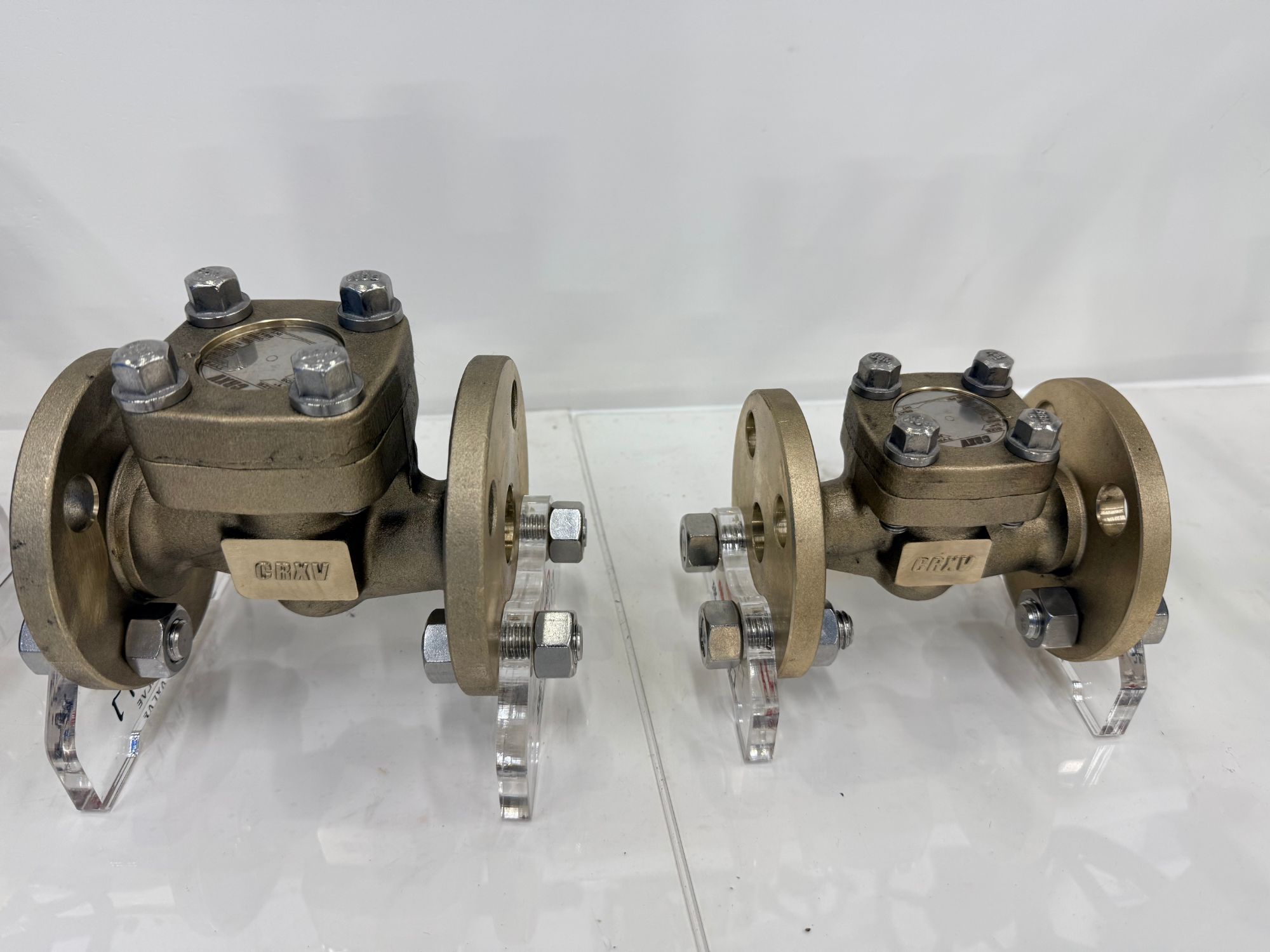
Industrial flow control rarely forgives shortcuts. The right forged steel check valve does more than stop backflow—it protects pumps, compressors, and entire process lines from failures that start small and escalate fast. With so many options claiming reliability, the difference usually comes down to material integrity, seat design, and pressure handling. In this guide, we sort through the practical choices that hold up under demanding conditions and show why CRXV has become a name worth checking when flow control cannot be left to chance.
How Forged Steel Check Valves Handle Sudden Pressure Spikes
Forged steel check valves react to sudden pressure spikes not through complex control logic but through their fundamental closing mechanism. When a downstream pressure wave reverses flow, the disc is pushed back toward the seat. The speed and seating force depend on the disc's mass and the spring assist, if present. In high-energy systems, this can create a sharp rebound that briefly allows reverse leakage before the valve fully closes. The forged body and hardened seat absorb this impact repeatedly, preventing cracking that might occur in cast alternatives.
What makes forged steel particularly suited to spike conditions is its grain structure. The forging process aligns the metal's internal fibers along the contours of the valve body, giving it higher tensile strength and resistance to fatigue than cast steel of the same grade. Under a pressure spike, the body expands slightly and then contracts; this cyclic loading would eventually initiate micro-cracks in a weaker material. Forged steel's tighter, non-porous structure delays that failure mode, which is why these check valves appear in hydraulic lines, boiler feedwater systems, and compressor discharge piping where spikes are routine.
It's also worth noting that not every forged steel check valve handles spikes the same way. A swing-type disc reacts slower than a spring-loaded axial disc, and the difference shows up as a momentary pressure drop followed by a slight overshoot. Engineers sometimes select a heavier disc intentionally to dampen the spike, trading faster closure for less water hammer. The key is matching the valve's closing characteristic to the system's spike profile, not simply assuming that a forged body alone solves the problem.
Selecting Seat Materials for Longer Service in Abrasive Flow
In abrasive flow, the seat rarely fails by a single mechanism. Solids dragged across the sealing face cut shallow grooves, while larger particles hit the surface at steep angles and knock out small chips. A material that survives pure sliding wear may still crack or spall under repeated impact, so the choice has to start with what the flow is actually doing at the seat. Fine, angular grit favors very hard materials; heavier, blunt solids often call for a tougher matrix that can absorb impact without fracturing.
Cemented carbides and some ceramics offer long life where velocities stay steady and particle size is small, but their brittleness shows up once the stream carries occasional oversize particles or the system hammers from cavitation. Hardened martensitic steels and cobalt-based overlays sit further down the hardness scale, yet they resist impact cracking better and can be reworked after wear. Where temperatures allow, high-durometer polyurethane and certain elastomers can be worth testing because they deflect under particle strikes and then recover, although chemical exposure and pressure limits narrow that option quickly.
Seat geometry works as an extension of material selection. A slight change in seating angle, a protected leading edge, or a thicker wear allowance can keep the same alloy in service far longer without moving to a more expensive grade. The most durable seats in abrasive flow are usually not the hardest ones on paper; they are the ones matched to the actual particle size, impact angle, flow velocity, and maintenance interval the operation can live with.
Why Compact Body Patterns Fit Tight Industrial Piping Layouts
In crowded process plants, every millimeter of free space around a pipe run gets claimed quickly. Compact body patterns reduce the overall envelope of a valve or fitting without breaking flange compatibility. The shorter face-to-face dimension lets installers slip the unit into gaps where a standard pattern would force awkward rerouting or extra elbows.
Beyond simple fit, the smaller footprint lowers the bending loads transferred into adjacent pipe supports. That matters when lines run close to walls, cable trays, or access platforms. Maintenance crews also get a break: a compact assembly can be removed or serviced with a shorter tool swing, avoiding the usual fight with surrounding structure.
Some engineers assume tighter geometry means compromised flow capacity, but well-shaped internal passages keep velocity and turbulence within acceptable limits. Where full-bore performance is not critical, the practical gains in layout flexibility usually outweigh the modest pressure drop. The piping system stays serviceable and clean without forcing the plant layout to bend around the equipment.
Comparing Swing and Piston Designs for Different Flow Reversal Speeds
Flow reversal speed changes how the gas stream interacts with either a swinging valve plate or a sliding piston, and the practical consequences are rarely obvious from static diagrams. In a swing design, the plate pivots away from the port, so at low reversal speeds it can linger in a partially open position and create a narrow, high-velocity gap that wears the seat unevenly. A piston, by contrast, moves linearly and tends to leave the port either mostly closed or mostly open, but its seals see a different kind of stress when the flow direction flips quickly.
At higher reversal speeds, the swing plate benefits from the gas momentum helping to snap it fully open or closed, yet this same momentum can cause bouncing if the dampening is not tuned for the specific cycle time. Piston designs often handle abrupt reversals more predictably because the mass travels along a single axis and can be cushioned at both ends. However, fast cycling exposes the piston rings to repeated scraping against the cylinder wall, which may accelerate wear in ways that a swing hinge does not experience.
Field experience suggests that swing designs are often preferred when reversal speeds remain moderate and the main concern is avoiding seal extrusion, while piston designs become attractive when the cycle rate climbs and the operator wants a more consistent open-to-closed transition. Neither approach is universally superior; the best choice depends on how sharply the flow direction changes and whether the maintenance team is more comfortable servicing hinge pins or replacing piston rings.
Placement Tips That Reduce Water Hammer and Internal Wear
Mounting the pipe run with fewer but firmer anchor points often does more than adding clamps at every stud. When a quick-closing valve stops the water column, the shock travels along the straightest path first, so keeping the first 18 to 24 inches after the valve free of elbows gives that pulse room to decay before it reaches a fitting.
If there is a vertical riser, support it just above the floor plate and again near the midpoint rather than letting the lower section float. This keeps the riser from flexing against the plate and gradually thinning the pipe wall at the point of highest repeated stress.
For tight layouts, a short capped vertical stub installed near the problem valve can act as a simple air chamber. Position the stub so it points upward and remains accessible, because trapped air eventually dissolves and the chamber may need to be drained and refilled to stay effective.
Reading Early Wear Signals Before a Check Valve Stops Sealing
A check valve rarely fails without leaving a trail of subtle clues. The earliest sign often shows up as a faint chattering or fluttering noise during flow reversals, long before any visible leak appears. This sound usually means the disc is no longer seating squarely, so it taps against the seat instead of dropping into a clean, silent closure. Operators who ignore these small acoustic changes frequently end up chasing a full sealing failure later, when the repair costs and downtime are much harder to absorb.
Beyond noise, watch for small pressure fluctuations on the downstream side when the pump cycles off. A healthy check valve holds backflow instantly, but a wearing one allows tiny reverse pulses to sneak through before the disc settles. You might also notice the valve body running warmer than normal during reverse flow conditions, especially near the hinge area, which points to localized friction or a slightly warped disc. These are not dramatic failures, just quiet hints that the sealing surfaces are losing their original geometry.
Maintenance teams that log baseline sounds, downstream pressure traces, and thermal snapshots during routine rounds give themselves a practical early warning system. Instead of waiting for a dripping flange or a water hammer event, they catch the wear while it is still reversible with a simple seat lapping or spring replacement. That shift from reactive repair to condition-based timing changes how long a check valve stays in service, and it usually costs far less than the emergency shutdown nobody planned for.
FAQ
Forging compresses the grain structure and reduces internal voids, so the body maintains more consistent strength under pressure spikes and thermal cycling. That translates into fewer leaks and less unplanned downtime in steam, oil, and gas systems.
A spring-assisted piston lift check usually responds fastest because the spring begins seating the disc before reverse flow gains momentum. This design limits water hammer and protects pumps in lines with frequent velocity changes.
Often they do. The higher initial price is balanced by tighter dimensional consistency and longer service intervals, especially where corrosion or erosion is a concern. For low-risk utility water lines cast valves may be adequate, but process-critical branches usually justify forged bodies.
Ignoring the flow arrow, placing the valve too close to elbows or pumps, and sizing it outside the expected velocity range are common errors. Keep at least five pipe diameters of straight run downstream when possible, and for vertical installations make sure flow moves upward.
Yes, but selection needs to match the service. Soft-seated metal or PTFE designs improve tight shutoff at low pressure, while spring-loaded closures help prevent chattering. Confirm the pressure-temperature rating and seat material against actual operating conditions rather than nominal pipe size alone.
Stellite or similar hardfaced seats and discs are common because they retain hardness at elevated temperatures. Above 400 degrees Fahrenheit, standard PTFE seals are best replaced with graphite or metal-to-metal sealing arrangements.
Internal geometry, spring range, and seat material often differ even when end-to-end dimensions match. One valve may be designed for low cracking pressure while another is built for high-velocity flow, so matching flow coefficient and cracking pressure to the operating range matters more than visual similarity.
Use an upstream strainer or filter, inspect the seat and disc periodically for scoring, and avoid running the line below minimum flow velocity for long periods. If buildup is likely, choose a design with minimal internal recesses or one that allows in-line access.
Conclusion
Forged steel check valves earn their place in industrial systems less through catalog specs and more through how they behave when flow reverses faster than expected. A pressure spike that slams a lesser disc against its seat can distort trim and crack cast bodies, yet well-chosen forged steel options absorb that shock through tighter grain structure and thicker wall sections around the seat pocket. Pairing the right seat material with the actual abrasive load matters just as much: a hardfaced Stellite or cobalt-based seat may survive slurries that quickly groove a standard 13Cr surface, while softer polymer inserts can handle fine particulates if temperatures stay modest. In cramped pipe racks, compact body patterns—especially short face-to-face piston checks—save enough linear space to make maintenance possible without removing adjacent spools.
Swing and piston designs are not interchangeable when reversal speed varies. Swing checks respond well to moderate, predictable backflow in horizontal runs, but rapid reversals in vertical or pulsing lines often call for a piston check with a stiffer spring and shorter stroke to seat before the shock wave builds. Placement also shifts reliability: mounting check valves at least eight to ten pipe diameters downstream of elbows or pumps reduces turbulence that accelerates hinge wear and seat chatter. Watch for early signs like crescent-shaped seat wear, polished slap marks on the disc, or a faint rattle at low flow—these indicate the valve is losing its sealing geometry long before a full leak appears. Replacing trim or adjusting spring tension at that stage costs far less than an unscheduled shutdown.
Contact Us
Contact Person: TIM
Email: [email protected]
Tel/WhatsApp: 8615857807381
Website: https://www.crxv.com/en/