

Best Return Idler Roller Choices to Keep Your Conveyor Running Smoothly
2026-11-23
Conveyor downtime rarely announces itself with fanfare—it creeps in as a squeak, a wobble, or a worn idler roller that quietly drags your whole line out of rhythm. Choosing the right return idler roller isn’t just a parts swap; it’s the difference between smooth, predictable motion and constant firefighting. Whether you’re battling dust buildup, belt wander, or premature bearing failure, the options below cut through the noise. We’ve zeroed in on practical, field-tested choices that keep belts tracking true—including standout options from YUFENG, a brand that keeps proving reliability doesn’t have to mean overpaying. Here’s what actually holds up when your conveyor has no time for excuses.
Flat, Rubber-Disc, and Spiral Return Rollers Compared
On a conveyor running damp or sticky material, a flat return roller rarely stays clean for long. Fines pack onto the shell, the belt starts to drift, and someone ends up scraping the roller while the line is still moving. Rubber-disc return rollers were designed to interrupt that buildup; the discs let material fall away between the contact points and also absorb some of the impact from lumps dropping off the return side. The trade-off is that the discs can tear or chunk out once the rubber ages or if a sharp piece of tramp metal gets caught. Spiral rollers take a different path: the spiral ribs throw material outward as the roller spins, so the cleaning action is continuous rather than dependent on gravity alone. That can keep things moving, but it also adds a bit of drag and can be noisy on faster belts.
In terms of belt wear, flat rollers spread the load evenly and are easy on splices, yet any buildup on the shell becomes a high spot that wears the cover unevenly. Rubber-disc rollers reduce the contact area, which is helpful for sticky fines but less helpful for wide, heavy belts that need broader support. The disc spacing matters more than most installation drawings suggest; too wide, and the belt can flex between discs; too tight, and material has nowhere to go. Spiral rollers clean well on wet clay or gypsum, but rough spiral edges on cheaply made units can act like a rasp against the bottom cover, especially when the belt slips or runs off-center.
Choosing between them usually comes down to what the material does when it lands on the return side. Dry, free-flowing product rarely justifies anything beyond a flat roller. Sticky but not truly wet material often suits rubber-disc rollers, provided the maintenance crew checks disc condition during normal walkdowns. Heavily fouled or wet applications tend to favor spiral rollers, though belt speed and splice condition should be checked first because the added resistance can show up as tracking problems elsewhere. It is less about one roller being better and more about which failure mode is easier to live with on a given conveyor.
Signs a Return Idler Is Causing Belt Mistracking
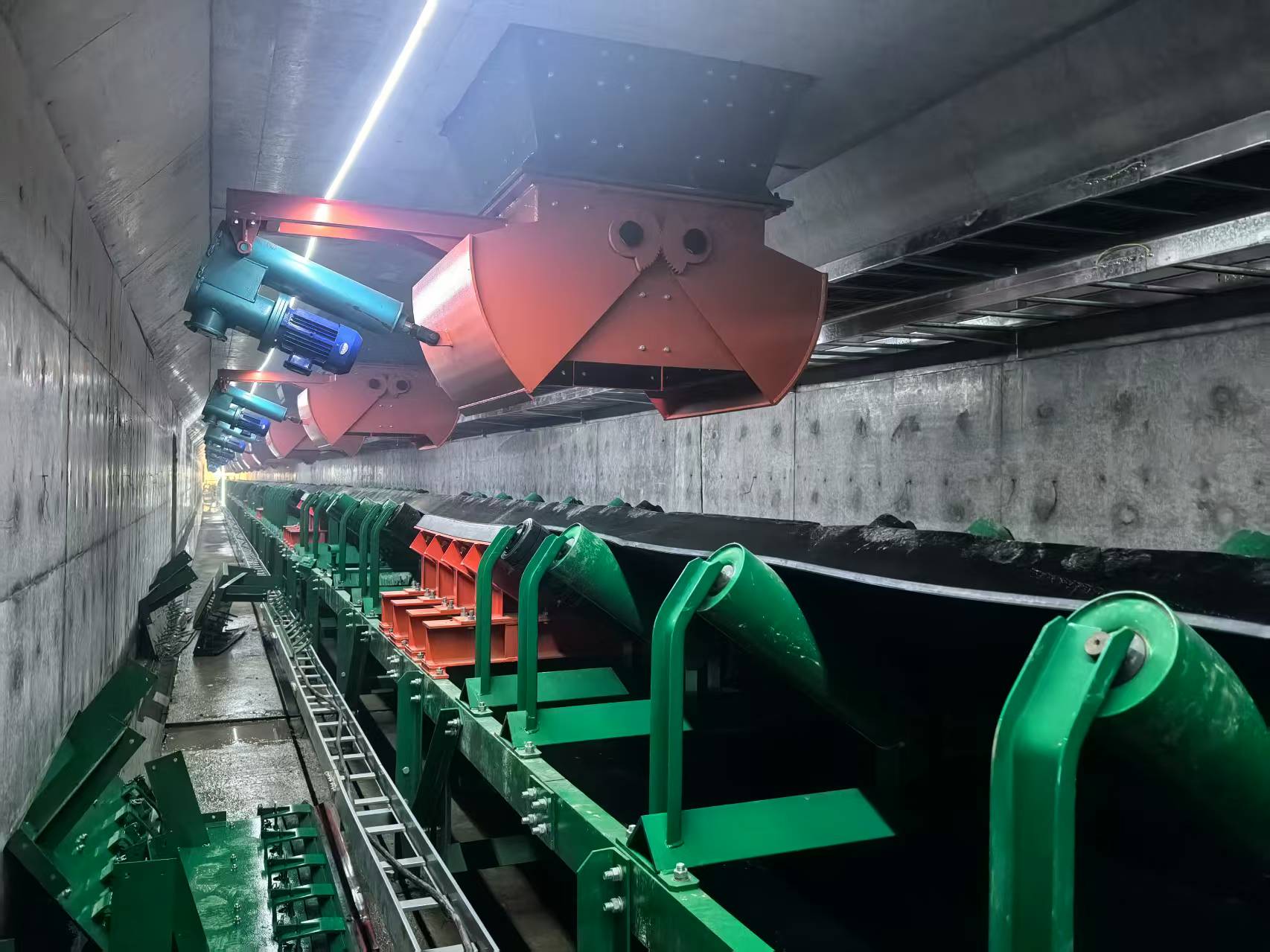
A return idler that is pushing the belt sideways rarely hides its tracks. One of the first things to check is the wear pattern on the idler shell itself. If one end of the roll looks polished while the other end still has its original surface, the belt has been running off center and leaning harder into that side. You might also see material buildup packed onto one edge of the idler or coating the frame near the bearing, which points to spillage being dragged through the return run and then deposited unevenly.
The belt itself usually offers a second set of clues. Look for edge fraying or a wavy line along one side of the belt cover where it has been rubbing against the idler bracket or the conveyor structure. On longer return spans, a belt that wanders from side to side in a slow, repeating pattern is often reacting to a return idler that is no longer square to the belt path. Occasionally the belt will sit slightly off center on every third or fourth idler but not on others, which suggests a bent frame or a seized roll rather than a general tracking problem.
Noise and dust can also help narrow down the source. A rhythmic squeak or a light scraping sound that rises when the belt speed increases may indicate the belt edge is catching the idler frame on one side. Around the return run, dust and fines often settle in a line that mirrors the belt path, so an uneven strip of material on the floor or on structural members below can reveal which idler station is pulling the belt out of line. If the mess is heavier at one particular return idler and decreases after that point, the idler at that location is worth inspecting first.
Roller Material and Bearing Choices That Outlast Standard Options
You do not need exotic materials to beat the service life of an off-the-shelf roller, but you do need to pay attention to how the shell and bearing interact. A case-hardened steel sleeve over a softer core absorbs impact without cracking, while a through-hardened bearing race keeps rolling elements from denting the same few spots under repeated load. That combination handles shock better than a uniformly hard part that looks impressive on a spec sheet but fails by fatigue spalling.
Sealing tends to separate long-lasting designs from average ones more than bearing brand. Even a high-grade bearing will eat itself once fine dust or washdown water reaches the grease. Labyrinth or contact lip seals on both sides, plus a relief groove for purged lubricant, keep the contact surfaces clean without adding the drag of heavy rubber seals. In wet or chemical-heavy areas, 440C stainless races and polymer cages are often the more honest upgrade than a thicker roller wall.
Track where the old rollers actually fail before choosing a replacement. If you see flaking at the edges, the bearing is dealing with misalignment and a self-aligning or tapered option may help. If the shell wears in a flat stripe, the roller is skidding instead of rolling; a different surface finish or slightly different diameter can change that. Durable rollers are usually the result of matching material and bearing style to a specific failure pattern, not buying the highest hardness rating available.
Spacing and Alignment Tweaks That Reduce Carryback and Wear
A surprising amount of belt damage comes down to a few millimeters of misalignment that nobody notices until the splice starts peeling. When skirt boards sit too close to the belt, fines wedge between the rubber and the steel, acting like sandpaper every time the line starts up. Pulling the skirts back just enough to let a business card slide through without resistance gives material an escape path instead of forcing it to grind against the belt edge. The same logic applies to impact beds: if the bars are not parallel with the belt line, the leading edge takes the brunt of impact and carves a groove that grows into a tear.
Carryback usually gets blamed on worn cleaners, but poor spacing between the head pulley and the discharge chute creates a pressure zone that presses wet fines back onto the belt's return side. Opening that gap slightly and adjusting the chute's lower lip angle lets the material release before it reaches the cleaner, so the blades only have to handle residual film instead of a full stream. Many operations find that moving the primary cleaner a few inches further from the pulley's tangent point also reduces chatter and premature edge wear, because the blade no longer fights against the belt's natural curve at the point of highest tension.
On long conveyors, small changes in idler spacing near the loading zone pay off quickly. Placing the first impact idler closer to the chute than the standard spacing reduces belt sag and the flapping that turns small amounts of carryback into dust spread along the structure. Inspect alignment during a loaded run rather than an empty one, since a loaded belt flexes differently and reveals which supports are actually carrying weight. Those tweaks cost almost nothing and often outlast the wear parts they protect.
When to Replace Instead of Repairing a Return Roller
A return roller can often be brought back with fresh bearings or a light skim on the shell, but there are limits. Once the shell wall has worn thin enough to flex under load, or the bearing seats have become oval, any repair is just buying time. Cracks radiating from the end disc welds are another clear sign. At that stage, continued patching tends to introduce more imbalance than it removes.
Pay attention to how the roller fails after service. If it has already been straightened, re-tubed, or welded once and is now failing in a new area, the remaining structure is likely fatigued. Similarly, a seized bearing that has spun in the housing usually damages the seat beyond reliable machining. In those cases, a replacement roller costs less than the repeat labor and unexpected line stoppage.
The decision also changes when access is difficult or downtime is expensive. A roller mounted in a hard-to-reach return run should rarely be repaired unless the damage is superficial. If a failure means stopping the belt for an unplanned shift, installing a new roller with a known service life is the safer and more predictable choice.
Low-Maintenance Setups for Conveyors That Run Around the Clock
Round-the-clock conveyor duty punishes equipment in ways scheduled lines never see. Instead of chasing constant lubrication and alignment fixes, low-maintenance setups lean on sealed-for-life bearings, self-aligning idlers, and belt tracking guides that keep the line centered without daily manual nudging.
The real difference often comes from material choices and access. UHMW wear strips, ceramic-lagged pulleys, and stainless or galvanized frames resist abrasion and moisture, cutting down the monthly scrub-and-replace routine. Designing guards and skirting so they can be swapped with basic hand tools also turns a two-hour repair into a fifteen-minute job.
It helps to keep the number of wear points low. Fewer transfer points, wider-radius curves, and properly tensioned belts reduce the small failures that accumulate into big stoppages. Some plants add simple vibration or temperature sensors at the motor and tail pulley, but only where the data actually changes the maintenance schedule rather than adding noise.
FAQ
Look at the bearing seal design first. A roller with double-labyrinth or contact seals keeps fine dust and moisture out of the bearing race, which is where most early failures start. Shell thickness and material matter too: a thicker steel shell resists denting from trapped rocks, while a balanced design reduces vibration that can hammer bearings loose over time.
In wet and muddy conditions, a self-cleaning spiral return idler or a rubber disc return roller tends to perform better. The spiral profile sheds sticky material instead of letting it cake up, and rubber discs can absorb impacts while helping to scrape off the belt. Galvanized or stainless steel bearings and housings also help prevent rust from ruining the roller.
Listen for a dry, grinding sound near the roller while the belt is running, which usually points to bearing wear. Also watch for a roller that has stopped spinning while the belt moves over it, or one that wobbles visibly. Flat spots on the shell and caked material that no longer clears are other early warnings.
Yes. A return roller that is seized, lumpy, or out of balance creates uneven drag on the underside of the belt. That imbalance can pull the belt to one side and make tracking adjustments seem impossible. Swapping in a straight, freely spinning set of return rollers often fixes a wandering belt before you touch the tracking idlers.
Not always. Heavier gauge shells make sense for sharp, heavy material and high tonnage, but they also add rotating weight that can increase power draw and wear the bearings faster if the conveyor is not loaded heavily. Match the roller to the belt speed, load, and material instead of simply choosing the thickest shell available.
Walk the conveyor regularly and listen for changes in sound. Clear material that builds up on the roller faces or between the roller and bracket. Check that all rollers still turn by hand during a shutdown, and replace any that feel rough or have play in the bearing before they damage the belt.
If one roller has failed, inspect the neighboring rollers on both sides. They usually share the same loading and contamination exposure, so replacing only the single bad roller often leads to another failure shortly after. Replacing a short section at a time keeps the conveyor running with fewer unplanned stops.
Conclusion
Return idler rollers rarely get much attention until a belt starts drifting or carryback piles up underneath the conveyor. Comparing flat, rubber-disc, and spiral return rollers makes it clear that each style solves a different problem: flat rolls work for clean, dry belts, rubber discs shed sticky material, and spiral rolls use a self-cleaning action to keep the return side quieter and more stable. If the belt edges wander or the tracking shifts after a splice, a seized or worn return idler is often the hidden cause. Upgrading shell materials and bearings helps as well, especially in wet or abrasive environments where standard steel and cheap sealed bearings fail early. Matching the design to the material and moisture level prevents many of these failures before they spread.
Small spacing and alignment changes often do more than swapping parts. Positioning return idlers a bit further from the head pulley and keeping them square to the frame reduces bounce, carryback, and uneven wear. When a roller shows deep grooves, a collapsed bearing, or a bent shell, replacement is usually cheaper than repeated repairs. For round-the-clock lines, low-maintenance setups with solid shafts, good seals, and proper frame alignment tend to pay back quickly because they cut unscheduled stops and extend belt life over time. That combination keeps the return side from becoming the weakest part of the line.
Contact Us
Contact Person: Jayce
Email: [email protected]
Tel/WhatsApp: 8615318787602
Website: https://www.yuphengbelt.com/