

Best Tact Switch Manufacturer: Finding Quality and Reliability for Your Projects
2026-06-09
When designing electronic interfaces, the tiny tactile switch you select can make or break user experience. Reliability, feel, and longevity aren't just specs—they're the soul of every button press. For engineers and product designers, finding a tact switch manufacturer that consistently delivers on these fronts is a quiet superpower. KEJIAN ELECTRONICS understands this better than most, combining precision manufacturing with real-world durability. Here's what to look for—and why your next project deserves switches built to last.
Materials Matter: What Goes Into a Robust Tact Switch
The tactile feel and lifespan of a switch largely hinge on the metal dome inside. High-quality domes are typically stamped from stainless steel or phosphor bronze, with stainless steel offering superior corrosion resistance and a sharper snap. The thickness and profile of the dome must be precisely controlled, as even subtle variations can lead to inconsistent actuation force or premature fatigue. Engineers often specify domes with a gold or nickel plating to maintain a stable contact resistance over millions of cycles, something bare steel simply cannot provide in humid or contaminated environments.
The contact pads beneath the dome are just as critical. They are commonly made of a copper alloy with a gold flash over a nickel barrier layer, which prevents oxidation and ensures low, stable contact resistance. For high-reliability applications, such as medical or aerospace equipment, gold-on-gold contacts are preferred because they resist fretting corrosion and don’t build up insulating films. The trick is balancing cost with performance: too thin a gold layer and it will wear through; too soft an alloy and the contacts can deform under thermal cycling.
The housing and actuator materials must survive both the electrical demands and the mechanical stresses of operation. Thermoplastics like LCP (liquid crystal polymer) or high-temperature nylon are chosen for their ability to withstand reflow soldering and hold tight dimensional tolerances. A well-designed actuator will incorporate a silicone rubber layer or a custom elastomer keycap to distribute force evenly across the dome, preventing localized stress that can crack the dome or degrade the tactile response. The base material should also resist outgassing, which can contaminate the contacts and lead to intermittent failures over time.
Beyond the Spec Sheet: Real-World Durability Testing
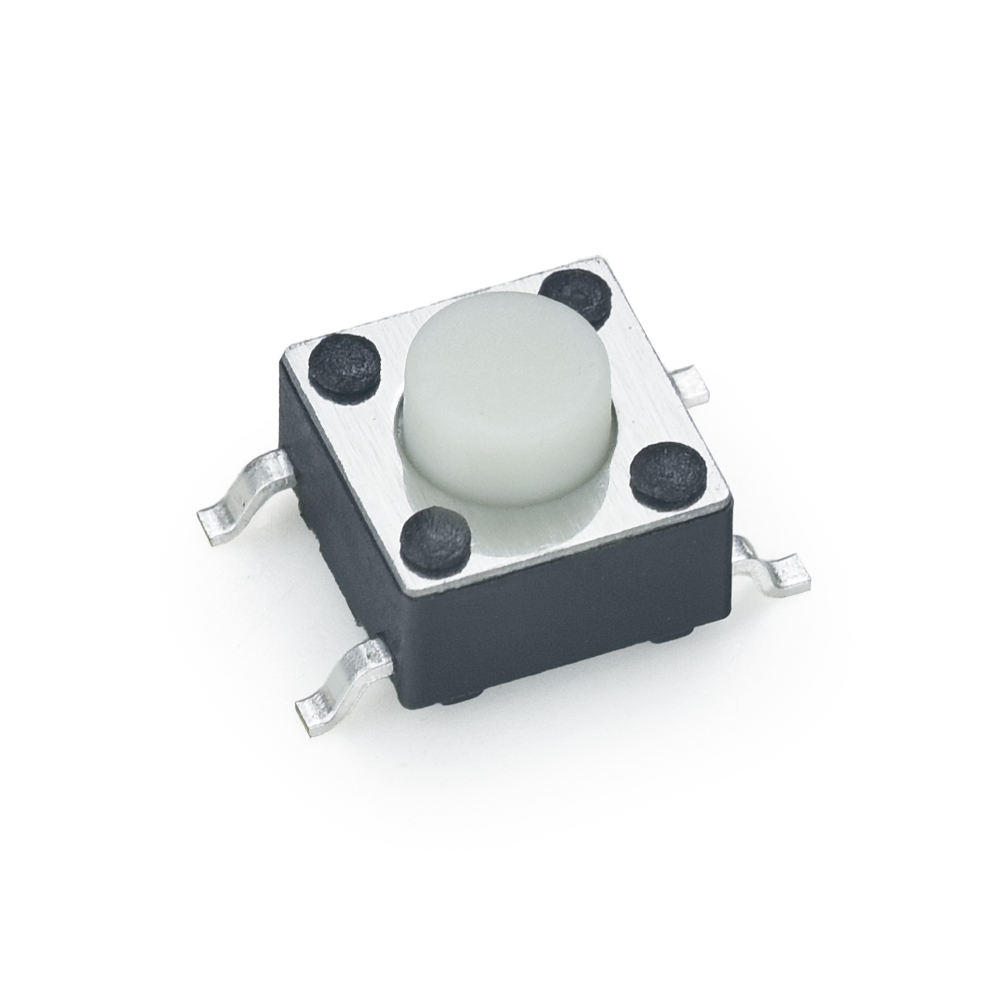
Manufacturers love to parade around lab numbers—drop heights, ingress ratings, battery cycles—but those sterile figures rarely align with how we actually live with our gear. Real durability isn't proven in a controlled environment; it's carved out in the chaos of daily use, where a phone slides off a rain-slicked pocket, a tablet gets wedged between airline seats, or a smartwatch absorbs the shock of a misjudged doorframe. The gap between a pristine test bench and the gritty reality is where true resilience emerges, and it's a story no spec sheet can tell.
We push devices beyond their comfort zones, replicating the unpredictable: repeated tumbles onto concrete from waist height, submersion in everything from saltwater to coffee, and weeks of being tossed into bags with keys and loose change. It's not about one catastrophic failure; it's the cumulative effect of small accidents that reveals poor sealing, weak structural points, or coatings that wear thinner than promised. This kind of testing uncovers the difference between a product that survives a single, rehearsed drop and one that still feels solid after a year of rough-and-tumble living.
Precision Manufacturing: How Fine-Tuning Impacts Feel and Lifespan
Precision manufacturing transforms a product from merely functional to exceptionally tactile. Every micron-level adjustment in component alignment, surface finish, and tolerance stacking directly influences how a device feels in hand. That subtle click of a button, the seamless contour of a casing—these are not accidents. They stem from relentless fine-tuning, where even a fraction of a millimeter alters perceived quality and comfort.
Longevity, too, is quietly engineered into the smallest details. When parts mate with exacting precision, friction diminishes, wear becomes predictable, and structural integrity persists through years of use. A hinge that doesn't loosen, a seal that never leaks—these feats arise from processes that eliminate variability. The result is a product that ages gracefully, maintaining its original feel far longer than mass-produced counterparts.
In the end, fine-tuning is what bridges the gap between good enough and enduring excellence. It demands patience and obsession, but the rewards are tangible: a device that feels right from the first touch and stays that way, resisting the ravages of time. This is why master craftsmen and advanced factories alike invest so deeply in precision—not for bragging rights, but because the user notices, even if only subconsciously.
Custom Solutions Without the Guesswork
Every project kicks off with a distinct mix of obstacles and opportunities. Rather than leaning on assumptions or generic templates, we start by immersing ourselves in your specific situation—your workflows, your customers, the friction points that no one else seems to notice. This isn’t about applying a cookie-cutter fix; it’s about shaping an approach that aligns with where you actually are.
The clarity comes from connecting dots that often get overlooked. By combining real-world data with honest, ongoing conversations, we zero in on what’s really holding things back. The solutions that follow aren’t padded with guesswork—they’re built on evidence and experience, so you sidestep the usual back-and-forth that drains momentum.
What you end up with is something that fits so naturally, you might wonder why it wasn’t always there. It’s a quiet kind of assurance—knowing that the path you’re on was mapped out with precision, not hunches. No surprises, no second-guessing, just steady progress that feels intuitive from the start.
Supply Chain Stability: Why Consistent Availability Counts
Supply chain stability hinges on more than just cost efficiency or speed; it’s the quiet reliability of consistent availability that keeps operations running smoothly. When materials arrive without fail, production schedules stay intact, and customer commitments are met without the scramble. This predictability isn’t just a perk—it’s the bedrock of trust between businesses and their partners, ensuring that minor disruptions don’t spiral into costly crises.
In practice, consistent availability means your suppliers have the buffer and foresight to handle demand spikes or logistical hiccups without passing the pressure downstream. It transforms supply from a series of transactions into a dependable rhythm. Companies that prioritize this often fly under the radar, but they’re the ones that avoid the firefighting mode so common in reactive supply chains. Over time, this steadiness builds a reputation that attracts better partners and more stable contracts.
Engineering Support That Goes the Extra Mile
When a critical system hiccup threatens your launch timeline at 2 AM, our engineers don't just log a ticket—they pick up the phone and stay on the line until the root cause is unearthed. We've built a culture where problem-solving doesn't clock out, and that obsession with seeing things through turns panicked nights into quiet, uneventful mornings.
Beyond reactive firefighting, we embed ourselves in your reality. Our team regularly shadows client-side developers during their workday, digging into the unspoken friction points that never make it into a formal support request. That hands-on curiosity has led to preemptive tooling overhauls and custom workflow automations that saved months of cumulative effort—none of which were ever listed in our original scope of work.
The extra mile shows up in details often unnoticed: a written post-mortem that doesn't bury blame but maps a clearer path forward, a Saturday morning check-in following a tricky deployment, or a quick prototype built just to prove a safer migration route. It's not about grand gestures; it's a steady refusal to settle for "good enough" when a little more effort can turn a one-time client into a long-term ally.
FAQ
You want a partner that treats every component as a mission-critical part, not just another order. The best ones run exhaustive life-cycle tests, verify actuation force consistency across batches, and audit their supply chain for raw material integrity. They also embrace real-world feedback loops from end users to tighten tolerances long before you face field failures.
Ask for detailed test reports beyond datasheets – things like salt spray corrosion results, vibration endurance under load, and switch bounce trends over 100k+ cycles. A trustworthy maker will walk you through their in-house failure analysis process and share samples with traceable lot numbers so you can replicate tests on your own board.
It’s not just about user experience. Inconsistent tactile feedback can mask switch degradation or lead to missed actuations in high-frequency use. Top manufacturers characterize the click ratio and travel profile with precision, ensuring the switch gives the same crisp response whether it’s hit by a gloved hand or a machine actuator, which translates directly to safety and throughput.
The smart manufacturers keep a modular platform – standard bodies, varying actuator heights, custom cap printing, and predefined sealing options. By mixing and matching validated subassemblies, they can deliver a bespoke switch that feels purpose-built while reusing proven internals. That trims engineering weeks and keeps your project on schedule.
Look beyond the quote. Do they suggest design-for-manufacturing tweaks that lower your assembly cost? Do they proactively share lifecycle roadmaps so you’re not caught off guard by EOL notices? Genuine partners assign a dedicated applications engineer to your account and treat your volume growth as a joint target, not just a sales metric.
You might not see them, but things like double-dome redundancy for failsafe circuits, micro-venting to equalize internal pressure during reflow without sealing failures, and lead-free terminations that survive harsh SMT profiles are already here. The best vendors co-develop these with automation experts to future-proof your design against tightening regulations and smaller footprints.
Conclusion
When you're sourcing tact switches for a project that can't afford to fail, the difference between an average supplier and the best often comes down to invisible details. It starts with the materials—cheap contacts degrade fast, but a manufacturer that uses high-grade stainless steel or gold-plated domes and engineered thermoplastics builds in longevity from the start. Yet a robust spec sheet isn't enough; the best partners validate those numbers through real-world durability testing that pushes well beyond datasheet limits, cycling switches millions of times under varying heat, humidity, and load. That relentless testing feeds back into precision manufacturing, where microscopic adjustments to stem travel, actuation force, and contact geometry create the snap and tactile crispness that end-users notice and that keeps devices operating flawlessly for years. This tight loop of material science, brutal testing, and fine-tuned assembly is what separates a commodity switch from one you can trust.
But quality hardware alone isn't the whole picture. The right manufacturer understands that off-the-shelf parts rarely fit every application perfectly, so they offer custom solutions without the typical guesswork—working from your mechanical and electrical requirements, they prototype rapidly and provide honest feedback on what will work, not just what's easy to build. Behind that capability must sit a supply chain that doesn't buckle under global shocks; consistent availability means they've invested in redundant sourcing and buffer inventory so your production line never stalls. Finally, true reliability extends to engineering support that refuses to close the ticket until the issue is resolved, whether it's troubleshooting a PCB footprint or re-characterizing a switch for a slight change in operating environment. Choosing the best tact switch manufacturer means weighing all these interconnected factors, because a switch is just a component until it becomes the critical interface your product relies on.
Contact Us
Contact Person: Anna lin
Email: [email protected]
Tel/WhatsApp: +86 13567768885
Website: https://www.kjele.com/