

Car Ozone Generator Factory Tour Reveals Quality Control Essentials
2026-10-15
Have you ever wondered what really happens behind the scenes at a car ozone generator factory? During a recent visit to LUFUTATECH, we got an up-close look at the machinery, the people, and the rigorous checks that separate a reliable unit from a risky one. The tour revealed quality control essentials that most buyers never see—and some of them challenge common assumptions. Here’s what we discovered.
Meeting the Technicians Who Hand-Solder Ozone Plates
Most people never see the inside of an ozone generator, but it’s the small, brushed-metal plates that do the quiet work of splitting oxygen. In a cramped workshop at the edge of the production floor, three technicians sit under bright task lamps, unrolling thin strips of nickel-chromium mesh and aligning them over ceramic tiles. Each solder joint is made with a steady, deliberate motion—no conveyor belt, no pick-and-place machine. The smell of rosin flux hangs in the air as they wipe excess alloy from the edges, checking continuity with a meter after every pass.
Shen, one of the senior hands, has done this for eleven years. She taps a finished plate against the bench, listening for a dull ring that signals a cold joint. Her apprentice watches, then tries the same motion on a practice tile. The work resists shortcuts: too little heat and the connection fails under load, too much and the ceramic can microfracture. A rejected plate goes into a red bin, its fault circled in grease pencil. On a good day, Shen completes twenty-three units, each one logged with her initials and the time it passed final inspection.
There’s no shortcut for the concentration this trade demands. The technicians rotate every two hours to keep their eyes sharp, and the morning shift always starts with a fresh tip cleaning on the soldering irons. In a corner, a wall chart tracks defect rates by week—not for management audits, but because the crew wants to beat their own record from last spring. When a batch is done, they wrap the plates in anti-static foam and carry them to the test bench, where a brief ozone bloom confirms what their hands already know.
The Calibration Bench Where Parts Per Million Get Verified
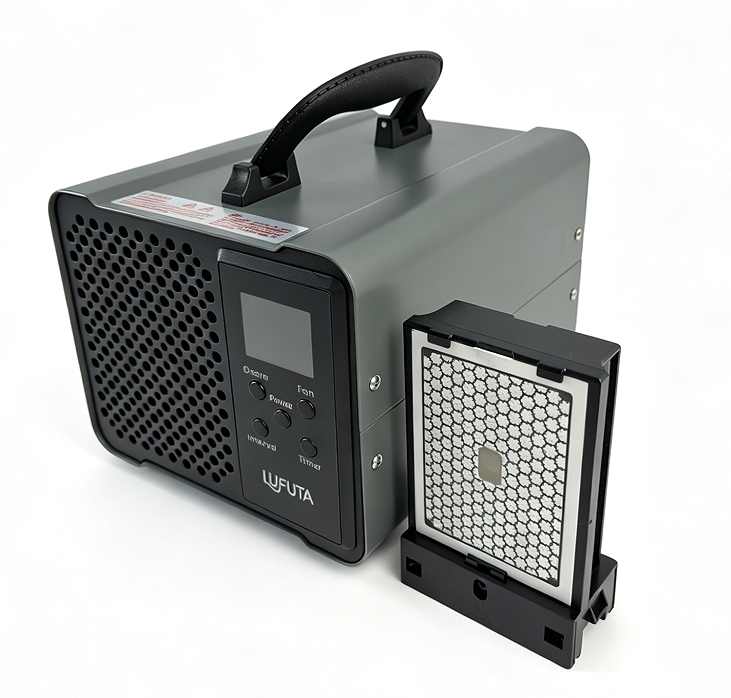
The bench doesn't look like much from across the room—worn laminate, a few cable loops, a stack of foam-lined cases. But once the instruments settle and the room locks into its 20°C hold, the real work begins. Reference resistors, deadweight testers, and quartz pressure transducers get compared against lab standards that carry uncertainties measured in micro-ohms or pascals, and every reading is logged until the drift pattern becomes clear.
What gets verified here isn't just a number on a certificate. A thermocouple that reads 0.3°C high at 900°C might be passing heat treatment specs by accident. A pressure sensor off by 40 ppm can quietly shift a custody transfer balance. So the bench treats each instrument as a small investigation: thermal emf, lead resistance, barometric offset, and even the angle of a connector get checked before a final offset is written down. It's slow, unglamorous, and exactly the kind of repetition that keeps a parts-per-million claim honest.
A Stress Test Room That Mimics Dashboard Heat Soak
The room itself is a sealed steel box roughly the size of a compact car interior. Inside, a full dashboard assembly sits on a fixture that can tilt and rotate to match real sun angles. Infrared emitter panels run along the ceiling and side walls, their output tuned to reproduce the long-wave radiation that turns a parked cabin into an oven. You don't just crank up the heat; you recreate the exact thermal profile of a windshield-focused sun load, right down to the hot spots that form behind the gauge cluster.
Testing doesn't follow a flat soak cycle. The control system ramps the chamber in stages—preheat, direct solar simulation, then a sudden cool-down to capture expansion and contraction. Air movement is kept deliberately low so radiant heat dominates, which is what happens when a vehicle sits with windows closed. Thermocouples under the vinyl, inside the center stack, and on the back of the glovebox door record the lag between surface temperature and the air around it. That lag is where warping, squeaks, and adhesive failures tend to hide.
What comes out of the room is less a pass/fail result and more a map of material behavior. A chrome trim bezel might bow 0.4 mm after the third cycle, or a foam-backed skin might start to separate near the defrost vent where temperatures climb fastest. These findings go back to the design team as targeted fixes rather than a vague "make it more durable" note. Over dozens of runs, the room has become shorthand for catching dashboard gremlins before they ever see a summer parking lot.
How Ozone Output Is Measured With Sealed Chambers
Measuring ozone output with sealed chambers relies on a simple but effective principle: trap a known volume of air, introduce the ozone generator's output for a fixed period, and then quantify the ozone concentration inside. The chamber itself is typically constructed from ozone-inert materials like stainless steel, glass, or certain fluoropolymers, because ozone aggressively attacks rubber, most plastics, and even some metals. A small fan or recirculation loop ensures the gas mixes evenly, preventing "hot spots" near the injection point that would skew readings. Once the generator runs for a set time—often between one and ten minutes—the internal ozone level is measured using either UV absorption, electrochemical sensors, or the classic potassium iodide wet-chemistry method. The result is expressed as a concentration (e.g., ppm or mg/m³), which, combined with the chamber volume, gives the total ozone output rate.
One common pitfall in sealed-chamber testing is ozone decay. Unlike open-flow systems where fresh gas continuously replaces the sample, a sealed chamber allows ozone to decompose over time due to wall reactions, humidity, and temperature. This means the measured concentration is always lower than the instantaneous generator output, especially during longer test runs. Experienced testers compensate by either using short sampling intervals or applying a decay correction factor derived from a blank run with the generator off. Another consideration is chamber pressure: as ozone is injected, pressure can rise slightly, which affects both the sensor readings and the actual ozone partial pressure. A well-designed chamber includes a small vent or pressure equalization port that opens only after the measurement is complete, preserving the sealed environment during data collection.
The value of sealed-chamber measurements lies in their ability to capture "total output" rather than just the output at a single point. Ozone generators often produce a plume or stream with varying concentrations across its cross-section; a sealed chamber integrates all that variation into one representative number. This makes it particularly useful for comparing different generator models or verifying manufacturer claims. For hobbyists and small-scale water treatment operators, a DIY sealed chamber made from a large glass jar with a gasketed lid, a small mixing fan, and a calibrated ozone sensor can provide surprisingly accurate results. Just remember to purge the chamber with dry air between tests, since residual humidity from previous runs can suppress the next reading by accelerating ozone decomposition on the walls.
Spotting Micro Leaks Before They Shorten Generator Life
Micro leaks in generator casings rarely announce themselves with an obvious hiss or a sudden pressure drop. More often they creep in through worn gaskets, hairline cracks in weld seams, or dried-out sealant around conduit penetrations. Each tiny opening lets outside air and moisture mix with the hydrogen cooling gas, gradually raising dew point and lowering gas purity. The insulation system feels the effects first—absorbed moisture accelerates aging, while higher windage losses force the machine to run hotter for the same output. Long before a sensor alarms, the generator is already losing efficiency and accumulating damage that shortens its service life.
Routine checks with a portable helium mass spectrometer remain one of the most reliable ways to find these elusive leaks. Because helium is far lighter than air and easily detected at parts-per-million levels, technicians can walk the casing, flange joints, and hydrogen seal areas while the unit is online. Ultrasonic detectors add another layer: they pick up the turbulent noise of escaping gas even in a noisy powerhouse. For accessible joints, a thickened soap solution still works, but it misses leaks in enclosed spaces—so pairing it with a pressure decay test, corrected for casing temperature changes, gives a much clearer picture.
Yet finding a leak is only half the battle. The same weak points often reappear after routine thermal cycling, especially around hydrogen cooler connections and seal oil drain lines. Keep a simple log of every repair location, the gasket type or sealant used, and the follow-up test result. Over a year or two, patterns emerge: a particular flange may need a upgraded gasket material, or a recurring conduit leak may call for a different sealing compound. Add online dew point and hydrogen purity trend monitoring to catch gradual changes, then use scheduled leak hunts to pinpoint the source before the casing pressure drop forces an unplanned outage.
The Final 40-Point Check Before the Box Is Taped Shut
Most people tape a box shut and hope for the best. But if you’ve been burned by a crushed corner or a missing invoice, you know that hope isn’t a strategy. This final pass isn’t about reading a generic checklist out loud—it’s about touching every seam, testing every flap, and asking the uncomfortable questions: Did the inner carton shift when I lifted it? Is the label facing the same direction as the courier’s scanner? Does the tape actually grip the cardboard, or is it just sitting on dust?
Run your hand along all six sides. Press down on the top and listen for movement. Check that the weight is balanced, the fragile items are suspended at least two fingers from any wall, and the paperwork is in a sealed pouch on the outside, not buried under bubble wrap. Count the tape strips—three across the center seam, two along each edge—and make sure none are peeling at the ends. Only when every one of those 40 points gets a quiet yes should the tape gun go down.
FAQ
Usually the visit begins at the incoming materials section, where raw components like ceramic plates, stainless steel mesh, and high-voltage transformers are checked before assembly.
Each unit is powered on in a sealed test chamber while an ozone sensor monitors output concentration and checks for any electrical leakage or unstable voltage.
Stations include insulated gloves, grounded workbenches, fume extraction above soldering areas, and clear markings for high-voltage zones to reduce the risk of shock or ozone exposure.
Because the plate's coating thickness and surface uniformity directly affect ozone output, so inspectors measure resistance and inspect for micro-cracks before it moves to assembly.
Generators are placed in temperature and humidity chambers that cycle from cold to hot with vibration, simulating long hours inside a parked vehicle or during rough drives.
The entire batch is quarantined and a root cause analysis is triggered; defective units are either reworked or scrapped, and the process parameter is adjusted before production resumes.
Yes, calibration benches use a reference ozone meter to adjust the internal timer or power setting so each device stays within a safe and effective output range.
Conclusion
Walking the production line makes one thing obvious: a car ozone generator earns its spot through a mix of handwork and measurement. At the first station, technicians hand-solder ozone plates with a steady rhythm, checking each joint before it cools. That work feeds directly into a calibration bench where parts per million are verified against known references, so the printed output rating isn't just a marketing number. The stress test room takes the same logic further by recreating dashboard heat soak—generators sit in warm enclosures for hours, then get cycled to force any weakness to surface. Sealed chambers then measure ozone output in a closed environment, giving a clear pass-or-fail number for actual gas production.
The quieter half of quality control is about finding failure before it happens. Technicians go over each unit for micro leaks, the kind that won't stop a generator on day one but will shorten its working life. The final station wraps all of this into a 40-point checklist that covers connections, seals, housing fit, and output consistency. Nothing gets checked off without a physical mark, so the last person to touch the unit is accountable for it. That combination of careful soldering, calibrated testing, and plain stubbornness about details is what separates a dependable ozone generator from a cheap imitation.
Contact Us
Contact Person: Paul Luo
Email: [email protected]
Tel/WhatsApp: 0086-19966314501
Website: https://www.lufutatech.com