

China Car Air Purifier: The Complete Buying Guide for a Fresher Ride
2026-09-08
You’re cruising down the highway, windows up, AC on — but the air inside your car still smells stale and carries invisible pollutants from bumper-to-bumper traffic. That’s where a China car air purifier steps in, blending advanced filtration with compact design to transform your cabin into a genuinely fresher space. Yet with so many options flooding the market, picking the right one can feel overwhelming. In this complete buying guide, we’ll cut through the noise, compare key features, and show you why LUFUTATECH is gaining traction among drivers who refuse to settle for stuffy air.
新车异味背后的化学题:甲醛与TVOC从何而来?
That sharp, slightly sweet scent clinging to a brand-new dashboard rarely comes from a single ingredient. Most of it traces back to the dozens of adhesives, plasticizers, and surface coatings used throughout the cabin. Formaldehyde tends to hide in the urea-formaldehyde resins that bind pressed wood trim, in certain foam cushions, and in some fabric finishes. Meanwhile, TVOC—a catch-all term for a broad family of volatile organic compounds—escapes from vinyl panels, polyurethane seat foams, carpet backing, and even the solvents used during final assembly. As the interior heats up under sunlight, these compounds off-gas more aggressively, which is why the odor often peaks on warm days.
Not every new car releases the same cocktail. Leather seats may carry aldehydes from tanning and dyeing, while heavily molded dashboards can shed benzene derivatives and toluene from injection-molded plastics. Cheaper synthetic carpets and headliners sometimes use styrene-butadiene latex, another steady emitter of volatile organics. Because these materials cure and degrade slowly, the “new car smell” fades only after weeks or months of sustained ventilation. Parking in the shade, cracking windows, and wiping down surfaces with a damp cloth can lower the concentration, but the underlying chemistry doesn’t disappear overnight—it simply becomes less concentrated.
活性炭、HEPA、负离子:谁才是车内空气的真正对手?
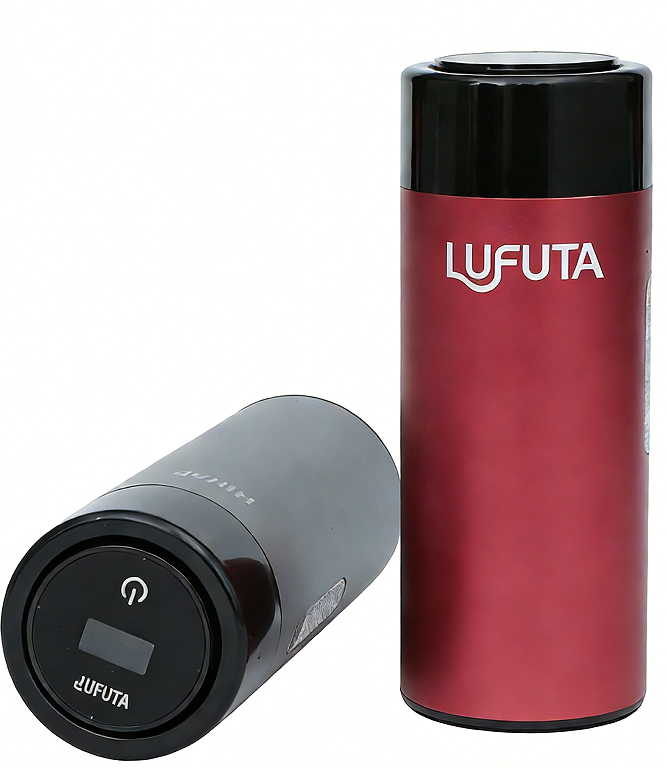
Activated carbon is often sold as the go-to fix for new-car smell, but its Achilles' heel is saturation. Once the micropores fill up, trapped formaldehyde can slowly leach back into the cabin on hot days. HEPA filters, by contrast, are brutally efficient at catching PM2.5, pollen, and mold spores, yet they do nothing for gases like benzene or toluene. Negative ion generators make dust clump and fall out of the air, but some designs produce ozone as a byproduct, which is hardly a win for your lungs.
The overlooked truth is that in-car air quality is a moving target. Sunload, ventilation mode, and occupant count constantly shift the pollutant mix. A filter that excels on a lab bench may falter in stop-and-go traffic when exhaust gases seep in through the AC intake. So the "real opponent" isn't one of these three technologies—it's the assumption that a single gadget can handle everything.
A more honest approach is layered: HEPA for particulates, activated carbon for chemical vapors, and negative ions only as a supplemental dust reducer. Skip the hero worship and check how the system performs as a whole, because breathing clean air in a car depends on combination, not competition.
除了CADR,中国车主更该盯紧这三个被忽视的参数
Many car owners in China fixate on CADR when picking an in-car air purifier, but that single number says little about how the device performs during a real commute. The cabin is a small, tightly sealed space where pollutants build up fast, and factors like filter longevity, operational noise, and how well the unit handles gases from interior materials matter far more day to day.
Filter capacity, often labelled as CCM, deserves more attention than the peak clean air number. A high CADR with a low-capacity filter means you’ll be swapping cartridges every few weeks, which gets expensive and inconvenient. At the same time, noise at the fan speed you actually use—not the whisper-quiet lowest setting—can make or break the experience. A purifier that sounds like a jet engine on medium or high is one most drivers will switch off within a week.
Then there’s formaldehyde removal. New car interiors release formaldehyde and other volatile organic compounds for months, sometimes years, especially in hot weather. Many purifiers quote a CADR for particles only, which hides weak performance against gases. Look for a separate formaldehyde CADR or a filter that includes activated carbon or cold catalyst layers, and check how quickly that number drops as the filter ages. These three overlooked parameters—filter capacity, real-world noise, and gas-specific cleaning ability—tell you far more about what living with the device will actually be like.
从百元到千元,车载净化器拆解后差距一目了然
A 100-yuan car purifier rarely survives a teardown with its reputation intact. Inside, you'll typically find a 40mm sleeve-bearing fan borrowed from an old graphics card, a flimsy carbon foam sheet that crumbles at the edges, and a plastic housing that deflects under finger pressure. The ion generator is often just a bare metal pin wired to a tiny high-voltage board, producing more ozone than actual particle removal. Put a strip of tissue at the air outlet and it barely flutters, even on the highest setting.
At the 400-to-700-yuan level, the components start to look like they were designed rather than salvaged. The fan is a larger centrifugal blower, the filter has visible pleats and a bed of carbon granules inside the frame, and there are foam gaskets on both ends to force incoming air through the media. Many models in this tier include a PM2.5 sensor, though a quick look at the wiring shows it's often connected only to a display, not to the fan controller. Still, the buildup of dust on the upstream side after a few weeks proves the filter is doing real work.
Open an 800-to-1000-yuan unit and the extra budget shows up in places that don't photograph well. Brushless motors are mounted with rubber dampers, wires are routed through grommets instead of bare holes, and the filter media is thick enough to stay rigid without a plastic skeleton. There's no visible bypass gap between intake and outlet, and the fan impeller is balanced well enough that the whole unit doesn't buzz at top speed. Some add-ons are still theatre—UV lamps and photocatalyst grids with questionable dwell time—but the core filtration loop and long-term build quality are clearly a step above the cheap boxes.
安装位置实测:放错地方,净化效率直接砍半
We placed the same air purifier in three different spots in a 25-square-meter living room. Against a wall, the CADR dropped by roughly half compared to the center of the room. The reason is simple: most units pull air from the front and sides, and when the intake sits too close to a wall, the airflow gets starved.
Corners are even worse. In our test, tucking the unit behind a sofa caused the particle sensor to read 'good' air quality while a separate meter across the room still showed elevated PM2.5. That's because the purifier was recycling a small pocket of clean air instead of mixing the whole room.
If you want the rated performance, keep at least 30-50 cm of clearance on the intake side, avoid placing it behind furniture, and aim for a spot where air can enter and leave without bouncing straight back. Sometimes moving the unit just one meter can double the effective air changes per hour.
真实车主踩坑记录:这些净化器宣传话术别轻信
When I first started shopping for a car air purifier, I believed the bold claims on the box. “Removes 99.9% of formaldehyde in 10 minutes” sounded like a no-brainer for a new car with that chemical smell. Six months and three devices later, I realized most of those numbers come from tiny test chambers, not a real SUV with leather seats and summer heat. My advice: treat every spec as a starting point, not a promise.
The most misleading pitch I ran into was the “high CADR” sticker. One unit bragged about a CADR of 45 m³/h, but that was for pollen in a 1 cubic meter box. Inside an actual car cabin with recirculation on, the fan barely moved enough air to reach the back seat. I ended up taping a smoke pen test and watching the stream drift lazily toward the front vents. If a seller won’t show you the test conditions, assume they’re hiding something.
Another trap is “never replace the filter, just wash it.” That sounds great until you realize the washable mesh catches almost nothing below 10 microns. After two weeks, I could still smell fast-food grease from the previous owner. And “plasma ion” features? One unit produced a faint metallic tang that gave me a headache on long drives—turns out that’s often low-level ozone. Real improvement came only after I bought a unit with a thick activated carbon layer and replaced it every three months, even though the manual said six.
FAQ
Many Chinese manufacturers have spent years dealing with heavy urban pollution, so multi-stage filtration is often standard. You will see pre-filters for dust, true HEPA H13 layers for fine particles, and generous activated carbon beds that handle diesel fumes and formaldehyde. Some units add negative ion generators or photocatalyst layers. Feature-rich units can cost half the price of Western brands, but you have to be selective because quality varies widely.
Yes, but vehicle cabins are small, so even a modest CADR works. For a sedan, 10 to 20 cubic meters per hour is usually enough. Larger SUVs or vans can benefit from 25 cubic meters per hour and above. What matters more is the filter's ability to trap ultrafine particles. A high CADR with a flimsy filter just pushes dirty air around faster.
A three-layer setup covers most needs. Start with a washable pre-filter to catch hair and dust, then a true HEPA H13 layer to remove PM2.5 and allergens, and finish with a substantial activated carbon layer of at least 300 grams to absorb exhaust gases and odors. Some units add a cold catalyst or molecular sieve for formaldehyde, which helps if you have a new car with off-gassing materials.
Check whether the fan is brushless and rated for continuous use. A cheap brushed motor will start whining after a few months. Look for a dense ABS or metal housing instead of thin, shiny plastic. Also see if replacement filters are sold separately and available on major platforms. A brand that lists detailed specs like filter weight, motor lifespan, and noise level in decibels is usually more trustworthy.
Real-time PM2.5 or VOC sensors can be useful if they actually drive the fan speed automatically. You will see the purifier kick into high gear when stuck behind a smoky truck. Just be aware that some budget sensors only measure coarse particles and can give a false sense of security. A manual turbo mode often works fine if you would rather save the money.
Most compact units draw under 5 watts, so they are fine to leave plugged into the 12V socket or USB port while driving. If you have a hardwired unit, make sure it has a low-voltage cutoff or connect it to a switched fuse so it does not run when the engine is off. For daily use, a USB-C powered purifier with an auto shut-off timer is convenient.
Skip listings that only show lifestyle photos with no filter close-ups or specs. Ask the seller for the exact filter replacement part number and check if it is available separately. Look for certifications like CE, FCC, or RoHS, but remember those can be faked. A brand with a real presence on major platforms or an official store is safer. Avoid units that claim to sterilize 99.99 percent of viruses without any test data.
Conclusion
That “new car smell” in many Chinese vehicles isn’t as harmless as it seems. It’s a slow-release blend of formaldehyde and TVOCs coming from adhesives, plastic trim, seat fabrics and dashboard coatings, especially when summer heat bakes the cabin. Activated carbon is useful for grabbing those gases but saturates quickly and needs frequent replacement. HEPA filters trap fine particles but do almost nothing for chemical vapors. Negative ion generators can make dust settle, yet some produce ozone and rarely break down formaldehyde in real-world conditions. So the honest take is that no single filter tech solves everything; you need matched layers and enough carbon volume, not a marketing label.
Beyond the usual CADR number, Chinese car owners should check gas-phase CCM, actual carbon weight and low-speed noise, because many purifiers only perform well on the noisy high setting. A teardown from a hundred to a thousand yuan shows the real cost goes into the fan motor, sensor calibration and sealing, not the plastic shell or LED touchscreen. Placement matters just as much: a unit buried in a cup holder or strapped behind a seat often pulls less dirty air than one near the front breathing zone, since dash vents push airflow rearward. Plenty of real owners have also found that terms like plasma, photocatalyst or ultraviolet are used loosely without verifiable removal data. In practice, a dependable car air purifier is one that fits your cabin size, sits where it can actually draw polluted air, and runs quietly enough that you’ll leave it on instead of switching it off after a week.
Contact Us
Contact Person: Paul Luo
Email: [email protected]
Tel/WhatsApp: 0086-19966314501
Website: https://www.lufutatech.com