

China Fabric Hot Stamping Foil Factory Drives Modern Textile Design Trends
2026-11-25
Foil has never been a neutral choice in textile design, but the way it is being used now feels different. The shift is increasingly coming from the factory floor rather than the atelier. GUMPTION, a China fabric hot stamping foil factory, is at the center of that change, producing finishes that push designers toward sharper graphics, softer metallics, and textures that read well beyond the sample swatch. This post looks at how that production expertise is shaping the next wave of textile trends.
Why Metallic Finishes Are Entering Everyday Fabric Categories
Until recently, metallic finishes carried a narrow association with eveningwear and costume pieces. The stiffness and scratchy hand of early metallic yarns made them impractical for anything meant to be worn close to the skin or thrown in a washing machine. That changed as mills began blending fine metal-coated filaments with cotton, viscose, and stretch fibers, softening the texture enough for t-shirts, loungewear, and even socks. The shimmer is now subtle rather than loud, which makes it easier to wear during the day.
Another reason metallic details are showing up in ordinary fabric categories is the way they interact with movement and light in casual settings. A brushed silver thread in a knit jogger or a faint copper fleck in a denim weave adds depth without demanding attention. Designers are using these effects the way they once used heathered yarns or slubbed linen, as quiet surface interest that makes basics feel more considered.
There is also a shift in consumer expectation around comfort and novelty. People still want easy-care, soft-hand clothing, but they are less willing to settle for flat, uniform surfaces. Metallic finishes now often come with stretch, breathability, and matte or muted luster levels, so they fit into wardrobes built around athleisure and hybrid dressing rather than special occasions.
When Foil Needs to Move With Stretch, Sheer, and Recycled Blends
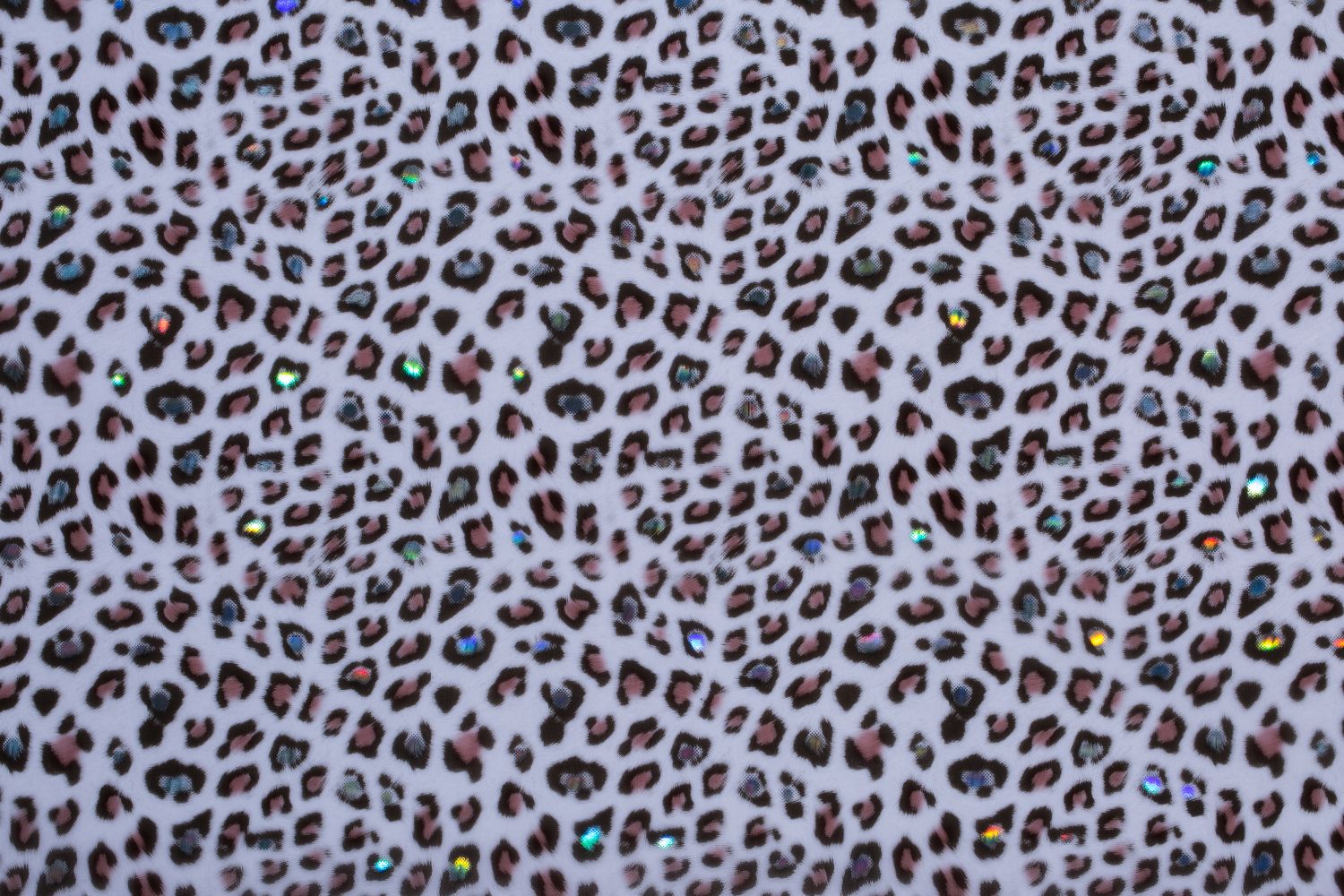
Foil on a stretch knit rarely fails because the metallic layer is too weak; it fails because the adhesive and the foil are asked to behave like rigid plates on a surface that refuses to stay still. When the base contains elastane or a high-twist yarn, the finish has to be broken into smaller islands, fine linear marks, or cracked textures that open and close with the fabric instead of resisting it. Lowering the cure temperature slightly and choosing a softer resin keeps the edges from lifting after repeated wear.
Sheer bases add another constraint: the foil should not fill the open weave or turn the hand stiff. A low-viscosity adhesive printed only where the metallic effect belongs leaves the surrounding fibres free to drape. Recycled blends complicate this further because shorter fibre lengths and occasional surface irregularities create uneven grab. A light surface smoothing pass, followed by a flexible foil and a gentle lay-down pressure, keeps the shine intact without hiding the raw, slightly irregular character of the recycled yarn.
The Factory-Level Choices That Shape a Season’s Textile Palette
Long before a designer pins a swatch to a board, dye technicians inside the mill are making quiet decisions that narrow what a season can actually look like. Water hardness, fiber blends, batch size, and even the age of a dye bath shift how a shade lands on fabric, which is why the same Pantone reference can feel completely different from one factory to the next.
Color matching at scale is less about inspiration and more about repeatability. A lab dip might hold a dusty lavender beautifully in a fifty-gram beaker, but reproducing that tone across twelve hundred kilos of cotton jersey means adjusting for migration, pH drift, and drying speed. Mills often steer designers toward a working palette of colors they know they can run cleanly, which quietly edits the season before it reaches the rack.
Finishing choices add another layer. Enzyme washes, resin treatments, and heat settings can mute or deepen a dyed surface, pulling a warm ochre toward mustard or a soft blue toward slate. These factory-level variables, rarely visible in a lookbook, are what give a season's palette its boundaries and its texture.
How Short Runs Make Experimental Textiles More Practical
Experimental fabrics often fail in ways that only become visible after washing, stretching, or a few weeks on a hanger. Short runs let a studio commit to fifty or eighty meters instead of several thousand, so a warped selvedge or a dye that crocks badly doesn't turn into an expensive warehouse problem. That smaller exposure makes it easier to work with irregular yarns, plant-based finishes, or hand-guided printing techniques that factories normally reject.
The practical benefit shows up most clearly in feedback loops. A designer can send twelve skirts or a few dozen scarves to a handful of shops, listen to what comes back about pilling or stiffness, and then tweak the weave or swap the backing before the next run. Testing at this scale feels less like a failed production order and more like a normal part of material development.
On the manufacturing side, short runs also fit better into real schedules. A mill can slot a compact trial between two larger orders without tearing down a whole line, which keeps the economics workable for both sides. Once a textile proves itself in actual use, scaling up becomes a decision based on evidence rather than a gamble taken at the sampling stage.
New Color Directions That Start at the Foil Stage
Foil has long been treated as a reflective finish, but a growing number of print and packaging projects now use it as the actual color foundation. Translucent ink printed over silver foil shifts the base into mint, lilac, or steel blue without losing the metallic depth underneath. The result is a color that appears to move as light hits the surface, rather than a flat match to a swatch.
Tinted and pearl foils are changing the conversation earlier in production. Instead of asking the foil to imitate gold or copper, designers are selecting pale peach, sage, or frosted violet foils and then adjusting overprint inks to dull or intensify the tone. On uncoated stock, a muted bronze foil under a thin layer of slate-gray ink can read as aged metal, while the same combination on coated board feels more electric.
Some of the most distinctive directions come from layering two foil pulls or pairing foil with low-gloss varnish. A warm champagne foil under a cool translucent blue creates a smoky, dimensional gray that would be difficult to achieve with ink alone. Since the final color depends on foil reflectivity, press pressure, and ink density, suppliers are now locking in drawdowns at the foil stage so the approved shade does not drift by the time it reaches the finished sheet.
Where Low-Waste Hot Stamping Methods Are Heading Next
The next wave of low-waste hot stamping is moving past incremental tweaks toward a full rethink of how heat, pressure, and foil interact. Instead of running oversized sheets through fixed cycles, newer lines are adopting segmented heating zones that only activate where the die actually makes contact. This cuts idle energy draw and reduces the amount of carrier film that gets scorched without transferring. Operators who used to accept a 12–15% foil waste rate are now seeing that number drop below 7% on mid-size runs, simply because the machine stops cooking unused areas of the web.
A quieter shift is happening around reclaiming the leftover foil skeleton. Traditionally, the polyester carrier and residual metallic layer were treated as mixed waste and sent straight to landfill or incineration. A handful of converters are now separating the carrier from the un-transferred coating, then feeding the clean polyester back into lower-grade film extrusion. It is not a perfect loop yet, but the economics are starting to work when foil prices spike. The hold-up is contamination: adhesive residue and release agents make the recycled polymer brittle if not washed properly. Early adopters are building in wash lines that run at low temperature, which preserves the polymer chain length and lets the reclaimed material back into non-decorative layers.
Looking forward, the more interesting experiments involve replacing the carrier entirely. Some tooling shops are testing direct-transfer systems where a thin metallic layer is applied via a reusable belt, eliminating the single-use polyester web altogether. If that approach matures, the waste profile changes from continuous foil waste to occasional belt refurbishment. The cost per impression is not yet stable, but the direction is clear: the carriers, the heat patterns, and the reclaim loops are all being redesigned around the idea that waste is a design flaw rather than an unavoidable byproduct.
FAQ
Many mills in Zhejiang and Guangdong have moved beyond basic metallic finishes. They now combine micro-embossing, holographic layers and matte-gloss contrasts in single passes, which gives designers much finer control over light and texture than standard foils.
Their in-house sampling cycles are often under 72 hours. Designers can test limited runs before committing, so patterns that used to look risky on paper now move into small-batch production quickly, shifting the trend cycle from seasonal to near real-time.
Performance wear, evening fabrics and denim touches have seen the most change. Stretch-compatible foils and low-temperature adhesives allow foil to sit on knits and synthetic blends without cracking, opening up applications that were previously impractical.
Yes. Water-based release layers and reduced-carrier polyester films are becoming more common. Some factories now offer recycled content foils and reclaim edge trim during slitting, which lowers both waste and the carbon footprint per roll.
Ask for wash-fastness data on the actual fabric, not just a generic spec sheet. Also check color consistency across batches, minimum order flexibility and whether the supplier can adjust adhesive chemistry for different fiber blends.
Typically a brand sends a texture or color reference, and the factory adapts the lacquer, pigment and embossing pattern. Revisions often happen digitally first. Once approved, a pilot run of a few hundred meters lets the design team validate the effect before scaling.
There is a move toward subtle interference colors and burnished antique finishes rather than full mirror shine. Designers are also pairing foil with tonal embroidery and laser-cut layers, using the material as a highlight instead of the main statement.
More than before. Many factories have lowered minimums and offer shared development programs. While fully custom formulations still require volume, small studios can often choose from existing libraries and request slight color or pattern adjustments without massive commitments.
Conclusion
Metallic detailing no longer sits only on eveningwear or costume pieces. A growing number of suppliers in China are adjusting foil weight, adhesion temperature, and release layers so that soft gold, copper, and pewter effects can survive repeated washing on shirting, lightweight knits, and casual outerwear. The shift is less about making fabric shiny and more about building subtle depth into everyday surfaces. At the same time, mills are asking for foils that move with the cloth rather than stiffening it, which means new formulations have to tolerate stretch recovery, fine sheers, and the uneven fiber structure of recycled polyester or cotton blends. These choices happen well before a designer names a trend; the available finishes, color ranges, and minimums quietly set the boundaries for what a season can look like.
Short-run production has changed how experimental textiles reach the market. Instead of committing to large yardage, studios can test a pearlescent tint or a cracked-ice emboss on a few hundred meters, gather feedback, and refine the effect without heavy inventory risk. That flexibility has made foil itself a starting point for color, with slightly oxidized silvers, warm graphite, and iridescent blues appearing earlier in development than they once did. Low-waste methods are following the same route: narrower web widths, water-based primers, and targeted application zones reduce excess while still delivering high-contrast surface interest. The momentum points toward a more responsive supply chain, where a factory in China does not simply execute a finished design but actively shapes the visual language of modern textiles.
Contact Us
Contact Person: Hsien
Email: [email protected]
Tel/WhatsApp: +86 57387072688
Website: https://www.gsfilm.cn