
Containerized Generator Factory: Modular Manufacturing for On-Demand Power
2026-09-01
The demand for reliable power has never been higher, yet traditional power plant construction remains slow, costly, and rigid. What if complete generator systems could be assembled in a controlled factory, shipped as containers, and operational within days? That's the core idea behind containerized generator factories—modular manufacturing for on-demand power. At the center of this innovation is DINGBO POWER, a brand pushing the boundaries of what's possible in decentralized energy. In the sections ahead, we'll unpack the mechanics, advantages, and real-world impact of this game-changing approach.
Moving Generator Assembly Off the Construction Site
Relocating the generator assembly away from the main work zone often starts with a careful assessment of cable runs, fuel line layouts, and exhaust routing. For smaller units, a flatbed trailer paired with a forklift does the job, but heavier industrial sets demand a crane and a pre-planned lift path that avoids overhead power lines and freshly poured foundations. We have seen crews mark the exact center of gravity on the skid, then use four corner shackles to keep the unit level during the swing. Once the generator is clear of the site, the immediate payoff is tangible: less noise bouncing off unfinished walls, no diesel fumes settling into stairwells, and a cleaner staging area for concrete trucks and rebar deliveries.
One practical method that has gained traction is the use of a temporary remote power compound just outside the site fence. Instead of hauling the generator miles away, the team sets it on compacted gravel pads, runs buried or overhead feeder cables through a lockable trench box, and installs a basic weather canopy. This keeps the unit accessible for daily fuel checks and oil sampling without blocking the main gate. The change in daily workflow is noticeable: electricians no longer shout over the engine hum, and the safety officer can walk the perimeter without stepping over extension cords. When a load bank test is scheduled, the remote location also allows the exhaust plume to dissipate without drifting across occupied trailers.
Moving the generator off the construction site is not a one-time task; it becomes a phased handoff. As the permanent electrical room takes shape, the team coordinates a reverse move, bringing the unit back only after ventilation louvers, fire-rated walls, and vibration isolators are in place. During that final relocation, the same lifting plan is reused, but now the path may include freshly landscaped medians or a finished loading dock. Some contractors choose to keep the generator permanently off-site in a fenced utility yard, especially on hospital or school projects where acoustic requirements are strict. In those cases, voltage drop calculations and larger conductors become the trade-off, and the original move turns out to be the first step in a permanent design decision.
Why Standardized Containers Turn Custom Power into a Repeatable Product
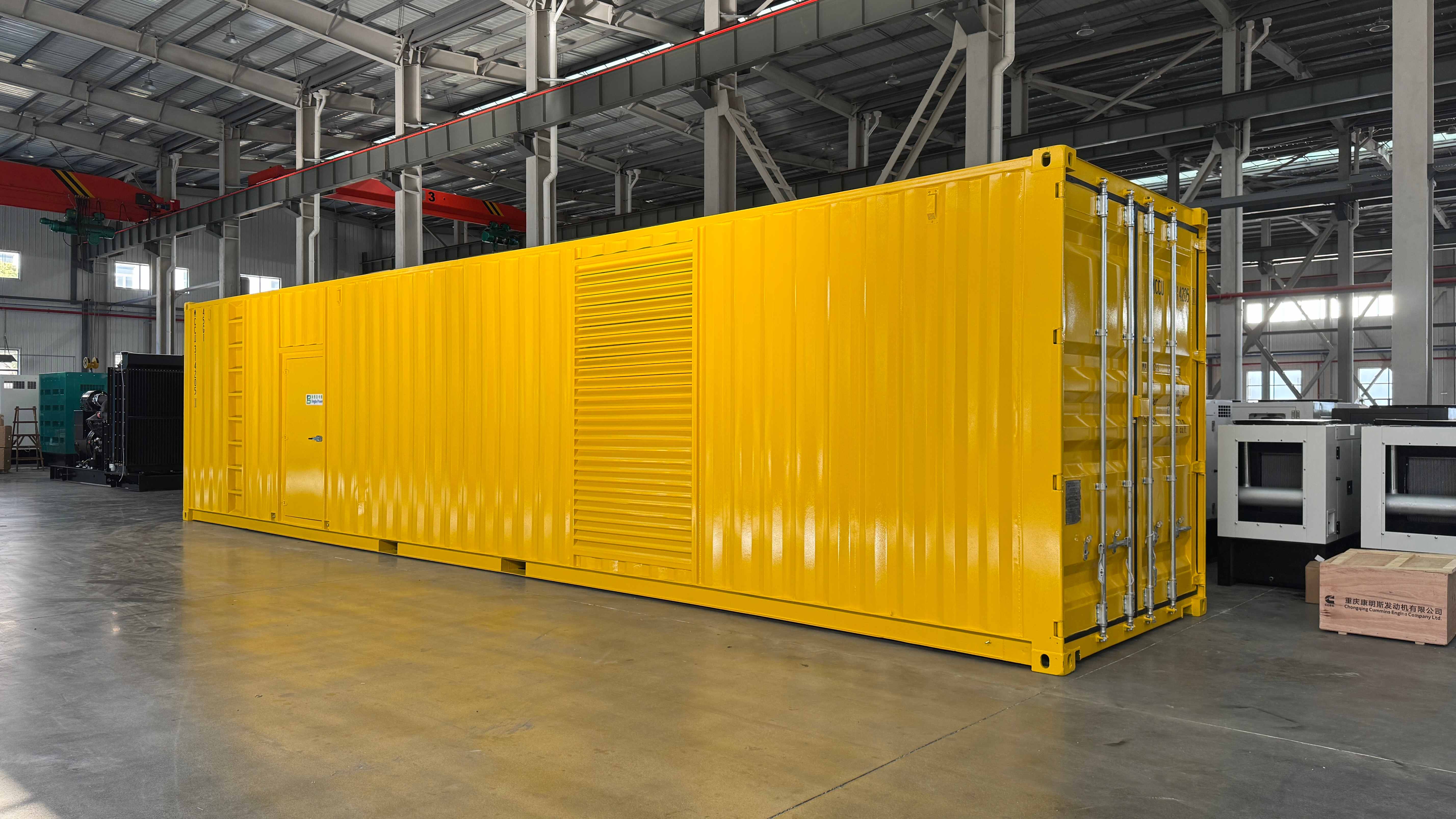
Custom power installations have traditionally been one-off engineering efforts. Each project started with a blank sheet, meaning unique layouts, hand-picked components, and extensive on-site wiring. The result was high cost, long lead times, and little reuse of previous work. Standardized containers flip that model by fixing the physical envelope, mounting patterns, and connection points up front. Engineers then fit the required power electronics, cooling, and controls into a known space instead of inventing everything from scratch.
When the container dimensions and internal interfaces stay consistent, the internal design becomes a module rather than a project. A power block built for one site can be reproduced for the next with minimal changes. Manufacturing benefits from repeatable assembly steps, quality checks become easier to run, and spare parts stay common across deployments. This turns what was once a bespoke engineering service into a catalog item with defined performance, clear ratings, and predictable behavior.
From the buyer's perspective, repeatability changes procurement and operations. Delivery times shrink because units can be built ahead of demand or assembled from proven subassemblies. Maintenance teams only need to learn one layout, and replacing a failed unit is a matter of swapping containers rather than troubleshooting a unique installation. Standardization also makes capacity planning simpler: adding another container adds a known amount of power, with no hidden integration surprises.
Shorter Lead Times from Indoor Assembly Lines
Keeping assembly indoors removes the biggest scheduling wildcard: the weather. When every station sits under the same roof, there is no waiting out rain delays, no frozen materials, and no reshuffling because a truck got stuck in traffic. Components flow from one bench to the next in a controlled rhythm, which means the date you are promised is the date the line actually hits.
This setup also tightens the feedback loop. If a bracket does not fit or a wiring harness runs short, the issue is caught at the next station rather than days later at an outside vendor. Rework happens on the spot, and the corrected part returns to the sequence without inflating the overall timeline. Shorter lead times here come less from rushing and more from simply removing the places where a schedule can quietly slip.
Handling Remote and Emergency Demand Without Field Fabrication
When a remote site loses a critical component, waiting for a custom fabrication shop to produce a replacement is rarely an option. Instead, operations that succeed under pressure design for modularity from the start. Standardized flanges, quick-connect couplings, and pre-drilled mounting plates allow crews to swap in off-the-shelf parts with only basic hand tools. This approach turns an emergency repair into a simple exchange, eliminating the need for welding, machining, or precise on-site fitting that remote locations simply cannot support.
A well-stocked mobile kit often makes the difference between a short shutdown and a prolonged outage. Rather than relying on field fabrication, teams carry a curated set of universal brackets, flexible hoses, and adjustable supports that cover most common failure modes. Pairing this with local supplier networks—even informal ones like nearby farms or construction sites—can source a workable substitute within hours. The key is to treat every component as replaceable by design, not as a one-off that requires bespoke craftsmanship.
Remote technical support has also evolved to reduce the need for physical fabrication. Video calls and augmented reality overlays let a specialist guide an on-site worker through safe, temporary modifications using materials already at hand, such as clamping a cracked pipe or shimming a misaligned pump. By designing systems with tolerance for field adjustments and providing clear, visual troubleshooting guides, companies can handle urgent demand without ever firing up a welder or lathe on location.
Tighter Quality Control When Weather Is Not a Variable
In climate-controlled production spaces, the absence of weather-driven shifts in temperature and humidity means you can hold parts to much narrower tolerances without worrying about thermal expansion or moisture absorption. A machined component that might have to allow for a few microns of drift in an outdoor setting can instead be specified to near-perfect consistency, because the ambient conditions stay locked within a tight band. That consistency lets QA teams reject anything that deviates even slightly from the target, rather than accepting a wider range simply because the environment might have caused it.
This tighter grip on quality shows up most clearly in electronics assembly and pharmaceutical packaging, where even a small condensation event or static charge from dry air could ruin a batch. When weather is removed from the equation, the QC checklist can focus entirely on machine calibration, material handling, and operator technique. Inspections become more frequent and more granular, not because the product is harder to make but because the process is so predictable that any outlier stands out immediately.
It also changes how teams think about failure analysis. Without seasonal weather swings to blame, a defect almost always traces back to a controllable factor: a worn tool, a mislabeled reagent, a skipped step. That clarity forces a culture of accountability where quality is expected on every single run, not just on days when the weather cooperates.
Scaling Capacity by Adding Modules, Not Rebuilding Infrastructure
Instead of expanding capacity through costly, time-consuming infrastructure overhauls, modular design lets you grow by simply attaching new units. Each new module inherits the same standards and interfaces as the existing ones, so scaling becomes a matter of plugging in another block rather than tearing down walls or rewiring from scratch. This approach preserves your initial investment and keeps downtime to a minimum.
The real advantage shows up in how quickly you can respond to demand. When traffic spikes or workloads shift, you don't need to redesign the foundation—you just add the next module and let it take on the extra load. Because each piece is independent yet compatible, you can scale specific functions without forcing the whole system through a risky migration.
Over time, this modular strategy changes how teams think about growth. Instead of dreading the next capacity upgrade as a multi-quarter project, they see it as a routine addition that fits into existing operations. The result is a system that evolves in small, manageable steps, staying aligned with actual needs rather than overbuilt for a future that may never arrive.
FAQ
It is a portable production line packed into standard shipping containers, where generator sets are assembled, tested, and shipped directly from the site. Instead of building a permanent plant, you get a fully functional manufacturing unit that can be relocated as power demand shifts.
Modular lines break assembly into repeatable stations inside containers. Because each station is pre-tuned for a specific task, workers can swap modules instead of retooling an entire floor. That compresses setup from months to weeks and lets you ship a generator within days of final order.
Mining camps, disaster relief teams, data centers racing to add capacity, and remote construction sites see the biggest gains. They often need power before permanent infrastructure exists, and a containerized factory can produce units near the point of use, cutting freight and idle time.
Yes, when the process controls are right. Each container acts as a clean room with fixed torque tools, automated test benches, and calibrated sensors. Because conditions repeat from container to container, you reduce variance and catch defects before the unit leaves the dock.
You can add capacity by stacking more containers, move production closer to active projects, or switch output from small rental gensets to larger standby units by changing the internal modules. A brick-and-mortar plant cannot be reconfigured that quickly without major downtime.
Instead of manufacturing in one country and shipping heavy generators across borders, you ship compact containers once, then produce generators near the customer. This avoids multiple handling fees, import duties on finished goods, and long ocean transit delays.
Operators need basic assembly skills plus one or two days on the specific torque and test software. Since every container uses the same interface and color-coded stations, a small crew can manage multiple lines after a short orientation. No specialized factory engineering background is required.
The main constraints are space and power demand for the line itself. Containers limit the size of generator frames you can build, so very large utility-scale units still need conventional halls. Also, if you need high-volume output, the modular approach works best when you add several containers in parallel rather than trying to push one line beyond its rated pace.
Conclusion
The containerized generator factory shifts power system assembly from open-air construction sites into repeatable, factory-controlled production lines. Standardized shipping containers become the chassis for complete generator sets, so what used to be a custom site-built project can be replicated, tested, and shipped as a finished product. This approach cuts lead times because indoor assembly lines operate without weather interruptions, and components move through predictable stations rather than waiting for on-site crane and labor schedules. For remote or emergency applications, the container arrives ready to connect, eliminating the need for field fabrication or specialized crews that are often unavailable at short notice. Quality control improves when every unit is built under the same roof, with torque checks, alignment, and electrical testing performed before dispatch instead of being improvised outdoors.
Because each container is a standardized module, capacity can be expanded by adding more units in parallel rather than modifying or rebuilding an existing powerhouse. This modular logic suits temporary sites, mining camps, disaster response, or grid support where demand appears quickly and may change over time. The generator inside is pre-installed, wired, and load-bank tested, so commissioning on location becomes a matter of fuel connection and breaker closure. By treating generation as a manufactured product rather than a construction task, operators gain shorter schedules, tighter tolerances, and a simpler path to scale—container by container.
Contact Us
Contact Person: Rita
Email: [email protected]
Tel/WhatsApp: +8613481024441
Website: https://www.dbdieselgenerator.com/