

Custom Handheld Explosion-Proof Searchlight Features That Improve Hazardous Area Visibility
2026-11-24
When a routine inspection turns into an emergency at a chemical plant or a flooded substation, the last thing any crew needs is a searchlight that fails in the middle of a volatile atmosphere. Standard flashlights flicker, overheat, or simply can't punch through smoke and mist. That's why the new handheld explosion-proof searchlights from Jianghe Flood Prevention are built differently—not as an incremental upgrade, but as a complete rethink of what portable illumination should do in hazardous areas. From beam geometry to thermal management, every detail is engineered to keep visibility sharp when the environment does its best to hide the next hazard. Here are the features that actually matter when the air itself is a risk.
Aimed Light, Not Just a Bright Spot in the Dark
Most lighting stops at making a space visible. But a fixture that simply throws brightness into a room often creates glare, flatness, and visual noise. Aimed light works differently. It starts with a reason: to pull a texture forward, to guide the eye toward a doorway, to separate the reading chair from the surrounding shadow. The beam has intention, and that intention shapes the room even before the switch is flipped.
Angle matters more than wattage. A narrow pool of light grazing a brick wall reveals depth that a ceiling fixture would wash away. Light placed low and directed across a path makes the floor feel safer without blinding anyone standing nearby. The difference is not in how much light is produced, but in where it lands, what it misses, and where the edges fall. Shadows stop being an absence and start working as part of the composition.
This approach treats darkness as material, not as a problem. Instead of erasing every shadow, aimed light leaves room for contrast, privacy, and pause. A hallway may have only three small beams, yet it reads as clearer than a space flooded with uniform glow. That is the shift: from filling a room with light to placing light where it can do something useful, expressive, and calm.
Sealed Housings That Keep Vapors Out and Impact Away
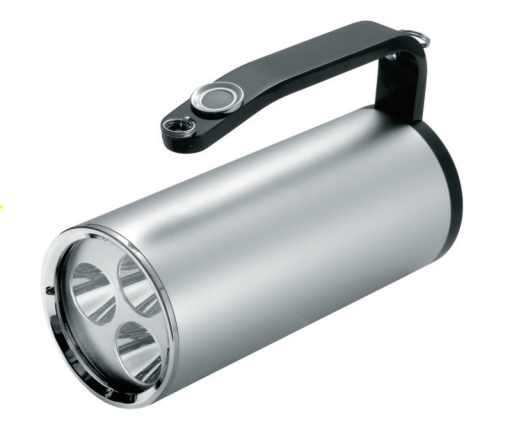
The housing relies on a continuous compression path rather than a single gasket line. Mating surfaces are machined flat enough that the seal material fills microscopic valleys, while captive fasteners keep pressure even around the entire perimeter. This stops solvent vapors, salt mist, and cleaning chemicals from creeping into the enclosure as temperatures shift and internal air pressure breathes.
Impact resistance is treated as a sealing problem too. A hard outer shell can survive a blow, but if it flexes far enough to break the gasket contact, vapor enters later. The body uses ribbed walls and internal standoffs so a strike deforms the outer surface locally without transferring the load to the seal face.
In practice, the difference shows up in places like food-processing lines and outdoor analyzer cabinets. Enclosures are hosed down, knocked by carts, and left in humid air for years, yet the terminals inside stay dry. The seals are not add-on features; they are part of the structural geometry, which is why the housing stays tight long after a simple gasketed box would have started pulling in vapors.
Battery Choices Sized to the Job, Not the Brochure
A forklift running two shifts a day has little in common with a pontoon boat battery that only wakes up on weekends. Yet the same spec-sheet bravado gets applied to both. The amp-hour figure on the label can be impressive without reflecting how deeply the battery will be discharged, how quickly it needs to recover, or whether the tray can even handle the weight. Start with the work cycle, then let the chemistry and capacity follow.
Oversizing is another brochure-driven habit. A battery bank that is too large for occasional use will spend most of its life undercharged or sitting at partial state, which ages lead-acid faster than hard work ever could. In those cases, a smaller lithium pack with the right battery management system often fits better, as long as it can handle the brief voltage sag from a high-draw starter or hydraulic pump.
Pay attention to where the battery actually lives. Cold machinery sheds, hot engine bays, constant vibration, and short lunch-break charging windows all shape performance more than a headline cycle-life claim. When the choice matches the daily duty instead of the brochure, the battery stops being a talking point and just does the job.
Handheld Ergonomics That Survive Gloved Hands and Long Nights
Most rugged handhelds feel like they were designed by someone who's never actually worn a pair of insulated work gloves. The buttons sit too close together, the touchscreen ignores anything but bare skin, and the grip turns slippery the moment your hands start sweating inside nitrile or leather. That's the first thing you notice here: the controls are spaced enough for a gloved thumb to land without clipping the neighboring key, and the screen responds to pressure rather than just capacitance, so a wet or dusty glove doesn't break the flow of a twelve-hour shift.
The edges aren't rounded for a showroom photo; they're contoured around the natural curl of a hand that's been holding the device since before sunset. There's a subtle ridge on the back that lets your fingers find the volume and scan keys without looking, which matters when your only light is a headlamp bouncing off steel racks. Even the wrist strap anchor sits higher than usual, keeping the unit from swinging into your knuckles when you reach for a clipboard or a crate label.
By hour nine, small annoyances become reasons people throw hardware across the loading dock. That's why the battery latch, the charging port cover, and the side buttons all give a tactile snap rather than a soft mush. Nothing here asks you to remove your gloves, slow down, or change your grip just to finish a scan. It's the kind of design choice that doesn't show up in a spec sheet, but you feel it in your forearm when the night finally ends.
Heat Dissipation That Prevents Sudden Dimming or Shutdown
Most sudden dimming issues trace back to one overlooked detail: heat soaking into the LED board and driver. Instead of relying on a single thick heatsink, the housing spreads thermal load across a ribbed aluminum body and a small vented rear chamber. Warm air moves away from the diodes continuously, so the junction temperature stays below the point where the control circuit starts dialing back current. The result is steady output even after hours of use.
The shutdown protection is just as important. Rather than letting the fixture cook until a thermal fuse trips, a soft limit ramps cooling early. If ambient temperature rises—like in a recessed ceiling or enclosed shade—the driver holds back only a fraction of power, never enough to be noticeable. This keeps the light from cycling off abruptly and gives the housing time to recover.
Visibility That Cuts Through Mist, Smoke, and Peripheral Clutter
Mist and smoke do more than dim a scene—they scatter light, flatten depth, and smear the edges of objects. This visibility system treats that as a core optical problem rather than an afterthought. A narrower spectral response and controlled exposure keep shapes intact when the air turns milky, so the image holds its structure instead of collapsing into noisy gray. What comes through is not a harsh, over-boosted picture but a field of view where distance and separation remain readable.
Peripheral clutter gets the same restrained handling. Rather than forcing every branch, wire, or heat trace at the frame edge into sharp relief, contrast is balanced so the center of attention stays anchored while the surroundings remain calm. The result is a view that feels less busy and more natural—especially useful when tracking movement along a treeline or picking out a vehicle idling behind drifting smoke.
That balance proves itself most in transitions: entering a fog bank, crossing a smoke plume, or moving from open ground into dense cover. The image does not blank out or wait for a mode change. Edges stay intact, depth holds, and the scene remains usable just long enough to make a decision before the air clears.
FAQ
A fixed floodlight covers a set area, but crews move through vessels, trenches, and pipe racks where shadows shift. A handheld light can be aimed exactly where a valve tag, drain line, or weld seam needs to be checked. When it is explosion-proof and built for one-hand use, it brings the light to the work without running temporary cables or adding another electrical permit.
A tight beam can create glare off metal walls, while a pure flood may not reach far enough into a long tank. The most useful lights offer a blend or an adjustable spot-to-flood function. A warmer tint also cuts through dust and vapor better than a harsh blue-white beam, which improves depth perception when surfaces are wet or reflective.
A scratched or fogged lens is often the reason a light gets replaced before the LED fails. In hazardous areas, drops onto grating, contact with solvents, and rapid temperature changes are normal. A borosilicate glass or coated polycarbonate lens with a sealed bezel keeps the beam quality intact and prevents internal condensation that scatters light.
High output does not help if the battery cannot be safely recharged or swapped during a shift. A removable pack with a charge indicator lets crews carry a spare and swap it in seconds. The charging dock should stay outside the classified area, so a battery that slides out without tools becomes a practical advantage rather than a convenience.
A single high mode can blind a partner in a confined tank or drain the battery too quickly. A momentary mode is useful for quick checks, a medium setting can handle general work, and a strobe or signaling mode can mark a location. Locking out accidental activation also prevents the light from turning on inside a bag and creating heat.
Yes, because a heavy, front-heavy light is more likely to be dropped from a ladder or catwalk. A balanced body with a comfortable grip allows one-hand operation while the other hand holds a rail. Some custom designs move the battery toward the rear or add a wrist strap and a wide tail switch so the light does not have to be regripped constantly.
Anodized aluminum can corrode if the finish is damaged, so many crews prefer a hard-anodized or epoxy-coated surface. Stainless steel or marine-grade alloys are other options where corrosion is aggressive. The finish is not cosmetic here; it protects the threads and flame path from pitting, which could weaken the explosion-proof integrity over time.
They are not interchangeable in every location. IECEx is widely accepted for international projects, ATEX is required for much of Europe, and North America may use Class/Division or Zone markings depending on the facility. A custom light should be supplied with the specific marking and documentation that matches the site inspection requirements, not just a generic certificate.
Conclusion
A hazardous-area searchlight earns its keep long before the beam switches on. The most useful custom builds pair a tightly focused hotspot with enough spill to read valve tags and walkways without blinding the operator, so the light lands where the job actually happens instead of scattering into the dark. That optical aim is backed by housings that do two jobs at once: gasketed, impact-rated enclosures keep flammable vapors from reaching internal contacts, and they shrug off drops against steel grating. Battery sizing matters just as much, with compact packs for short inspections and larger cells for full-shift work, avoiding the dead weight of a one-size-fits-all power source.
In the hand, controls and barrel shapes need to work with thick gloves and cold fingers, not just look right in a product photo. Generous switch spacing, textured grips, and a balance point that reduces wrist fatigue keep the light steady through long night rounds. Heat management also changes how a light behaves after thirty minutes; well-placed thermal paths and driver controls prevent the sudden step-down that leaves a crew in the dark. Finally, beam tint and focus are tuned to slice through mist, smoke, and background clutter, pulling useful contrast out of a noisy environment so operators notice a flange leak or a tripping hazard before it becomes an incident.
Contact Us
Contact Person: Kristin Zhang
Email: [email protected]
Tel/WhatsApp: +8615366239752
Website: https://www.jianghecn.com/