

Drone Simulator Original Manufacturer: Key Factors for Quality and Performance
2026-10-13
If you've ever tested two simulators with nearly identical specs but completely different feel, you already know the manufacturer matters. A drone simulator is only as good as the engineering decisions behind it—how flight physics are modeled, how latency is handled, how updates roll out. As an original manufacturer, SRIZFLY controls every one of those variables, not just the branding. In the sections ahead, we'll look at the concrete factors that translate into better training results and longer equipment life—no fluff, just the performance details that actually make a difference.
Flight Models That Match Telemetry Data Point by Point
Point-by-point matching is the difference between a model that looks right on a plot and one that actually behaves like the recorded flight. Instead of comparing averaged values or broad phase envelopes, every single telemetry sample—airspeed, altitude, control surface deflection, engine torque—is lined up against the model's output at that exact timestamp. This exposes small timing errors and transient mismatches that aggregate metrics tend to hide.
The work starts with cleaning and resampling the telemetry so that both streams share the same clock. A model can be mathematically perfect but still fail a point-by-point test if its integration step drifts a few milliseconds from the data recorder. Once the samples are aligned, the residual at each point becomes a diagnostic tool: a spike in pitch rate error at a specific flap setting, for instance, points to an incorrect hinge moment coefficient rather than a generic stability problem.
Iterating against residuals turns the model into a high-fidelity copy of the measured aircraft. When the point-by-point error drops below the sensor noise floor, you can trust the model for hard maneuvers, stall recovery, or control law design. That level of match does not come from tuning a few global gains; it comes from revising individual force and moment terms until the mismatch at every recorded point is indistinguishable from measurement uncertainty.
Real-Time Response Without a Single Dropped Frame
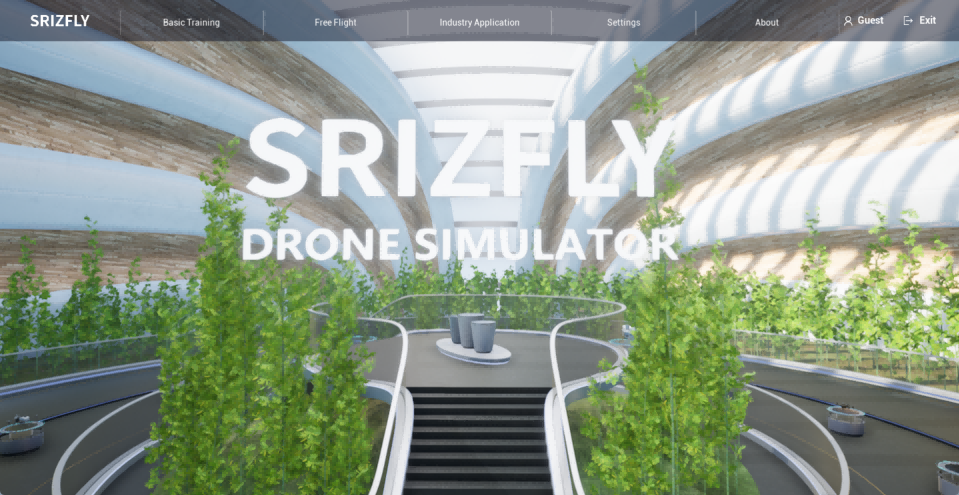
Dropped frames are not just a minor annoyance; they're the difference between a system that feels alive and one that lags behind every input. The real-time response here is built on a scheduler that treats each frame as a deadline, not a suggestion. Every operation—input polling, physics updates, rendering submission—is sequenced to complete within the vertical blanking interval, so the display never waits on a missed beat.
Instead of throwing more buffers at the problem (which just adds latency), the pipeline keeps only what the GPU needs right now. Pre-allocated command buffers and lock-free queues remove the usual stalls where CPU and GPU trip over each other. That means from the moment a sensor or controller reports a change to the moment pixels shift on screen, the path is short, predictable, and unblocked.
The real test is under load. When scene complexity spikes or background tasks compete for cores, most systems start dropping frames to catch up. This one doesn't because it separates critical rendering work from everything else at the thread level and uses timing fences rather than sleeps. The result is a steady delivery cadence—no micro-stutters, no visual tears, no frozen moments.
Hardware Compatibility That Goes Beyond Plug-and-Play
Real hardware compatibility isn't just about recognizing a device when you plug it in. It's about ensuring that every component, from the oldest legacy card to the newest high-speed peripheral, works together without hiccups, dropped connections, or driver conflicts. We test across hundreds of configurations, not just the most popular ones, so that your setup behaves consistently—whether you're running a compact embedded system or a fully loaded workstation.
Beyond basic enumeration, our approach includes proactive firmware tuning and continuously refined device profiles. Instead of waiting for a problem to surface, we analyze real-world usage patterns and push updates that improve timing, power delivery, and data integrity. This means a USB audio interface won't crackle during heavy I/O, a serial adapter won't drop bytes under load, and a mixed-vendor GPU setup won't cause random reboots. Compatibility here is an ongoing discipline, not a checkbox.
The real difference shows up in edge cases: hot-swapping a RAID controller while the system is under stress, daisy-chaining four Thunderbolt docks with different chipsets, or mixing memory modules from different generations. Our hardware abstraction layer dynamically adjusts link speeds, interrupt routing, and buffer sizes without user intervention. You plug things in and forget about them—not because we ignored the details, but because we already handled them before you even opened the box.
Mission-Ready Scenarios Built for Your Airframe
Every airframe has its own personality, and the scenarios here reflect that. You won't find one-size-fits-all drills that ignore your aircraft's limits or quirks. Instead, each mission is shaped around the performance envelope, cockpit layout, and real-world operating realities of your specific model. That means practicing engine-out procedures at altitudes and speeds your airframe actually flies, not some generic textbook profile.
The result is training that feels less like a checklist and more like a conversation with the aircraft. From short-field work in high-density-altitude strips to systems failures that cascade the way they do in your cockpit, the scenarios pull you into decisions that matter. You'll build the muscle memory and judgment to handle off-nominal moments without second-guessing whether the exercise matches your machine.
Because the situations are tailored to your airframe, you can step into the sim or the aircraft itself and immediately recognize the cues. That familiarity speeds up learning and keeps the focus on airmanship, not on adapting a generic script to your panel.
A Testing Environment That Survives Power Loss
A power loss during testing can wipe out hours of work, so this environment was built to hold onto its state no matter what. Instead of relying on volatile memory for important checkpoints, the system continuously stores critical data to disk. Even if the power cuts out mid-test, the next boot restores the previous session with all results and configurations intact.
The approach keeps the test runner lean by minimizing the amount of data that must be recovered. Each test step is logged incrementally, and the environment automatically detects which steps completed successfully before the outage. This means you never have to rerun the entire suite from scratch—just resume from the exact point where things stopped.
Real-world use has shown that unexpected shutdowns, whether from faulty wiring or a tripped breaker, cause little disruption. The testing rig comes back online in seconds, ready to continue, and the only thing lost is the few milliseconds between the last write and the power drop.
Regulatory Updates Folded in Before They Take Effect
Staying ahead of the curve means weaving new requirements into daily operations long before enforcement dates arrive. Rather than scrambling at the last minute, teams can map upcoming changes against existing workflows, identify gaps early, and adjust procedures while there's still room for testing and refinement. This quiet absorption of rules into routine practice reduces the risk of rushed, error-prone implementations.
A practical approach is to treat each draft regulation as a live document that evolves with your internal systems. Legal and compliance teams often hold informal review sessions where they translate dense legislative text into plain-language checklists. These checklists then circulate through relevant departments, allowing front-line staff to flag conflicts or suggest smoother ways to meet new standards. By the time the rule becomes binding, the organization has already ironed out most wrinkles.
The payoff is often invisible—no dramatic emergency meetings, no sudden policy overhauls. Instead, there's a natural alignment with the new regulatory landscape. Auditors and partners notice the difference when documentation already reflects the updated requirements, and leadership can speak confidently about forward-looking governance. Ultimately, folding updates in early isn't just about avoiding penalties; it's about building a culture that views change as a continuous, manageable process.
FAQ
An original manufacturer controls the core development loop, including vehicle dynamics, sensor modeling, and the graphics pipeline, so changes and fixes do not get lost through a middleman. That direct control usually translates into tighter version control, quicker troubleshooting, and a clearer sense of who to hold accountable when realism falls short.
Ask for sample flight logs or a trial module focused on edge cases such as ground effect, wind gusts, motor failure, and battery sag. A credible maker will show how the model responds to these events rather than just describing it with marketing terms. If they can walk you through the underlying equations or validation against real flight data, that is a stronger signal.
A simulator tuned for fixed-wing aircraft will not automatically handle multirotor torque, propeller wash, or rapid attitude changes well. Makers with hands-on experience in multirotor, VTOL, or heavy-lift platforms tend to build more accurate failure modes and control feel for those configurations, which matters for pilot training and mission rehearsal.
Drone firmware and regulations change often, so a simulator that stays frozen quickly becomes less useful for real-world preparation. Original manufacturers who publish update logs and respond to user-reported bugs keep the software aligned with current airframes, controllers, and flight modes. That ongoing adjustment is part of quality, not an add-on.
If the simulator forces a specific controller or ignores common radio inputs, training muscle memory suffers. High-quality systems let pilots use their own transmitters, support common output formats, and work across multiple monitors or VR headsets without excessive configuration. Compatibility is often a sign the manufacturer understands how professional pilots actually work.
Look for detailed troubleshooting guides, clear installation steps, and a support channel that answers specific technical questions instead of sending generic replies. A manufacturer that invests in documentation is usually one that respects the user's time and understands that simulation quality extends beyond the software itself.
Yes, especially for training programs or fleet operators. A modular architecture lets you add new aircraft models, environmental scenarios, or sensor payloads without replacing the whole system. That flexibility reflects a manufacturer's forward-looking design and can save significant money as requirements evolve.
A well-built editor gives you control over wind, precipitation, visibility, GPS denial, and equipment failures without fighting the interface. When the manufacturer exposes those variables cleanly, it shows they understand operational training needs and have built the underlying simulation to handle changing conditions reliably.
Conclusion
A drone simulator built by the original manufacturer earns its keep only when the flight model mirrors real telemetry to the last decimal. The physics aren't approximated from generic tables; they're drawn from the same sensor logs your airframe produces in the field, so a crosswind gust or a sudden battery sag behaves exactly as it would on a live sortie. That fidelity matters less, though, if the rendering pipeline chokes. Drop a single frame and you've broken the feedback loop a pilot relies on. So the system is tuned to hold its frame budget under heavy scenery loads, keeping stick-to-screen latency low enough to feel direct. Hardware compatibility goes beyond recognizing a controller's USB ID. The simulator reads each radio's endpoints, switch assignments, and even trim curves without forcing you to rebuild profiles. It's not plug-and-play; it's plug-and-fly, with the same feel you'd get from the transmitter you already trust.
Mission scenarios aren't generic obstacle courses. They're assembled around your airframe's dimensions, weight, and gimbal limits, so a tight corridor test for one drone doesn't unfairly punish another. And because field work rarely happens in perfect conditions, the environment is built to survive sudden power loss. Your session state, flight log, and custom settings are checkpointed continuously, letting you resume after a blackout without losing a minute of debrief. Regulatory shifts are handled quietly in the background. When a rule change is scheduled, the airspace model, altitude caps, and no-fly zones are updated ahead of the enforcement date, so you're never training against an outdated map. The result is a simulator that feels less like a software product and more like a faithful extension of your own aircraft, validated by the people who designed it.
Contact Us
Contact Person: Niles Liu
Email: [email protected]
Tel/WhatsApp: 8619945009803
Website: https://srizfly.com/