

Electrical Steel Factory: Innovations in Non Oriented Materials
2026-01-29
In the fast-evolving world of industrial materials, electrical steel stands as a cornerstone of modern technology, powering everything from electric vehicles to renewable energy systems. At the heart of this innovation lies the production of non-oriented materials, which are crucial for enhancing efficiency and performance in electrical applications. This blog delves into the cutting-edge advancements within electrical steel factories, exploring how these materials are revolutionizing industries and paving the way for a more sustainable future. As we uncover these innovations, we spotlight Jiangsu Baowu New Materials, a leader in driving progress with their pioneering approaches to non-oriented electrical steel solutions. Get ready to be inspired by the transformative impact of these materials on our technological landscape—read on to discover more.
Advancements in Non-Oriented Electrical Steel Manufacturing
In recent years, the production of non-oriented electrical steel has undergone significant transformations, driven by the increasing demand for energy-efficient motors and generators. Manufacturers have refined rolling and annealing processes to achieve more uniform grain structures, which is crucial for minimizing core losses in electrical devices. Innovations in alloy design, such as the strategic addition of silicon and aluminum, have further enhanced magnetic properties, allowing these steels to operate at higher frequencies with reduced energy waste. As industries push for greener technologies, these material improvements are pivotal in advancing applications from electric vehicles to industrial machinery, marking a notable shift toward more sustainable and high-performance electrical systems.
A key development in this field involves the adoption of advanced coating technologies that serve dual purposes: protecting the steel from corrosion and reducing eddy current losses during operation. These coatings are engineered to be thin yet durable, ensuring they don't interfere with the steel's magnetic permeability while enhancing durability in harsh environments. Additionally, real-time monitoring systems have been integrated into manufacturing lines, enabling precise control over parameters like temperature and cooling rates. This level of automation not only boosts consistency across batches but also allows for rapid adjustments based on specific customer requirements, making the production process more agile and responsive to market trends.
Looking ahead, the focus is shifting toward customization and scalability. Researchers are exploring techniques like additive manufacturing to create bespoke steel components with tailored magnetic characteristics, which could revolutionize how electrical machines are designed. Collaboration between material scientists and engineers is fostering breakthroughs in reducing iron loss at higher operating temperatures, opening doors for applications in renewable energy systems and advanced robotics. As these trends converge, the industry is poised to deliver steels that not only meet but exceed regulatory standards, underpinning a future where efficiency and innovation go hand in hand.
Enhancing Magnetic Properties for Efficient Energy Conversion
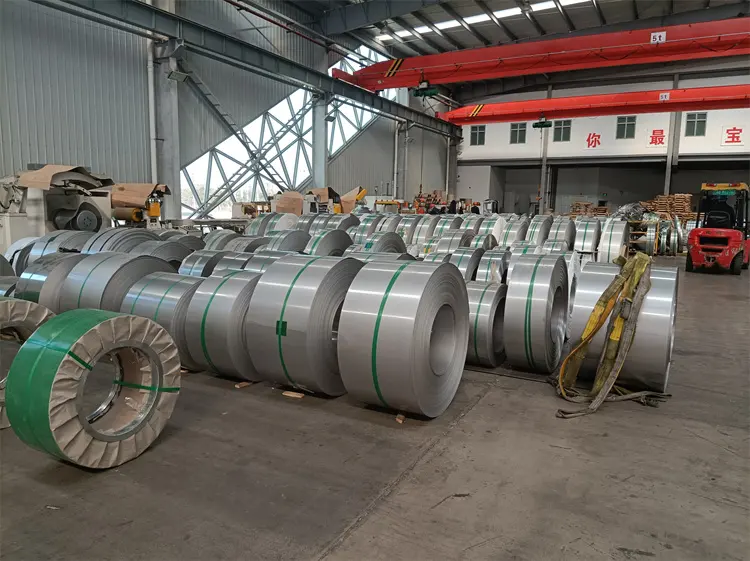
When we talk about boosting magnetic properties, it's not just about stronger magnets—it's about fine-tuning materials at the atomic level to slash energy losses in devices like transformers and electric motors. For instance, recent advancements in nanocrystalline alloys have shown that by tweaking grain boundaries, we can curb eddy currents that typically waste power as heat. This precision engineering means more electricity flows where it's needed, with less ending up as ambient warmth.
Beyond materials, innovative designs play a key role. Consider permanent magnets in wind turbines: optimizing their alignment and shape can capture more kinetic energy from breezes, converting it to electricity with fewer hiccups. It's a subtle dance between magnetism and mechanics, where even small improvements ripple into big gains in efficiency, making renewable sources more viable and cost-effective.
What sets this apart from generic tech talk is the focus on real-world trade-offs. Engineers aren't just maxing out magnetic strength; they're balancing it with factors like durability and temperature stability. In electric vehicles, for example, magnets that hold up under high heat ensure consistent performance without frequent replacements. This holistic approach turns abstract property enhancements into tangible benefits for everyday energy systems.
Innovative Coating Technologies for Improved Durability
In today's competitive manufacturing landscape, durability isn't just an added bonus—it's a critical demand. Innovative coating technologies are stepping up to meet this challenge, pushing the boundaries of protection and longevity. From aerospace to consumer electronics, these advancements are transforming surfaces to withstand extreme conditions, reduce wear, and extend product lifespans. By integrating smart materials and precision application methods, manufacturers can now offer solutions that not only enhance durability but also contribute to sustainability by minimizing replacement needs and material waste.
One standout approach involves nanotechnology-based coatings, which create ultra-thin, resilient layers that repel water, resist corrosion, and prevent scratches. For instance, ceramic-infused coatings can be applied to automotive parts, resulting in finishes that endure harsh weather and road debris without degrading. Similarly, self-healing polymers are gaining traction; these coatings can automatically repair minor cracks or abrasions, ensuring a continuous barrier against environmental damage. Such innovations are not merely incremental improvements but represent a leap forward in material science, enabling products to perform reliably in demanding environments, from industrial machinery to outdoor infrastructure.
Looking ahead, the convergence of these technologies with digital monitoring systems is setting new standards. Coatings embedded with sensors can provide real-time data on wear and tear, allowing for predictive maintenance and reducing unexpected failures. This proactive approach enhances durability beyond the physical layer, integrating intelligence to optimize performance over time. Whether it's for architectural facades or medical devices, these cutting-edge coatings are redefining what it means to build for the long haul, offering a blend of robustness and adaptability that was once thought impossible.
Sustainable Production Methods in Electrical Steel Factories
Electrical steel factories are increasingly turning to eco-conscious practices to cut waste and boost efficiency. Many plants now use closed-loop water systems that drastically reduce water consumption by recycling it within production cycles. This not only conserves a vital resource but also minimizes the release of contaminated water into the environment. Some facilities even harness solar or wind energy to power their operations, slashing greenhouse gas emissions from fossil fuels. By integrating smart sensors and automation, they optimize energy use during steel processing, avoiding unnecessary power drains that occur in traditional setups.
Beyond energy savings, these factories focus on raw material sustainability. Sourcing recycled scrap steel reduces the demand for iron ore mining and cuts down on the carbon footprint associated with transport and refining. Advanced techniques like continuous casting are employed to minimize material loss during steel formation, ensuring that every ton of steel produced yields maximum utility. Factories also implement strict waste management protocols, repurposing by-products like slag for construction materials instead of sending them to landfills. This approach transforms potential waste into valuable resources, aligning economic goals with environmental stewardship.
Innovation in production methods extends to employee training and community engagement. Workers are trained in sustainable practices, fostering a culture of responsibility that permeates daily operations. Some factories partner with local communities to monitor air and water quality, ensuring their activities don't harm surrounding ecosystems. By adopting these holistic strategies, electrical steel factories not only meet regulatory standards but also lead the industry toward a cleaner, more resilient future, setting a benchmark for others to follow.
Customized Alloy Designs for Diverse Industrial Applications
Picture an alloy tailored not just for a specific material, but for the exact demands of a high-performance automotive engine or a resilient aerospace component. In today's industrial landscape, off-the-shelf solutions often fall short, making customized alloy designs not just an option but a necessity. By tweaking elemental compositions—like adjusting nickel or chromium levels—manufacturers can craft alloys with unique properties, such as enhanced corrosion resistance for marine environments or superior heat tolerance for power generation turbines. This precision allows industries to push boundaries, improving efficiency and durability where generic metals might fail.
From the medical field to electronics, customized alloys are reshaping how we approach engineering challenges. In healthcare, biocompatible alloys are meticulously designed to integrate with human tissues, ensuring implants like joint replacements last longer without adverse reactions. Meanwhile, in consumer electronics, alloys with specific thermal and electrical properties are crafted to manage heat dissipation in compact devices, boosting performance without sacrificing size. These tailored solutions highlight the versatility of modern metallurgy, proving that a one-size-fits-all approach is increasingly obsolete in addressing the nuanced requirements of diverse sectors.
What sets these designs apart is the integration of advanced techniques like additive manufacturing and computational modeling, which enable rapid prototyping and fine-tuning. Engineers can now simulate how an alloy will behave under stress or extreme temperatures before it's even produced, reducing trial-and-error and accelerating development. This synergy of innovation not only fuels competitiveness but also drives sustainability, as optimized alloys often lead to lighter, more efficient products with reduced environmental impact. In essence, customized alloy designs are unlocking new potentials across industries, turning complex problems into tangible advancements.
Precision Processing Techniques for Superior Sheet Quality
When it comes to achieving top-tier sheet quality, precision processing isn't just an option—it's the backbone of consistent excellence. Imagine a high-stakes aerospace project where even the slightest material inconsistency could compromise safety. Here, techniques like CNC machining with adaptive control systems adjust feeds and speeds in real-time, compensating for material variations to maintain flawless dimensions. Waterjet cutting adds another layer, slicing through alloys without heat-induced warping, preserving the sheet's structural integrity. It's this meticulous approach that transforms raw stock into components that meet exacting specifications, ensuring every sheet performs predictably under pressure.
Beyond standard methods, innovative strategies like laser etching for surface texture analysis can elevate sheet quality from good to exceptional. In automotive manufacturing, for instance, sheets undergo non-contact measurements using 3D scanning post-processing to detect micro-imperfections invisible to the naked eye. Combined with automated deburring robots that smooth edges with micron-level accuracy, these techniques mitigate fatigue points and enhance durability. It's not merely about cutting—it's about refining every aspect to create sheets that not only fit perfectly but also endure longer in demanding applications.
To truly stand out, integrating smart monitoring via IoT sensors during processing allows for proactive quality control. Visualize a fabrication facility where sheets are tracked from cutting to finishing, with data analytics flagging deviations before they escalate. This holistic view, paired with techniques like cryogenic treatment to stabilize metal grains, results in sheets with superior flatness and resistance to corrosion. By merging traditional craftsmanship with tech-driven insights, these methods deliver sheets that consistently exceed expectations, proving that precision is the key to unmatched reliability and performance.
FAQ
Non-oriented electrical steel is essential because it offers isotropic magnetic properties, ensuring efficient performance in rotating machinery like motors and generators, which require consistent magnetic flux in all directions.
Recent advances include alloy optimization for reduced core loss, thinner gauge production to minimize eddy currents, and surface coating technologies that enhance insulation and durability, leading to significant energy savings.
Key challenges include achieving precise chemical composition control to optimize magnetic properties, maintaining uniformity in grain structure during rolling, and balancing production costs with environmental sustainability efforts.
A major innovation is the implementation of continuous casting and annealing processes, which streamline production, reduce defects, and improve the overall magnetic permeability and efficiency of the steel.
Non-oriented steel is generally more cost-effective and suitable for applications like electric motors where multidirectional magnetic fields are needed, whereas oriented steel, with its directional magnetic properties, is used in transformers but tends to be more expensive.
Sustainability is increasingly important, with factories adopting energy-efficient technologies, recycling scrap materials, and developing eco-friendly coatings to reduce environmental impact while enhancing product lifecycle.
Conclusion
The electrical steel industry has witnessed significant transformations through innovations in non-oriented materials, specifically in manufacturing processes that enhance energy efficiency and durability. Advancements in non-oriented electrical steel manufacturing have led to improved magnetic properties, enabling more effective energy conversion in various applications. These developments are complemented by innovative coating technologies that not only extend the material's lifespan but also contribute to sustainable production methods, reducing environmental impact while maintaining high performance standards.
Factories are increasingly adopting precision processing techniques to ensure superior sheet quality, which is critical for meeting the demands of diverse industrial applications. Customized alloy designs further allow for tailored solutions, optimizing electrical steel for specific uses without compromising on efficiency or durability. By integrating these innovations, the sector continues to push boundaries, offering robust and adaptable materials that support global energy efficiency goals while fostering a more sustainable manufacturing landscape.
Contact Us
Contact Person: Zoe Liang
Email: [email protected]
Tel/WhatsApp: 86 189 2128 6299
Website: https://www.baowuchina.com