

Forged Steel Ball Valve Factory Tour Highlights Precision Engineering and Reliable Flow Control
2026-11-27
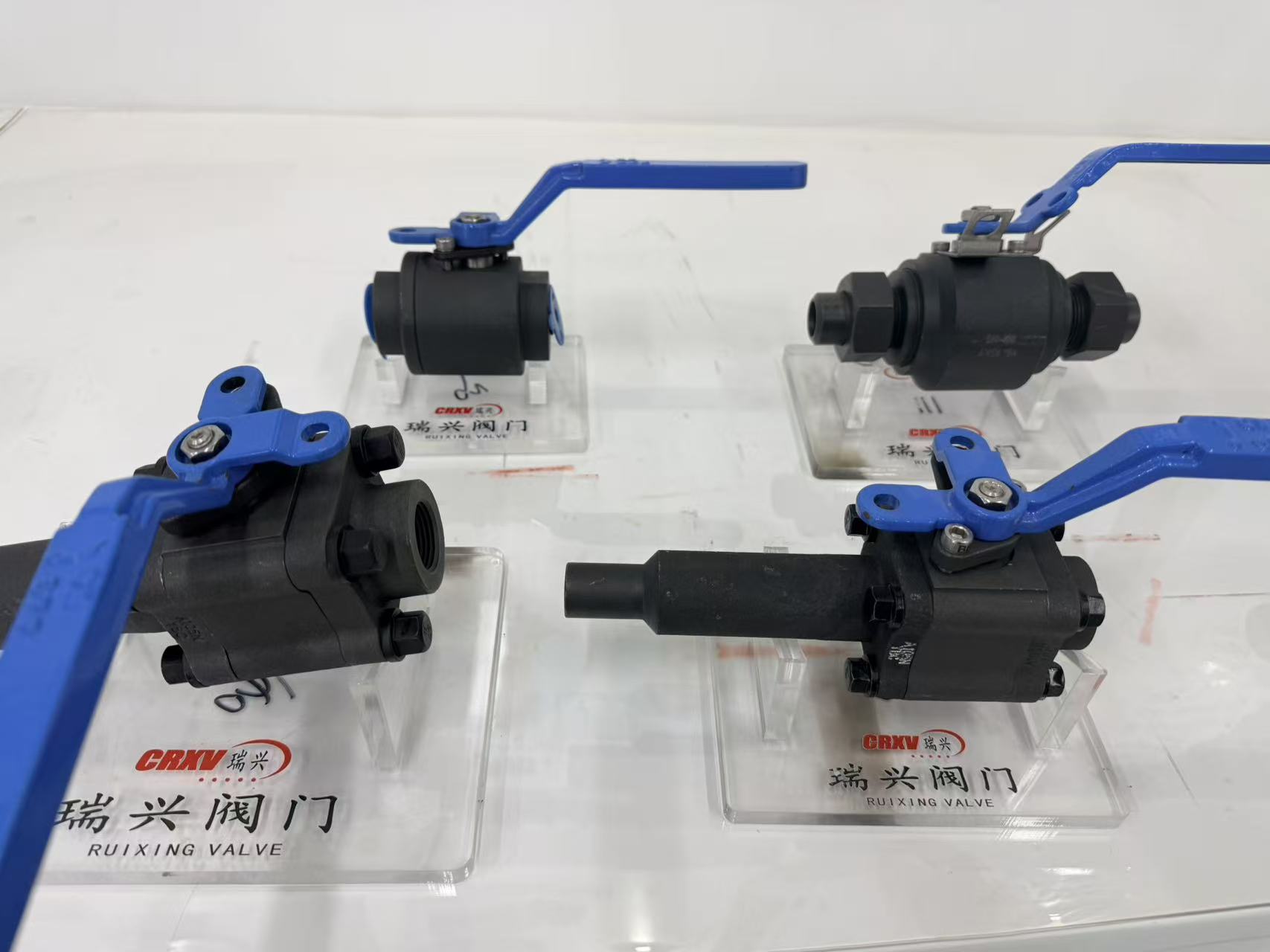
You do not really know a valve until you have seen the forging line that made it. On a recent walk through the CRXV facility, we watched forged steel ball valves move from rough stock to tested assemblies, with precision checks and flow-control validation at every step. That level of discipline rarely shows up in a brochure.
Where Raw Forged Steel Takes Its First Shape
Before a forged component earns its final shape, there is a moment of first contact that sets everything in motion. It happens at the hammer or press, where a heated billet sits against the lower die and the upper tool comes down with deliberate force. This is the point where the material stops being just a piece of stock and begins to flow into the cavity that defines its purpose. The scale, the slight unevenness of the surface, the way the metal starts to spread under pressure—all of it is part of that initial forming stage.
In most shops, this first hit is not about reaching finished dimensions. It is about moving enough material to fill the die without overstressing the grain structure. Operators watch the flash line form, adjust the number of blows, and gauge how the steel responds to temperature and tool alignment. A billet that is a few degrees too cold will show it immediately in the first impression. That early shaping, rough as it looks, is what later machining and heat treatment will refine, but the foundation is set right there.
The environment matters as much as the tooling. Forging hammers and mechanical presses each leave a different signature in those first deformations. A hammer’s repeated strikes produce a rhythm that lets the steel settle between blows, while a press applies a longer, more continuous squeeze. Neither approach works for every part, and the choice often comes down to the alloy, the shape, and how much reduction is needed in that opening stage. What they share is the same starting point: raw steel, brought to forging temperature, meeting the die for the first time and taking on a form it will not fully lose.
Turning the Seat Pocket to a Few Microns
There is a point in the trim shop where the seat back moves from being a collection of cut panels to something with a precise face. The pocket opening is set with a feeler gauge, not by eye, and the difference between a good edge and a rejected part is often smaller than the diameter of a single fibre in the thread.
Leather and foam do not stay still. A panel that measures perfectly after cutting can absorb moisture from the air and change enough to pinch the gap. The team keeps a reference set in the same room as the stitching line, checks the opening at two temperatures, and walks the final adjustment along the stitch trough before the adhesive sets. It is slow, quiet work that looks like nothing is happening.
At a few microns, the pocket does not read as a separate part. The surround and the flap meet as if they were always one surface, and the gap becomes a shadow line rather than a joint. Passengers rarely name what they are seeing, but the cabin feels tighter, cleaner and more deliberate because of it.
Lapping the Ball Until the Seal Runs Smooth
You know the feel when a ball valve starts to drag instead of turn? That tiny hitch usually comes from a seal surface that still has high spots. Lapping the ball isn't about polishing it to a mirror shine; it's about cutting those highs down until the seat and ball share an even, uninterrupted line of contact. I work in small arcs, lifting and turning the ball every few strokes so the abrasive doesn't settle into a pattern. The sound changes once the surfaces start matching, less gritty and more like a wet sigh.
The real test is wiping the ball clean and rotating it against a dry seat with light finger pressure. If the drag feels consistent all the way around, the seal is running smooth. If it still catches at one spot, the lap isn't finished. Some people rush this by leaning harder on the compound, but that only gouges the surface and pushes the problem deeper. Better to use a finer grit and let the motion do the work than to force it.
Once the contact band looks uniform and the ball glides without any tight arc, stop. Over-lapping can bell the seat or round off the edge that actually holds pressure. A smooth seal isn't about removing more metal; it's about removing the right amount in the right places.
Hand Assembly That Feels for the Right Drag
Every finished unit passes through the same pair of hands before it leaves the bench. The assembler isn't just tightening screws or seating parts; she's working a sliding joint back and forth, eyes half-closed, reading the tiny variations in friction through her fingertips. A hair too much resistance and the piece gets a whisper of honing on a felt wheel. A shade too loose and a shim is cut from brass stock until the motion settles into something quiet, weighted, and deliberate.
There's no digital gauge for this step. The target is a feel, not a number, and it changes slightly from one batch of material to the next. Some afternoons the metal arrives a little softer, or the plating builds up in an invisible film, and the required adjustment is more like tuning a string than following a spec. Newer assemblers spend weeks learning to distinguish “smooth” from “mushy,” and “firm” from “gritty,” before they're trusted to sign off on a mechanism.
The result is a drag that doesn't surprise you mid-turn. It holds where you stop it, gives way without slop, and makes the whole device feel less like a collection of stamped parts and more like a single, considered object. That consistency doesn't come from a checklist. It comes from someone paying attention to what the parts are saying while there's still time to change them.
Pressure Tests That Punish Every Weld and Thread
The test stand does not care about the product’s reputation. It ramps hydraulic pressure until fittings groan, then holds the load long after the rated limit has become a memory. Each weld gets watched for the first bead of oil, the faint sweat that says a root pass was not quite fused. Threads take their share too, because a slow spiral leak can be just as final as a burst.
Some runs pulse the pressure in sharp, uneven spikes instead of one clean climb. That kind of loading finds fatigue cracks that a single proof test misses. Teflon tape, anaerobic sealant, machined shoulders, O-ring grooves, all of it has to survive the same hammering. When a joint lets go, the failure is usually loud but honest. The weak point is never allowed to hide behind a torque spec.
After the chamber drains and the gauges return to zero, the inspected parts either go to the next station or get cut apart for a closer look. What remains is a record of every thread that held and every weld that did not move. That record, not the brochure, decides whether the piece ships.
The Final Walkthrough Before a Valve Ships
Every valve that leaves the shop floor gets one last look — not a rushed glance, but a deliberate walkthrough that treats the component as if it were already installed and under pressure. The stem is cycled a few times by hand, the seat contact is checked under a bright light, and any trace of shop dust or assembly grease is wiped from the sealing surfaces. It is the kind of inspection that catches the small things: a slightly off-center packing nut, a faint scratch near the flange face, or a torque marking that has faded just enough to raise a question.
This final pass also serves as a quiet audit of everything that came before. The test tags, the material certificates, the paint touch-ups — each one is matched against the valve in hand, not just the paperwork on the desk. If a drain plug shows the wrong orientation or a nameplate is mounted a degree off from the drawing, this is the moment it gets corrected, not after the crate is nailed shut. The goal is not to invent new requirements at the last minute, but to make sure the valve leaves the building with no unfinished business hiding under a coat of fresh paint.
By the time the dust cover goes on and the bolts are torqued for shipment, the valve has earned more than a signature on a checklist. It has passed through a pair of eyes that know what a good valve should feel like when it operates, and what a bad one feels like when it does not. That final walkthrough is not about ceremony — it is about sending out a piece of equipment that the next person to open the crate will trust without a second thought.
FAQ
Forged steel has a dense grain flow that follows the shape of the body, so it resists crack propagation under high pressure and thermal cycling. During the tour, we watched billets heated and pressed into near-net shapes, which closes internal voids and gives the valve extra structural toughness without adding wall thickness.
After machining, every ball and seat goes through an automated inspection cell. The equipment measures roundness, surface finish, and seat contact width, then flags parts that drift before they reach assembly. That keeps breakaway torque predictable and prevents tiny leaks that only appear under pressure.
The team pays close attention to stem straightness, packing compression, and gland alignment. They use live-loaded packing and tighten it in stages with a torque fixture rather than relying on feel, so the seal stays consistent through thousands of open-close cycles.
The seats are lapped to each individual ball until they create a continuous contact band. This reduces turbulence, gives repeatable shutoff, and keeps the valve tight even with low operating torque. It is a hand-finished step that many high-volume plants skip.
Corrosion and galling can ruin a valve long before the body wears out. Depending on the service, the plant applies electroless nickel, nitriding, or tungsten carbide on the wear surfaces. They check coating thickness with X-ray fluorescence and run adhesion tests instead of trusting a visual pass.
A separate test cell runs extreme-temperature cycling. Valves are heated in a fire test furnace, cycled under pressure, then cooled and leak-tested again. For low-temperature service, they use liquid nitrogen and monitor seat leakage while the ball is operated, which gives a realistic picture of shutdown performance.
The plant separates cutting, machining, assembly, and testing into different areas, with filtered positive air pressure in the assembly rooms. Workers wear lint-free gloves, parts are flushed and dried before packing, and final inspections include a borescope check for debris.
Conclusion
Walking the floor of this valve plant, the first thing that stands out is how much feel still drives the process. Raw forged steel blanks get clamped, faced, and bored into bodies with a stiffness that keeps every cut predictable. The seat pocket is not just machined; it is chased to a few microns, then checked with gauges that catch drift before it becomes a leak path. From there, the ball receives the same attention. Lapping compound is worked across the surface until the seal line stops dragging and starts gliding, a step that has little to do with speed and everything to do with repeatable shutoff.
Further down the line, assembly benches stay deliberately manual. Technicians rotate stems, backs of seats, and ball seals by hand, reading friction more than torque readouts. That sense of drag becomes the first real test of how the valve will behave under pressure. Then every weld, thread, and joint is put through hydrostatic and pneumatic cycles that treat each valve as a potential failure until proven otherwise. By the final walkthrough, tags, build records, and sealing faces are checked one last time before crating. The overall impression is not just precision in isolation, but a chain of careful steps that keeps flow control dependable once the valve leaves the plant.
Contact Us
Contact Person: TIM
Email: [email protected]
Tel/WhatsApp: 8615857807381
Website: https://www.crxv.com/en/