

High-Quality Ultrasonic Bubble Sensor Key Features and Benefits
2026-09-20
In many fluid-handling systems, bubbles are more than a nuisance—they can compromise accuracy, damage equipment, or signal a developing fault. That's why detection method matters. Siansonic has redefined bubble sensing with a high-quality ultrasonic sensor that combines non-invasive detection, rapid response, and rugged reliability. In this guide, we'll unpack the key features and benefits that make it a standout choice for medical, industrial, and laboratory applications.
Air Bubbles Don't Stand a Chance Against Ultrasonic Detection
Tiny air pockets trapped in a liquid or sealed chamber rarely stay hidden when ultrasonic waves sweep through the medium. The high-frequency pulses move at different speeds through fluid and gas, so even a bubble a fraction of a millimeter wide creates a sharp reflection that stands out like a roadblock. Engineers can map those echoes in real time and pinpoint exactly where air has gathered, whether it's inside a syringe barrel, a heat exchanger, or a freshly filled vial.
What makes the ultrasonic approach especially stubborn against bubbles is that it doesn't rely on line-of-sight or waiting for pressure to drop. A transducer can sit on the outside of a pipe or container and still read the internal acoustic signature. That means a process can be checked continuously, with no need to stop the line or break a seal. When a bubble tries to hide along a weld seam or cling to a sensor tip, the returning echo pattern shifts enough to trigger an alert before the defect turns into a downstream failure.
Keeping the Fluid Path Untouched and Uncompromised
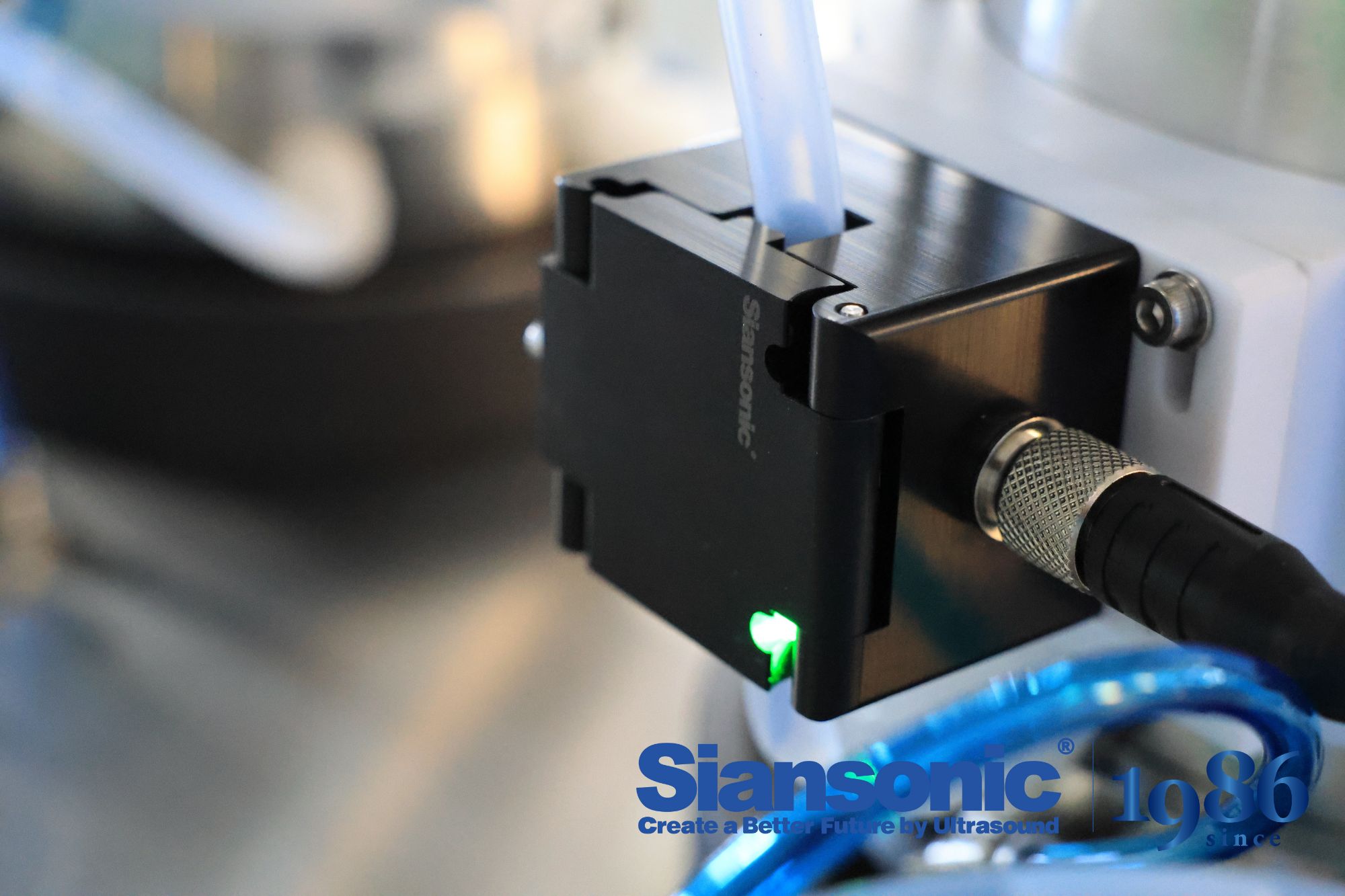
Every connection point in a fluid system is a potential invitation for trouble. The idea here is simple: the path the fluid travels should remain exactly as it was designed—no dead legs, no rough transitions, no places where residue can hide or bacteria can take hold. We machine the entire flow path from a single block of material, so there are no seals or welds to fail mid-run.
That also means the fluid never touches anything that could leach or react. Instead of relying on a patchwork of tubes and fittings, the pathway runs through a continuous, polished channel. You can run aggressive solvents, high-purity water, or sensitive biologics without worrying about extractables or pressure drops caused by internal geometry shifts.
The result is a fluid path that stays intact from first draw to final dispense. Nothing is added, nothing is trapped, and nothing is compromised. It is a quiet kind of reliability—no alarms, no maintenance calls, just the same clean flow every time.
Microseconds Matter When Air Enters the Line
A single bubble slipping past a seal doesn't announce itself with a bang. It rides the fluid, compresses under pressure, and then releases its stored energy at the worst possible moment. That tiny pocket of gas can turn a smooth actuation into a shudder, a precise dose into a guess, or a steady spray into a spitting mess. The damage isn't always immediate, but the erosion of repeatability is relentless.
Most systems are designed to tolerate a bit of dissolved air, but once free gas forms a pocket, the time constant of failure shrinks dramatically. In a high-speed filling line, a microsecond-level delay in valve response from air compliance can throw off fill weights by fractions of a gram. Over a million cycles, those fractions become lost product, rejected batches, and unexplained downtime that no amount of post-process inspection can fully recover.
The real problem is that air doesn't just slow things down—it changes how force is transmitted. What should be a stiff, incompressible column of liquid becomes a spring. That spring stores energy during deceleration and releases it as a pressure spike, hammering fittings and seals. By the time you see the leak, the microsecond-scale fatigue has already done its work on the metal and elastomer.
From Silicone to PVC, It Adapts Without Recalibration
Plenty of gauges expect you to load a material profile and repeat the routine every time the stock changes. This one doesn’t need that. Swap in silicone, PVC, or an off-spec batch, and the unit re-tunes itself before the next reading—no interrupt, no manual offset, no laptop on the line.
The trick is in how it processes the return signal. Rather than relying on fixed presets, it evaluates the material’s actual response on the fly and adjusts the internal threshold accordingly. That means a shift from soft silicone tubing to rigid PVC profiles happens without touching a calibration target or restarting the run.
For mixed production schedules, that removes the usual pause-and-recalibrate bottleneck. Operators can move from one material to the next with confidence that the readings stay consistent, which keeps throughput up and setup time close to zero.
Noise Immunity That Ends Annoying False Positives
Real-world sensors rarely operate in a clean environment. Vibrations from passing trucks, stray electromagnetic fields, or even a sudden temperature shift can trick a poorly shielded circuit into reporting a signal that never existed. The result is a stream of false positives that quietly erodes trust in the device. Noise immunity is not about making the sensor blind to those disturbances, but about teaching it to distinguish between meaningless chatter and a true event.
The most effective implementations combine several layers of defense. Analog front ends use bandwidth limiting and common-mode rejection to strip away interference before it reaches the decision stage. Digital processing then applies pattern recognition or debounce logic, holding a candidate signal long enough to verify that it repeats or persists in a physically plausible way. Together these steps turn what would have been an annoying false alarm into background noise that simply gets ignored.
The practical payoff is immediate. A motion detector that ignores a swinging tree branch, a touch panel that does not respond to a drop of water, or a smoke alarm that stays quiet during a steamy shower all share the same foundation. By filtering out signals that do not match the expected profile of a real trigger, the system becomes predictable. And predictability is what makes users stop disabling or ignoring the very devices that are supposed to protect them.
A Footprint Small Enough for Portable Medical Devices
Modern portable medical devices such as wearable monitors, insulin pumps, and handheld ultrasound units demand a remarkable amount of sensing, processing, wireless communication, and power management within a very confined board area. Discrete component approaches quickly exhaust the available space, so design teams increasingly rely on system-in-package modules and application-specific integrated circuits that fold multiple functions into a single compact die or substrate. This shift not only trims the physical outline but also shortens signal paths, which helps cut noise and energy consumption.
The push for a smaller footprint reshapes component selection, PCB stack-up, and antenna design. Resistors and capacitors in 0201 or even 01005 packages are now common, while flexible circuits let electronics bend around curved housings. Chip antennas or traces etched directly into the board replace bulky external antennas. Thermal management becomes just as critical, since heat concentrates in a tighter layout, so thin heat spreaders and thermally conductive gap fillers are used to move heat away without adding meaningful bulk.
Ultimately, a small footprint is not merely a dimensional target; it directly affects patient comfort and adherence. A wearable patch can sit unobtrusively on the skin for days, and a portable diagnostic tool can slip into a coat pocket, enabling point-of-care testing far from a clinic. Achieving this requires close collaboration across chip design, packaging, and industrial design, all guided by the principle that every square millimeter must earn its place in the final device.
FAQ
Because it doesn't depend on the liquid being clear or the tubing being transparent. Ultrasonic sensing detects acoustic impedance changes when a gas bubble passes between the transducer and reflector, so colored fluids, opaque tubing, and even fouling on the outer wall have far less impact on accuracy. That physical principle also means fewer nuisance alarms from ambient light or surface scratches.
Typical units resolve microbubbles down to around 20 to 50 microns, but the real differentiator is consistency. A good sensor holds its detection threshold across flow rates from a few milliliters per minute up to several liters per minute, and it can reject intermittent micro-foam while still alarming on a true embolus-sized bubble.
Most designs accept PVC, silicone, Tygon, and similar medical or industrial tubing from 1/16 inch to 1/2 inch outer diameter. The sensor body usually has interchangeable adapters so one electronics module can cover multiple tube sizes. The key is firm, repeatable seating in the clamp; that contact matters more than the exact polymer.
Avoid mounting the sensor right after a peristaltic pump roller release, because that spot creates periodic pressure pulses that can mimic small bubbles. Also avoid sharp bends or connectors immediately upstream that trap air. Give the sensor a straight run of at least a few tubing diameters, and make sure the tubing is fully wetted before relying on baseline readings.
Acoustic velocity changes with temperature, which can shift the baseline if not compensated. High-quality sensors track temperature either with an onboard thermistor or by continuously updating a reference window in software. That keeps the detection threshold stable from cold storage through body-temperature operation without manual recalibration.
Some advanced models can infer liquid presence from the same acoustic path, but dual-function claims should be verified for your specific fluid. For true flow rate you still need a separate flow sensor. However, using the bubble sensor to confirm a filled, bubble-free line before a dosing or infusion step is a practical way to add safety without adding another component.
Very little, provided the transducer faces stay clean and the tubing is replaced before it becomes stiff or cloudy. Periodic dry-wipe of the clamp area and checking the cable strain relief is usually enough. Many sensors now include a self-test function that verifies transducer coupling on power-up or on demand.
Conclusion
Ultrasonic sensing brings a level of certainty that optical or capacitive alternatives simply can't match when a single air bubble enters a critical line. Because the transducer sits outside the tubing, nothing touches the fluid path—no seals to degrade, no dead volume to trap contamination. The result is immediate: within microseconds, the sensor picks up the acoustic mismatch caused by even a tiny air pocket and triggers an alert before the bubble reaches the patient. This speed and non-contact design make it especially valuable in infusion pumps, dialysis machines, and other fluid delivery systems where sterility and fast response are non-negotiable.
What makes this sensor stand out further is how it handles real-world variability. It works across silicone, PVC, and other common medical tubing materials without needing recalibration when you switch lines. Built-in noise filtering rejects electromagnetic interference and mechanical vibration that typically cause false positives, so alarms are meaningful rather than a nuisance. And despite all that capability, the sensing element itself is compact enough to fit inside portable and wearable medical devices, giving engineers room to innovate without sacrificing performance.
Contact Us
Contact Person: Ivy Zhang
Email: [email protected]
Tel/WhatsApp: +86 1081502288
Website: https://www.siansonic.com/