
Metal Shredder Fabrication: Crafting Robust Machines for Efficient Recycling
2026-05-09
In the world of industrial recycling, the backbone of efficient material processing lies in precision metal shredder fabrication. At Shengzhong Shredder, we don’t just build machines—we engineer robust, high-performance shredders that transform scrap into valuable resources. But what truly goes into crafting a shredder that can chew through mountains of metal day after day without breaking a sweat? Join us as we pull back the curtain on the art and science behind our heavy-duty recycling workhorses.
The Art of Building Unbreakable Shredders
True shredder resilience starts with a fanatical devotion to metallurgy. We hand-select alloy blends that laugh off the punishment of continuous, high-torque operation, heat-treating each gear and blade until the crystalline structure achieves a near-diamond hardness. This isn't about ticking boxes on a spec sheet—it's a gut-level understanding that a shredder only earns the 'unbreakable' label when its core components possess an almost stubborn refusal to deform, even when asked to digest materials far outside the ordinary.
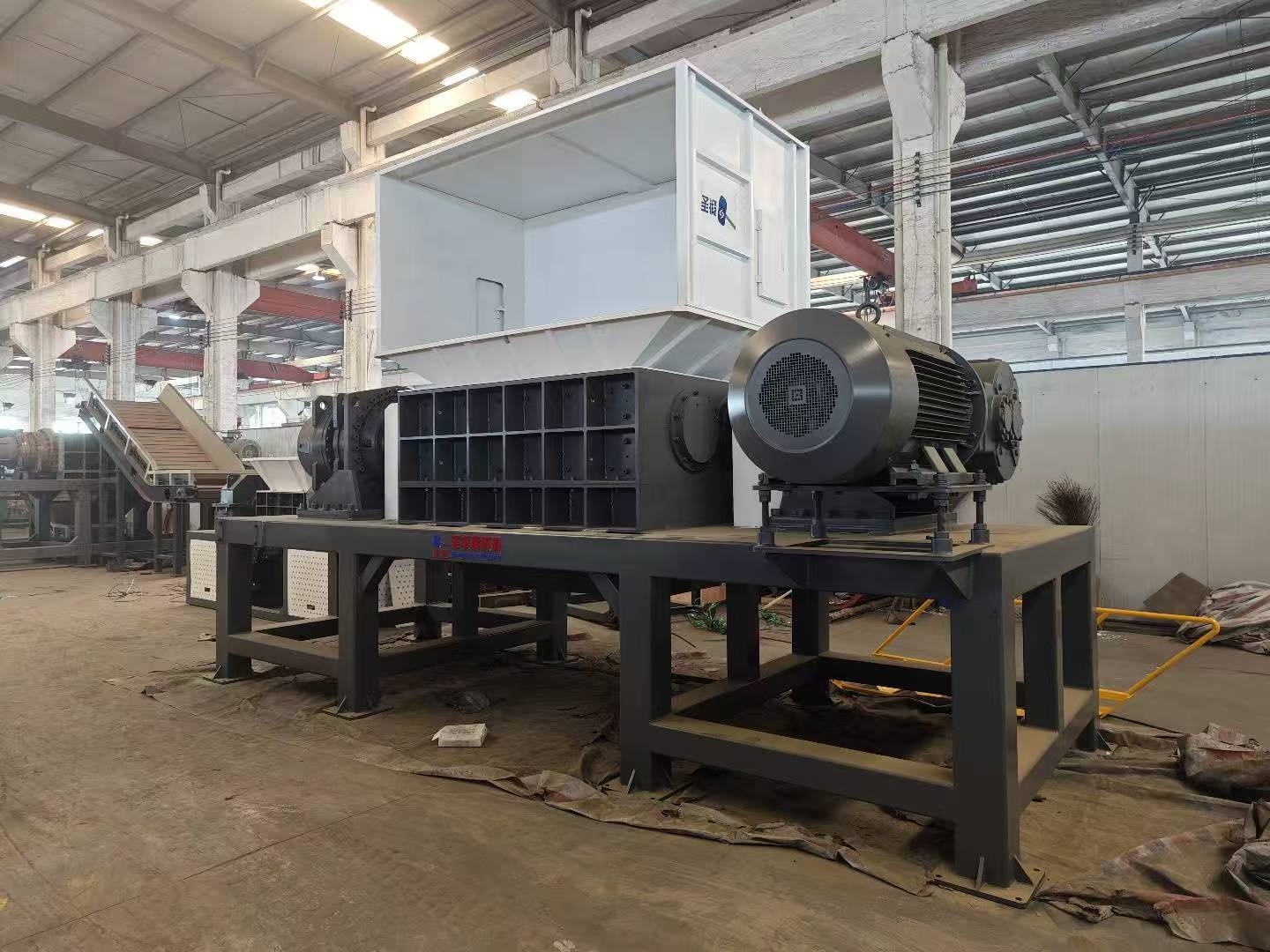
Engineering a shredder that won't falter under pressure demands a rejection of fragile complexity. Instead of layering redundant circuits or brittle safety pins, we design around deliberate, beefy simplicity. Every bearing surface is oversized, every shaft is solid hardened steel, and the cutting chamber is carved from a single block to eliminate weak joints. The result is a machine that thrives on overload, where the only reaction to a jam is an almost imperceptible grunt of extra torque—never a snapped part or a smoked motor.
Beyond brute force, the real art lies in anticogging geometry. Our blade profiles are shaped through countless iterations, blending aggressive hook angles with deep chip clearance so material never clumps or stalls the rotor. A proprietary wave-like tooth alignment creates a self-feeding, tear-and-fold action that distributes stress evenly, turning what should be punishing workloads into a balanced, fluid motion. It's this attention to cutting dance that transforms a collection of metal chunks into a shredder that feels alive, yet remains mechanically bulletproof.
Selecting Materials That Defy Wear and Tear
When you need surfaces that can handle constant friction, impact, or harsh environments, the material choice becomes the linchpin of durability. It’s not just about picking something hard—it’s about understanding how different forces interact with the material’s internal structure. For instance, high-carbon steels offer incredible surface hardness after heat treatment, but they can become brittle if not properly alloyed with elements like chromium or molybdenum to boost toughness. The trick is balancing hardness with the ability to absorb shock without fracturing, which is why tool steels and certain ceramics are often favored in high-wear industrial settings.
Beyond metals, polymers and composites have quietly revolutionized wear resistance in applications where weight, corrosion, or lubrication are concerns. Ultra-high-molecular-weight polyethylene (UHMWPE) is a standout—it’s self-lubricating, abrasion-resistant, and can outlast steel in slide plates and conveyor guides. Meanwhile, reinforced nylons and PEEK (polyether ether ketone) thrive in demanding automotive and aerospace components because they resist creep and maintain their properties at elevated temperatures. The secret often lies in fiber additives or internal lubricants that reduce friction at the microscopic level, creating a surface that sort of "heals" itself during use by redistributing wear patterns.
Of course, even the toughest material will fail if it’s mismatched with its operating environment. Saltwater spray, acidic vapors, or extreme temperature swings can rapidly degrade materials that are otherwise perfectly dimensioned for mechanical wear. That’s where duplex stainless steels or cobalt-chrome alloys step in, offering a combination of corrosion and erosion resistance that keeps mining equipment and marine hardware intact for decades. Practical selection often involves a ranking exercise—mapping the real-world conditions against material properties like the PV limit (pressure-velocity rating) or the loss in volume after a standardized abrasion test. It’s this holistic view, rather than a single spec, that leads to components that genuinely defy wear and tear.
Precision Engineering for Optimal Crushing Force
Achieving the perfect crushing force isn’t just about raw power—it’s a delicate balance between material resistance, geometric design, and energy efficiency. Every adjustment in chamber profile or stroke pattern is computed to ensure the force is concentrated exactly where it breaks the rock, not where it strains the machine. This means fewer fatigue failures and a longer service life, turning brute mechanics into a refined, predictable process.
By mapping real-world feed variations and wear patterns into the design phase, we create crushers that self-regulate their force output without complex electronics. The shape of the concave, the angle of the jaw, even the speed of the eccentric shaft—all are tuned in tandem so that the crushing zone remains optimized even as liners wear down. The result is a machine that adapts silently, maintaining peak performance shift after shift.
What sets this approach apart is the attention to how force travels through every component. Instead of overbuilding everything to cope with spikes, critical parts are sculpted to channel stress along predetermined paths. This lean engineering cuts excess weight, reduces power draw, and still delivers the pinpoint pressure needed to fracture the toughest feed. It’s not just crushing—it’s controlled demolition at a microscopic level.
Innovations That Boost Throughput Without Sacrificing Durability
Modern material handling systems achieve higher speeds not through brute force but by rethinking component geometry and load distribution. For example, conveyor rollers now use tapered bearing housings that spread stress more evenly across the axle, allowing faster rotation without premature wear. The shift to forged alloys with refined grain structures lets these parts endure millions of cycles at elevated RPMs while resisting fatigue cracks.
Another quiet evolution involves the integration of solid lubricants directly into wear surfaces. Rather than relying on external grease that attracts debris and causes downtime, new composite bushings embed graphite or PTFE throughout their matrix. This keeps friction low even under heavy loads, enabling continuous, high-speed operation in dusty or wet environments where traditional setups would seize.
Systems now also embed self-diagnostic sensors that monitor vibration, temperature, and strain in real time. By catching early signs of imbalance or misalignment, these tools let operators push throughput limits during peak demand without crossing thresholds that accelerate damage. Paired with adaptive motor controls, the equipment can momentarily increase pace while automatically backing off the instant a parameter drifts outside safe boundaries, preserving long-term structural integrity.
Tailored Solutions for Diverse Recycling Challenges
Every recycling operation faces a unique set of hurdles—whether it’s separating multi-layer food packaging, handling a surge in end-of-life electronics, or managing contaminated construction debris. A predefined, one-size-fits-all system rarely addresses the specific material streams and volume fluctuations that facilities encounter daily.
Truly effective recycling requires engineering that adapts to the material at hand. For instance, optical sorters calibrated for polymer identification can rescue valuable plastics from a mixed waste line, while hammer mills configured for e-waste can liberate precious metals without generating hazardous dust. The same philosophy applies to emerging challenges like battery recycling, where tailored crushing and separation sequences prevent thermal runaway and recover lithium, cobalt, and nickel efficiently.
Beyond machinery, adaptability extends to integration with existing workflows and local regulations. A custom solution might involve compact modular equipment for space-constrained urban sorting centers, or wet-processing upgrades for regions dealing with high moisture organic waste. By aligning technology with the precise demands of the task, recyclers can improve purity rates and reduce downtime, turning diverse waste streams into reliable secondary resources.
Ensuring Longevity Through Smart Maintenance Design
Longevity in equipment isn’t something you stumble into—it’s woven into the fabric of how you plan upkeep. Smart maintenance design pays attention to the little things: a slight change in vibration, a flicker in temperature readings, a sound that wasn’t there last month. Instead of following a calendar blindly, it reads these subtle cues and nudges you to act before a minor hiccup turns into a major breakdown. That kind of attentiveness keeps machines running year after year, not by chance, but by design.
The real trick is letting the maintenance plan learn and shift over time. When you set up routines that evolve based on what the equipment tells you, you avoid the trap of one-size-fits-all servicing. Take a production line: adjusting lubrication points based on actual load cycles rather than a fixed schedule sidesteps both over-greasing and dry spots. It’s these small, informed tweaks—often invisible to the casual observer—that quietly erase wear and stretch the life of every component.
At its core, this approach acknowledges that each asset has its own rhythm. Some thrive on frequent, light touch-ups, while others need deep inspections only now and then. Smart design doesn’t just throw technology at the problem; it respects these differences and builds a maintenance flow that fits naturally into the daily grind. The result isn’t flashy, but it’s effective: equipment that ages gracefully because the upkeep itself was built with longevity in mind.
FAQ
It's the entire process of building heavy-duty machines from the ground up—cutting and welding thick steel plates into frames, machining shafts and rotors, integrating powerful motors and hydraulic systems, and finally assembling everything with precision. Every step is geared towards creating equipment that can withstand extreme abuse.
These machines chew through old cars, appliances, and industrial scrap day in, day out. If they're not built like a tank, you'll face constant breakdowns, blade failures, and costly downtime. Robust construction ensures they keep running under relentless impact and heavy loads.
By reducing bulky metal items into fist-sized chunks, they drastically cut down transportation costs and make downstream sorting and melting much faster. This size reduction also frees up trapped materials like plastics or foam, improving overall material recovery rates.
The housing and structural parts often use high-strength structural steel, but the real workhorses—the hammers, rotors, and liners—are made from abrasion-resistant alloys like Hadfield manganese steel or tool steels. Some areas get ceramic overlays for extra life in high-wear zones.
It starts with detailed engineering drawings and material procurement. Then comes heavy plate cutting and forming, followed by welding sub-assemblies. Critical components like the rotor get precision machined and balanced. After that, it's surface treatment, painting, final assembly, and rigorous testing before shipping.
It's a mix of material selection and surface engineering. We use alloys that work-harden under impact, so the more you beat them, the tougher they get. Then there are hardfacing techniques like applying tungsten carbide overlays or using induction hardening on key edges to fend off erosion.
Absolutely, but it depends on the design. Many modern shredders are built to tackle a cocktail of materials—metal, plastic, rubber, you name it. However, to avoid clogging or excessive wear, some pre-sorting helps, and the machine might need adjustable settings or specialized cutter configurations.
We don't just bolt it together and hope for the best. There's ultrasonic testing on critical welds, dynamic balancing of the rotor to avoid vibration, hydraulic system pressure tests, and a full-load trial run with actual scrap. Only after passing all these does it get the green light.
Conclusion
The fabrication of metal shredders hinges on a deep understanding of destructive forces and material science. Building unbreakable machines starts with selecting alloys that defy extreme abrasion and impact, such as high-manganese steel for hammers and hardened tool steel for cutters. Precision engineering then translates these material choices into geometries that maximize crushing force while minimizing stress concentrations. Every chamber angle, rotor balance, and anvil clearance is calculated to direct energy precisely where it fractures scrap most effectively, turning chaotic loads of metal into consistently sized output without self-destruction.
Beyond brute strength, modern shredder design incorporates innovations that boost throughput without compromising longevity. Variable-speed drives and load-sensing hydraulics adapt power delivery in real time, preventing stalls and wear. Tailored solutions address diverse recycling streams—from bulky automotive bodies to thin electronic casings—by adjusting rotor configurations and screen sizes. Durability is further ensured through smart maintenance features: easily replaceable wear parts, automated lubrication systems, and structural designs that allow quick access to high-stress zones. This blend of rugged build and thoughtful engineering yields machines that operate reliably for decades in the harshest environments.
Contact Us
Contact Person: Leon
Email: [email protected]
Tel/WhatsApp: 8615385558866
Website: https://www.shred-waste.com