

Naxi Cultural Attractions Near Jade Dragon Snow Mountain You Should Not Miss
2026-09-19
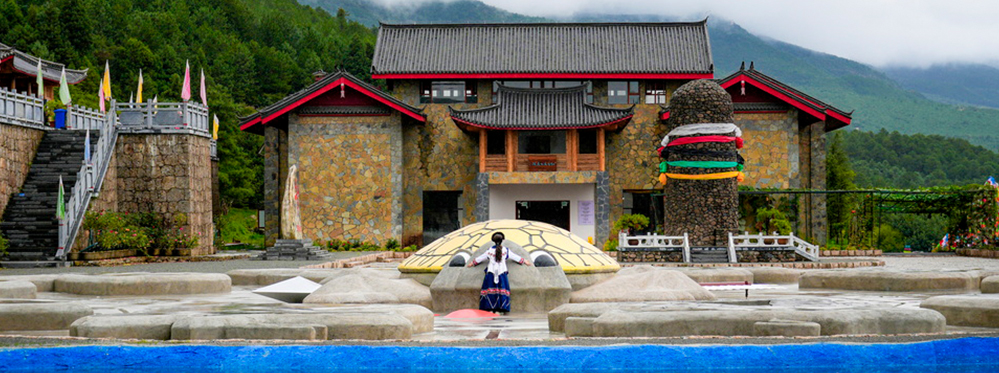
Most travelers rush straight to the cable cars at Jade Dragon Snow Mountain and miss the living Naxi culture tucked into its shadow. But if you’re willing to wander a little off the standard route, you’ll find stone-paved villages, centuries-old murals, and rituals that still shape daily life. Just below the peaks, Jade Water Village offers an easy first taste of that world — and it’s only the beginning. Here are the Naxi cultural stops near the mountain that deserve more than a drive-by.
Morning Incense and Dongba Chants in Baisha
Before sunrise, smoke from cedar and pine drifts between the old stone houses of Baisha. Village elders light bundles of incense at doorway shrines, a quiet chore repeated for generations. The scent hangs low in the cold air, mixing with the first sounds of roosters and the shuffle of feet on cobbled lanes.
Inside a courtyard nearby, a dongba priest unrolls a handwritten manuscript and begins to chant. The syllables rise and fall, not exactly a song, not exactly speech. A few neighbors gather by the threshold, listening without translation. Some close their eyes; others mouth the words they have heard since childhood.
This is not a performance staged for visitors. It is a slow, daily act of attention — smoke, ink, voice, and memory folded together before the day fully opens.
The Murals That Keep Baisha’s Past in Color
Baisha's murals aren't just paint on plaster—they're a stubborn kind of memory. Long after the caravans stopped and the incense thinned, these walls still hold the old colors: deep cinnabar, mineral green, a blue that has no name outside the valley. Nobody touches them up; the cracks and fading are part of the record. What survives is a visual diary written in the language of twisted dragons, half-human guardians, and processions that once moved through the streets below.
Most visitors expect a museum, but the murals live where they were born—inside quiet halls that once served as meeting places, trading posts, and places of worship. The pigments were ground from local stone and mixed with animal glue, which is why they don't flake off like modern paint. Walk close enough and you can see the brushwork freeze mid-stroke, as if the painters stepped away just yesterday. That tactility is what makes Baisha's past feel less like a story and more like a room you can stand in.
The real surprise is how the murals refuse to explain themselves. There are no neat labels, no timelines projected on the walls. Instead, you piece together flashes: a merchant's hat that matches a grave found three valleys over, a god borrowed from a religion that no longer prays here. The colors don't shout; they murmur. And that's exactly why they keep the past from turning gray.
Yuhu Village and the House Joseph Rock Called Home
Yuhu Village sits in the shadow of Jade Dragon Snow Mountain, a cluster of stone-and-timber houses surrounded by barley fields and willow trees. Joseph Rock first came here in 1922 and kept returning for nearly three decades. Unlike other foreign travelers who passed through Lijiang, Rock made Yuhu his permanent base, renting a small compound at the village edge and filling it with books, cameras, and pressed plants.
The house he called home remains remarkably intact. A two-story Naxi-style building with a narrow courtyard, it now functions as a modest museum. Visitors can see Rock's typewriter, his travel trunk, and black-and-white photographs of the region from the 1920s and 1930s. From this quiet spot, he organized expeditions into the mountains, documented Naxi religious texts, and mailed some of the first detailed botanical samples from northwest Yunnan to the West. The creaking wooden floors still carry the weight of his restless curiosity.
Where Naxi Music Fills a Courtyard After Dark
As dusk settles over Lijiang's old town, the rhythmic pluck of a pipa meanders through narrow stone lanes, drawing visitors toward a hidden courtyard. Inside, a handful of elderly musicians sit on worn wooden stools, their eyes half-closed as if listening to something beyond the notes themselves. This is Naxi ancient music—a living fossil of Tang and Song dynasty melodies, kept alive not on grand stages but in the quiet intimacy of a family home after the tourists have thinned.
The performance begins without fanfare. A single gong resonates, and the ensemble joins in one by one, their instruments—some rarely seen elsewhere, like the sugdu and the erhuang—blending into a texture that feels both fragile and resolute. There is no conductor, no printed program; the musicians simply breathe together, passing phrases back and forth like old friends sharing a well-worn story. For those seated on benches along the courtyard walls, the music does not demand attention but rather invites a slower kind of listening, one that matches the flicker of lanterns and the smell of woodsmoke drifting from the kitchen.
By the time the last note fades into the night air, the courtyard has become a kind of time capsule. Visitors linger not because they are told to, but because leaving feels like waking from a dream. Here, in the space between darkness and melody, Naxi music reveals its true nature: not a relic behind glass, but a conversation that continues as long as someone is willing to sit, listen, and let the evening unfold at its own pace.
Watching the Snow Mountain From a Shuhe Teahouse
You settle into a low wooden chair by the window, and the whole of Yulong Snow Mountain fills the frame like a brushstroke left to dry. The tea is local—perhaps a raw pu'er that tastes of stone and morning mist—and as you pour the first cup, the steam rises to meet the glare of the glacier. No one hurries you here. The mountain does not perform; it simply stands, and the teahouse gives you permission to do the same.
A pair of horses clip-clop past on the old cobbled lane below, their bells ringing out of sync with the slow boil of water on the charcoal stove. You notice the way the snowline shifts with each passing cloud, revealing ridges that weren't there a moment ago. The owner, an old Naxi woman, refills your pot without asking and nods toward the peak, as if introducing an old friend.
By late afternoon, the light turns thin and amber, and the mountain seems to lean closer to the rooftops. You stop checking your phone—there's no urge to capture, only to sit still in the cold air that smells of pine resin and damp clay. When you finally leave, the warmth of the cup stays in your palms longer than expected, and the snow mountain lingers behind your eyes like a word you almost remember.
An Open-Air Stage Where the Mountain Does Half the Acting
The stage sits at the foot of a weathered limestone face, its surface catching every shift in light. There is no painted backdrop because the rock does that work, turning gold at sunset, bruising purple before a storm, and vanishing into mist at dawn. Actors learn to time their pauses to the wind moving through high ledges.
Acoustics here are not engineered so much as invited. A line delivered too loudly bounces back harsh and flat; a whispered aside can roll up the slope and return a half-second later, as if the mountain itself were considering the words. The audience sits on stone terraces, warm from the afternoon, and the boundary between performance and place starts to dissolve.
When fog spills over the ridge mid-scene, nobody calls for lights. The mountain has simply walked onstage. That unpredictability means no two performances are alike, and the best directors treat the landscape as an uncredited cast member rather than a scenic afterthought.
FAQ
Baisha keeps its lanes and morning markets much quieter, and the frescoes inside its modest temples still show a mix of Naxi, Tibetan, and Han motifs that you rarely see explained elsewhere.
Yes, because the guides and placards focus on everyday stories and local donors, not just deities. The faded pigments also feel like a direct link to the Ming dynasty village that once surrounded them.
Yuhu Village, where houses are built from rough local stone and the former home of Joseph Rock sits at the edge of the fields. Walking its narrow paths at dusk, with the mountain looming behind, feels far from any staged cultural show.
It centers on a natural spring and terraced ponds that feed local farming, while the Dongba school and small shrines are worked into the landscape rather than placed as attractions. You can watch a priest write pictographs but also see the water system that shaped village life.
Dongba is the Naxi religious and script tradition kept alive by ritual specialists. At Dongba Valley and in villages like Baisha or Yuhu, you can see papermaking, pictograph carving, and occasional blessing ceremonies, often with practitioners who learned from family elders.
Baisha Old Town and the surrounding hamlets stay relatively calm compared with Lijiang, especially in the early morning or late afternoon. The embroidery workshops and small temples there let you observe daily routines rather than push through a line.
The Lijiang Naxi Dongba Culture Museum, though not exactly hidden, gathers original manuscripts and ritual objects in an old courtyard. It gives context to the scattered village sites so the symbols and ceremonies you see later make more sense.
Yes, look for family-run courtyards in Baisha or Yuhu where you can join a simple baba bread making or learn basic Dongba character writing. The best ones are small, with no fixed schedule, and the host often brings out tea and tells you about the mountain’s role in local stories.
Conclusion
Baisha feels less like a stop on an itinerary and more like a place still breathing its own history. Early in the day, the air around the old town carries the faint bite of juniper incense while Dongba chants rise from a quiet courtyard—not as a performance for visitors, but as a ritual that has simply continued. A short walk away, the Baisha murals hold that same continuity in pigment and line. Their colors have dimmed with time, yet the scenes of everyday Naxi life, deities, and travelers remain vivid enough to suggest a world that never quite left. Then there is Yuhu, a village of stone and weathered timber just below the mountain. Joseph Rock’s former home sits there modestly, crammed with photographs, botanical notes, and the stubborn residue of a man who made the Naxi people his life’s study.
After dark, the cultural pull shifts to sound. In a Shuhe courtyard lit by a few lamps, Naxi musicians—many of them elders—let ancient melodies unwind at their own pace, and the silence between notes feels as important as the notes themselves. Earlier in the afternoon, a different kind of listening happens in a Shuhe teahouse, where a cup of local tea steams against the view of Jade Dragon Snow Mountain. The same peak becomes a silent collaborator at an open-air stage outside town, where singers and dancers perform with the mountain looming behind them, half scenery and half actor. None of these places demand much from you. They simply ask that you sit, look, listen, and let the mountain’s cultural ring settle in slowly.
Contact Us
Contact Person: Changhong He
Email: [email protected]
Tel/WhatsApp: 086-0888-5190152
Website: https://vip.e-baixing.com/ysh