

New Type Emollient Factory: Pioneering Advanced Moisturizer Manufacturing
2026-06-20
In the rapidly evolving world of skincare, a quiet revolution is underway—one that promises to redefine how we think about moisturizers. At the heart of this shift is a new type of emollient factory, where precision engineering meets green chemistry, and where MingYa is leading the charge. This isn't just another production line; it's a blueprint for the next generation of advanced moisturizer manufacturing, designed to meet soaring consumer demand for efficacy, sustainability, and sensory delight. What sets this facility apart, and how might it reshape your product portfolio? The answer lies in a blend of innovation and intentional design that we're about to explore.
The Chemistry of Deep Skin Nourishment
True deep skin nourishment goes beyond surface hydration—it demands an interplay of molecular size, polarity, and affinity with the skin's own lipid matrix. The stratum corneum, our outermost barrier, is structured like a brick wall where corneocytes are embedded in a mortar of ceramides, cholesterol, and fatty acids. To penetrate this sophisticated defense, active compounds must either mimic these lipids or be small enough to slip through intercellular pathways. This is why oils rich in linoleic acid, which naturally integrates into the barrier, often outperform larger, water-soluble molecules that merely sit on top.
At the deeper layers, nourishment becomes a conversation between cellular receptors and precisely shaped molecules. Peptides, for instance, are short chains of amino acids that signal fibroblasts to ramp up collagen production—a process that depends entirely on their sequence and three-dimensional conformation. Hyaluronic acid fragments of varying weights play different roles: high-molecular-weight forms draw moisture to the surface, while low-molecular-weight versions dive deeper to influence tissue repair and reduce inflammation. Even vitamins like niacinamide must first convert into coenzymes to participate in the hundreds of enzymatic reactions that keep skin resilient.
The delivery system is just as critical as the ingredient itself. An otherwise potent compound can oxidize or break down before it ever reaches viable epidermis. Modern formulations use liposomes, which are tiny vesicles made from phospholipids, to encapsulate and ferry active ingredients through the barrier. These not only protect fragile molecules but also fuse with skin cell membranes for direct release. The pH of a product also governs how active ingredients behave—glycolic acid, for example, needs a low pH to remain uncharged and capable of exfoliating, while a neutral pH might render it ineffective. This delicate chemical orchestration is what transforms a simple moisturizer into a genuinely restorative experience.
Where Precision Engineering Meets Skincare
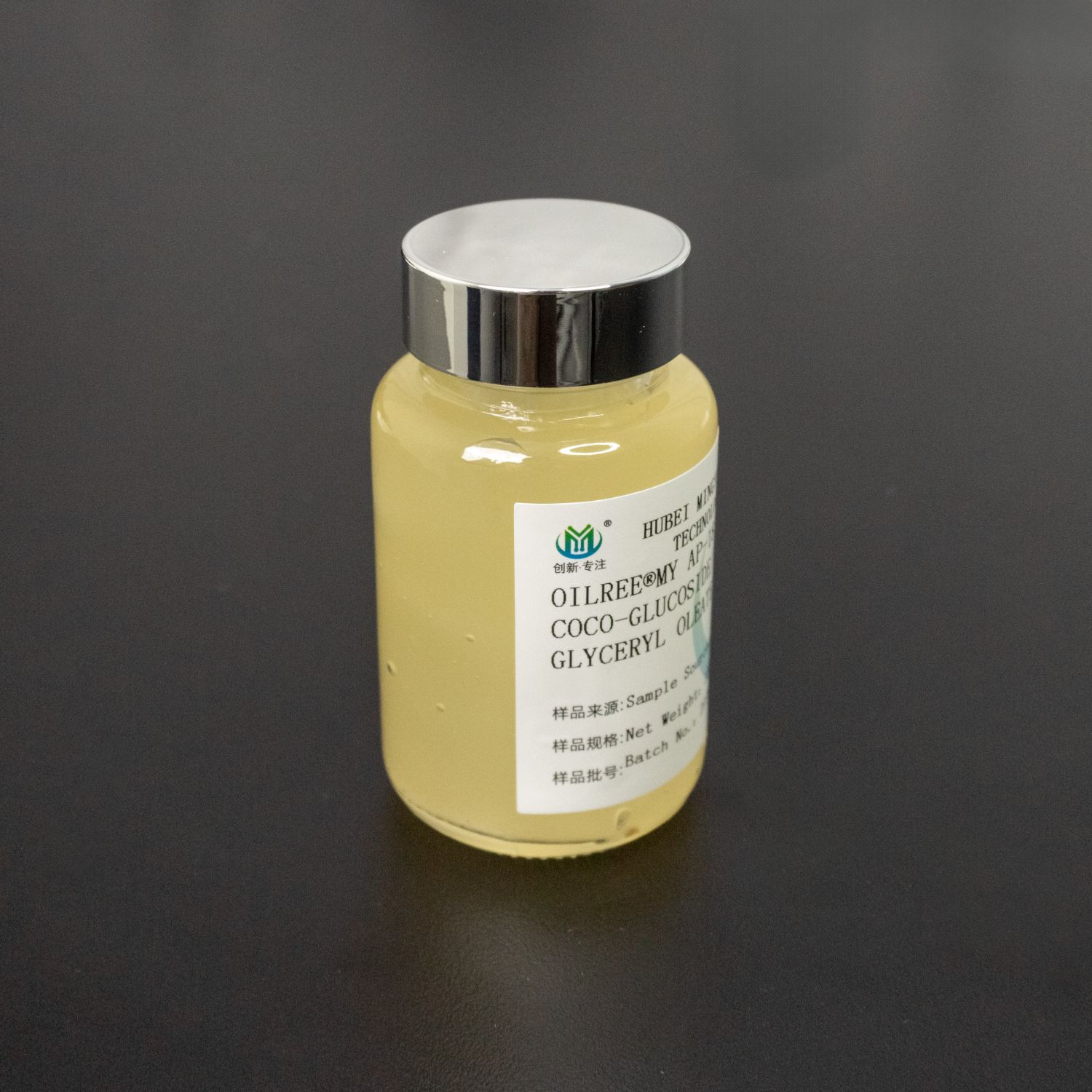
In the world of modern beauty, skincare has evolved beyond simple creams and serums into a domain where micron-level tolerances and material science define results. Every texture, absorption rate, and delivery mechanism is now informed by the same rigor found in aerospace and medical device manufacturing.
This intersection isn't about automation for its own sake, but about eliminating guesswork. When a moisturizer's viscosity is measured in centipoises and its molecules structured to mirror the skin's natural lipid barrier, you get a product that behaves less like a cosmetic and more like a biological extension of your own physiology.
The tools may be familiar—3D-printed applicators, laser-etched microchannels in sheet masks, cold-plasma-activated ingredients—but the outcome is quietly radical: skincare that respects the skin as an intricate interface, not just a surface to coat.
Eco-Conscious Production Without Compromise
It starts with questioning every material, every process. We’ve moved beyond the usual checkbox of “sustainable” and instead built production around real, measurable choices. That means fabrics spun from post-consumer waste, dyes locked in through closed-loop water systems, and energy pulled entirely from renewable sources. No shortcuts, no greenwashing—just a methodical unraveling of the wasteful norms that crept into manufacturing long ago.
But lowering impact doesn’t mean lowering standards. In fact, the attention required to do things right often lifts the quality higher. Our stitching is reinforced where others cut corners. Our finishes rely on natural enzymes rather than harsh chemicals, resulting in a softness that isn’t just skin-deep. The durability that comes from this approach keeps garments in use longer, which is perhaps the most radical environmental act of all.
The result is gear that feels alive with purpose. It performs in the backcountry without a trace of apology, and it ages in a way you’ll appreciate. Wearing it, you’re not just sporting a label—you’re part of a quiet push toward production that doesn’t ask for excuses or trade-offs. Just honest, uncompromising work from start to finish.
Rigorous Testing for Unmatched Purity
Every batch endures a gauntlet of over 200 analytical checks, each designed to catch even the slightest impurity before it reaches you. We go beyond standard protocols, employing advanced techniques like liquid chromatography and mass spectrometry to map out every compound in painstaking detail. This isn't just testing—it's a relentless pursuit of certainty, ensuring that what you receive is nothing short of pristine.
Our labs operate with a singular focus: to shatter industry benchmarks. We test at multiple stages—raw materials, mid-process, and finished product—so no contaminant has a chance to slip through. Trace metals, residual solvents, microbiological threats—each is hunted down and eliminated. The result is a purity profile that speaks for itself, validated by third-party accreditations you can trust.
We refuse to cut corners. Instead of sample testing, we run full-panel analyses on statistically robust subsets, capturing variability that others miss. Our instruments are calibrated daily, our methods continuously refined. This obsession with detail yields a purity so consistent, it redefines what excellence means. When you hold our product, you're holding the outcome of thousands of hours of meticulous, unwavering scrutiny.
Collaborating to Create Signature Formulas
True formula creation rarely happens in isolation. It thrives when minds meet, bridging deep technical expertise with a clear creative vision. We view each project as a shared journey, where your ideas about texture, performance, or sensory experience merge with our materials science know-how. This close dialogue often reveals unexpected ingredient synergies or application techniques that neither side would have discovered alone, turning a simple brief into a genuinely distinctive product.
The process itself is flexible by design. Some partners come with a fully sketched blueprint, while others arrive with only a feeling they want to capture—maybe a cream that melts at skin temperature or a cleanser that transforms from oil to foam. We adapt, running small-scale trials in rapid cycles, tweaking pH, viscosity, or botanical extracts until the sample in your hand matches the one in your mind. Feedback loops stay tight, ensuring every adjustment serves the original concept without diluting its character.
What emerges is always more than a formula—it’s a signature. Because the collaboration embeds your perspective into every layer, the final result carries a fingerprint no competitor can replicate. Whether it’s a supplement blend built around a family tradition or a skincare line that echoes a specific landscape, the product stands apart in a crowded market precisely because it was never meant to fit a template.
Pioneering Tomorrow’s Moisturizing Breakthroughs
True skin hydration isn’t about surface-level fixes—it’s about rewiring how moisture behaves at the cellular level. Instead of relying on heavy occlusives that sit on top, we focus on signal-driven ingredients that teach the skin to retain water more efficiently over time. This approach ensures that hydration feels weightless, lasts longer, and adapts to individual skin rhythms.
Our latest work explores biomimetic water channels and adaptive humectant networks that respond to shifts in humidity and activity. By mimicking the skin’s own natural moisturizing factors, we’ve created formulations that don’t just add water but help the skin hold onto it where it matters most. The result is a self-sustaining moisture barrier that stays resilient even under environmental stress.
Every breakthrough stems from a refusal to settle for conventional metrics like immediate plumping alone. We measure success by long-term hydration consistency, barrier repair at the microscopic level, and how comfortable skin feels throughout the day. It’s a quiet revolution—one that prioritizes lasting change over instant gratification.
FAQ
Unlike conventional setups that follow standardized, linear production, this facility integrates adaptive processing cells that adjust in real time to raw ingredient variations, essentially letting nature dictate the refinement sequence rather than forcing ingredients into a rigid workflow.
By deploying microfluidic homogenization at the point of emulsification, the factory creates moisturizers with a droplet architecture that mimics the skin's own lipid bilayers, achieving absorption rates that were previously only theoretical in cosmetic chemistry.
The process relies on three core innovations: a zonal reactor that isolates each ingredient until optimal integration, ultrasonic cavitation for blending without heat degradation, and a real-time molecular spectroscopy loop that validates final product structure without batch sampling delays.
Moisturizer performance hinges on how ingredients co-locate on the skin after application—advanced manufacturing controls this spatial arrangement at the micron level, preventing separation and ensuring that occlusives and humectants work in concert for sustained hydration.
Instead of starting with semirefined bases that carry residual solvents, the factory applies a cold-enzymatic purification step that strips unwanted oxidants and volatile compounds, yielding a clean emollient profile that minimizes skin stress and extends shelf life without synthetic stabilizers.
Every production cycle closes with a dynamic fingerprinting step—a combination of rheological profiling and light-scattering analysis creates a unique physical signature for each batch, and only those matching the digital twin of the ideal product are released, virtually eliminating drift.
Conclusion
At the crossroads of advanced chemistry and precision engineering, our new-type emollient factory redefines moisturizer production. We harness deep skin nourishment through a proprietary blend of biomimetic lipids and humectant complexes that mirror the skin’s natural barrier. Every batch flows through a closed-loop GMP facility where temperature-sensitive bioactives retain their potency, ensuring delivery of ingredients into the epidermis. This synergy of formulation science and micron-level process control yields creams and lotions with unmatched texture, absorption, and lasting hydration.
Sustainability runs through every phase—from cold-process emulsification that slashes energy use to fully recyclable packaging sourced from post-consumer materials, all without sacrificing performance. Our quality regime subjects each lot to triple-phase purity analysis: microbial, heavy-metal, and stability stress tests. Collaboration sits at our core; we work hand-in-hand with dermatologists and indie brand founders to translate visionary briefs into signature formulas, whether a featherlight gel-cream or a rich balm. Looking ahead, we are piloting fermentation-derived ceramides and adaptive-release technologies that respond to environmental humidity. This isn’t just manufacturing—it’s a relentless pursuit of what moisturizers can become.
Contact Us
Contact Person: Miss Pei
Email: [email protected]
Tel/WhatsApp: 8618620409116
Website: https://www.mingyachemicals.com/