
ODM CNC Milling Parts Are Transforming Custom Manufacturing
2026-11-18
Custom manufacturing has always carried a quiet tension: how to hold tight tolerances without freezing design freedom. ODM CNC milling parts are changing that equation, and Tianyu sits at the center of the shift. Instead of forcing teams to choose between repeatable precision and the flexibility to iterate, this approach makes both possible in a single workflow. The result is faster turnarounds, fewer compromises, and parts that finally match the intent of the original design. Here’s why that matters for your next project.
Why ODM CNC Milling Is Quietly Replacing In-House Machining
There was a time when keeping CNC work under your own roof felt like the only way to control quality and lead times. But the math has shifted. A shop that once justified two full machining centers now watches one sit idle half the week while the other swallows money in tooling, coolant maintenance, and a machinist's salary that keeps climbing. ODM providers run rows of spindles across multiple customers, so their utilization stays high and the per-part cost drops in ways a single in-house cell rarely matches.
The quiet part is less about price and more about capability. Many ODM shops have already absorbed the cost of five-axis machines, automation, and inspection gear that a typical product company would struggle to approve on its own budget. When an engineering team needs a tricky housing with undercuts and tight true-position callouts, the outside supplier can often start next week, while the in-house route means waiting on a new hire or a capital request that may never clear. Over time, that convenience compounds, and in-house machining starts to look like a fixed cost that no longer earns its floor space.
The Custom Part Bottleneck No One Talks About Until It Delays a Launch
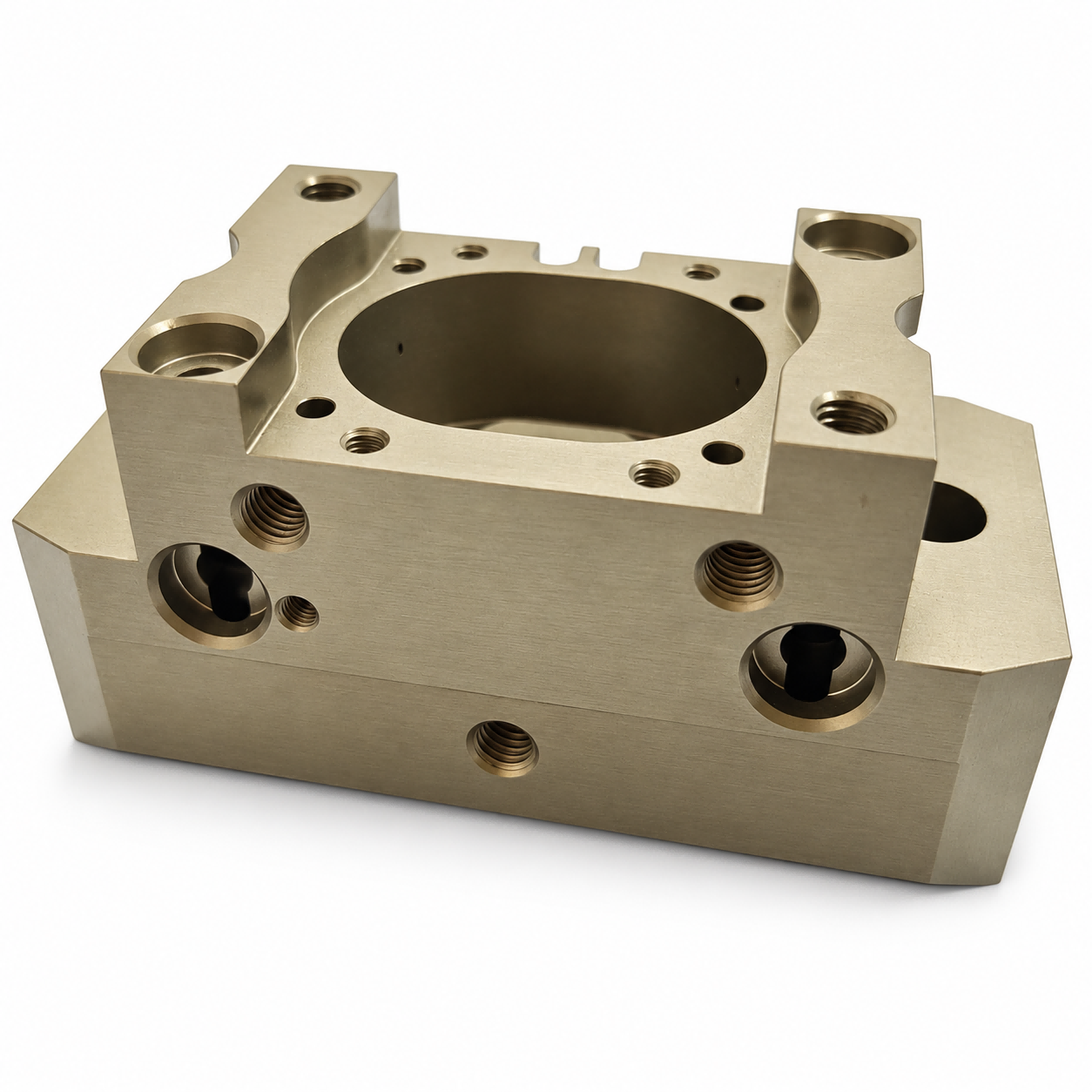
Every timeline looks fine until a single bracket, mount, or connector sits in a queue behind three other revisions. The bottleneck isn’t usually the CNC machine; it’s the quiet back-and-forth over tolerances, surface finish, and whether the drawing matches the actual mating part. Nobody logs those hours in the project plan.
By the time the shortage surfaces, procurement is already being asked to compress a four-week lead time into nine days. Engineering may have signed off on a design that was never fully validated for manufacturability, but the conversation only gets serious after the launch date slips. That is when the real cost shows up: not just expedite fees, but teams shifting into firefighting mode.
What makes this bottleneck so stubborn is that it hides inside ordinary language. “We’ll use a custom bracket” sounds minor until the bracket needs a second setup, a special anodizing batch, and a tolerance stack-up review. Treating those parts as small decisions instead of sequential risks is how a quiet delay becomes the reason a launch waits.
How Tighter Tolerances Change What Custom Products Can Actually Do
Tight tolerances don't just make parts fit better. They remove the small inconsistencies that force assemblies to be overbuilt or derated. When a custom shaft and bore are held within a few microns instead of a few tenths, motion becomes smoother, heat buildup drops, and loads can be pushed closer to the material's actual limit. That shift lets a custom part do a job that was previously reserved for a larger or more expensive component.
The effect shows up most clearly in stacked assemblies. Every clearance, runout, and flatness deviation adds up. Once those individual errors shrink, designers gain room to shorten bearing spans, reduce housing walls, or remove adjustment features entirely. Custom products begin to behave less like collections of separate parts and more like a single predictable system. That is why a gearbox with tighter tolerances can run quieter at the same torque, or why a manifold can seal reliably without soft gaskets and heavy bolt patterns.
There is also a less obvious consequence: tighter tolerances widen the options for materials and surface treatments. When dimensions are stable, thinner coatings, harder substrates, and lower-viscosity lubricants become viable because the part no longer relies on soft layers or generous clearances to absorb variation. A custom component that used to need grinding after heat treatment might now be hard-turned and used as-is, cutting lead time while improving repeatability. In short, the tolerance isn't just a number on a drawing—it changes what the product can be asked to do.
Mixing Materials and Finishes Without Multiplying Lead Times
Most lead-time disasters start with a finish choice, not a material choice. A walnut tabletop can arrive in two weeks, while a custom-matched edge band somehow needs eight. Mixing materials only gets complicated when every combination demands its own approval loop. Keeping finishes within a shared, pre-tested family means you can pair warm wood with dark metal or textured laminate without opening a new sampling cycle.
The practical move is to design the mix before the project starts. Set a short menu of compatible surfaces—say, two wood tones, one metal, one stone or solid surface—and let contrast come from grain, sheen, and edge profile rather than rare colors. A brushed bronze pull against a matte white panel feels deliberate, but it doesn’t ask the factory to stop a line for a one-off match.
When clients ask for changes, offer swaps within the same bundle instead of isolated substitutions. It keeps purchasing predictable and avoids the usual pile-up of partial approvals. Designers still get plenty of visual variety, but the production schedule doesn’t bend around a single finish decision.
What a Good ODM Milling Partner Looks Like Before You Send a Drawing
A good ODM milling partner reads a drawing the way a machinist would, not the way a salesperson would. Before quoting, they ask about the part’s end use, expected volume, surface finish requirements, and whether the tolerances shown are truly functional or just copied from a previous design. They flag thin walls, deep pockets, and threaded holes that may drive up cost or complicate clamping, often before you ask.
They also compare the part against their actual machine capabilities and tooling inventory. Instead of promising that every ±0.005 mm dimension is easy, they tell you which features can be held on a standard 3-axis setup and which might need a second operation, a custom fixture, or a different process altogether. That honesty shows up in the quote: fewer surprises later, fewer redline changes after the first article inspection.
The strongest partners go beyond the print. They may suggest a slight radius change, a tapped hole relocation, or a split-line adjustment that reduces cycle time without changing function. If the drawing is incomplete, they ask for the missing datum references or surface finish callouts rather than assuming. That kind of pre-drawing dialogue is usually the difference between a supplier who machines parts and one who helps you make a better product.
Small Batch, Big Impact: When Custom CNC Parts Stop Being a Luxury
A decade ago, requesting a run of fifty machined aluminum brackets usually meant paying prototype premiums, waiting weeks for a slot, or settling for a design that had been reworked to suit standard stock shapes. That pressure has eased. Shops now treat low-volume work as a normal part of their schedule rather than an interruption. The shift is partly software-driven: automated quoting, toolpath generation, and fixtureless setups let machinists move from one small job to the next without rebuilding the entire workflow. As a result, the cost per part on a batch of ten or twenty has dropped enough that teams can order custom components for a single test line, a short product run, or a field repair without carving out a capital budget.
This access changes how decisions get made. Instead of designing around off-the-shelf parts and accepting awkward compromises, engineers can machine a bracket, housing, or manifold that fits the actual assembly. Low quantities also encourage faster iteration: a batch can reveal fit, finish, or thermal issues before tooling for mass production is locked in. The effect is less about replacing standard hardware than about removing the hesitation around custom work. When a short-run part arrives in a week rather than a month, it becomes a practical option rather than a special request.
That practicality matters most in uneven moments: a discontinued pump housing needs replacing, a robot cell needs a mounting plate that no catalog covers, or a clinical device requires a short validation batch. These situations used to trigger long procurement loops or force teams to modify the product around available parts. Now the math often favors machining exactly what the situation calls for, even in small quantities. Custom CNC parts have not become free, but they have stopped being reserved for flagship builds and well-funded R&D. The real luxury is no longer the machined part itself; it is ignoring the fact that small-batch flexibility is already on the table.
FAQ
An ODM partner typically gets involved before the design is frozen, so instead of just machining a drawing, they help adjust wall thicknesses, radii, and tolerances to make the part cheaper to produce and easier to repeat. That early input removes much of the back-and-forth that slows down custom projects.
Machining complex parts usually fails at the handoff between design and production. ODM shops consolidate that handoff, with engineering and milling under one roof. It becomes easier to hold tight tolerances on organic shapes, deep pockets, and thin walls because the people programming the toolpaths also understand the final assembly.
It leans on reusable fixturing, modular setups, and careful toolpath planning rather than hard automation. For runs of 10 to 500 pieces, that keeps setup time down while still leaving room for material options and dimensional checks that would be too slow on a fully manual bench.
Most serious ODM shops machine aluminum alloys, stainless steels, titanium, brass, and engineering plastics like PEEK or acetal. The real difference is not just the catalog of materials, but knowing which grade machines cleanly, holds threads well, and survives post-processing such as anodizing or passivation.
Yes, and that is usually the biggest hidden benefit. A good ODM team will suggest things like reducing deep pocket depths, changing a tapped hole to a threaded insert, or adjusting a corner radius to match standard tooling. Those changes are small on paper but cut machining time and scrap rates noticeably.
You typically see first-article inspection reports, CMM checks on critical dimensions, and surface finish verification as standard, not as add-ons. Because the ODM owns the entire process, records can follow the part from raw stock to final deburring, which helps when you need to repeat an order months later.
Robotics, medical devices, drone hardware, and precision instrumentation tend to benefit the most. These fields need custom brackets, enclosures, heat sinks, and movement components in small-to-mid volumes where the design changes often enough that traditional mold-based methods would be too rigid.
For metal and rigid plastic parts, ODM CNC milling often cuts weeks out of the schedule because there is no mold to build. Once the CAD file is released and material is in stock, first parts can ship in days, and design revisions can be absorbed without retooling costs.
Conclusion
The shift toward ODM CNC milling is less about replacing machine shops and more about removing the hidden friction that slows custom product development. In-house machining often looks cheaper on paper until a single tight-tolerance feature stalls an entire launch window, or until engineering time gets swallowed by fixture setups and toolpath tweaks. Outside milling partners have already absorbed those bottlenecks, which is why more teams quietly stop maintaining their own capacity and start treating precision-machined parts as a routine procurement item rather than a production crisis. The difference becomes obvious when a design stops waiting on machine availability and starts moving through revision cycles faster.
That shift changes what custom products can actually do. When tolerances tighten and materials can be mixed—aluminum beside stainless steel, anodized surfaces next to raw edges—without lead times multiplying, small batches stop feeling like a luxury. A good ODM partner shows process control before a drawing is even sent: they ask about fit, stress points, and assembly sequence instead of just quoting dimensions. Small runs no longer force a choice between compromise and cost; they let teams test real geometry, adjust mounting points, and still meet a launch date without committing to inventory. The result is that custom CNC parts become practical earlier in the product cycle, allowing smaller teams to iterate on physical parts without betting on large production runs.
Contact Us
Contact Person: Vera Yao
Email: [email protected]
Tel/WhatsApp: 8618512832770
Website: https://www.tianyucnc.com