

OEM Metering Units: Precision Flow Control Solutions for Industrial Applications
2026-05-21
In the world of industrial manufacturing, precision is everything—especially when it comes to fluid control. OEM metering units are the unsung heroes behind consistent product quality, from chemical dosing to food processing. But not all solutions are built to handle the demands of modern automation. That’s where Fanchang Machinery steps in, redefining reliability with engineered flow control that adapts to your toughest applications. Ready to see how the right metering unit can transform your production line? Let’s dive in.
Tailored Fluid Handling for Specialized Machinery
Every piece of specialized machinery comes with its own set of demands—pressure thresholds, flow rates, chemical compatibility, and spatial constraints that off-the-shelf components simply can't meet. Our approach starts by mapping out the entire fluid path, identifying potential failure points and performance bottlenecks unique to your system. We don't just swap parts; we engineer solutions that integrate seamlessly with your existing architecture, often enhancing overall efficiency by 15-20% through optimized routing and material selection.
What sets our fluid handling apart is the depth of customization we bring to each project. From bespoke manifold designs that consolidate multiple connections into a single, leak-resistant unit, to precision-machined fittings that eliminate dead legs in sanitary processes, every detail is tailored. We work with a broad palette of materials—exotic alloys, advanced polymers, and ceramics—to ensure long-term reliability, even in extreme environments. Prototyping and rapid iterative testing are core to our process, so that the final solution not only fits but exceeds expectations.
Achieving Unmatched Accuracy in Critical Processes
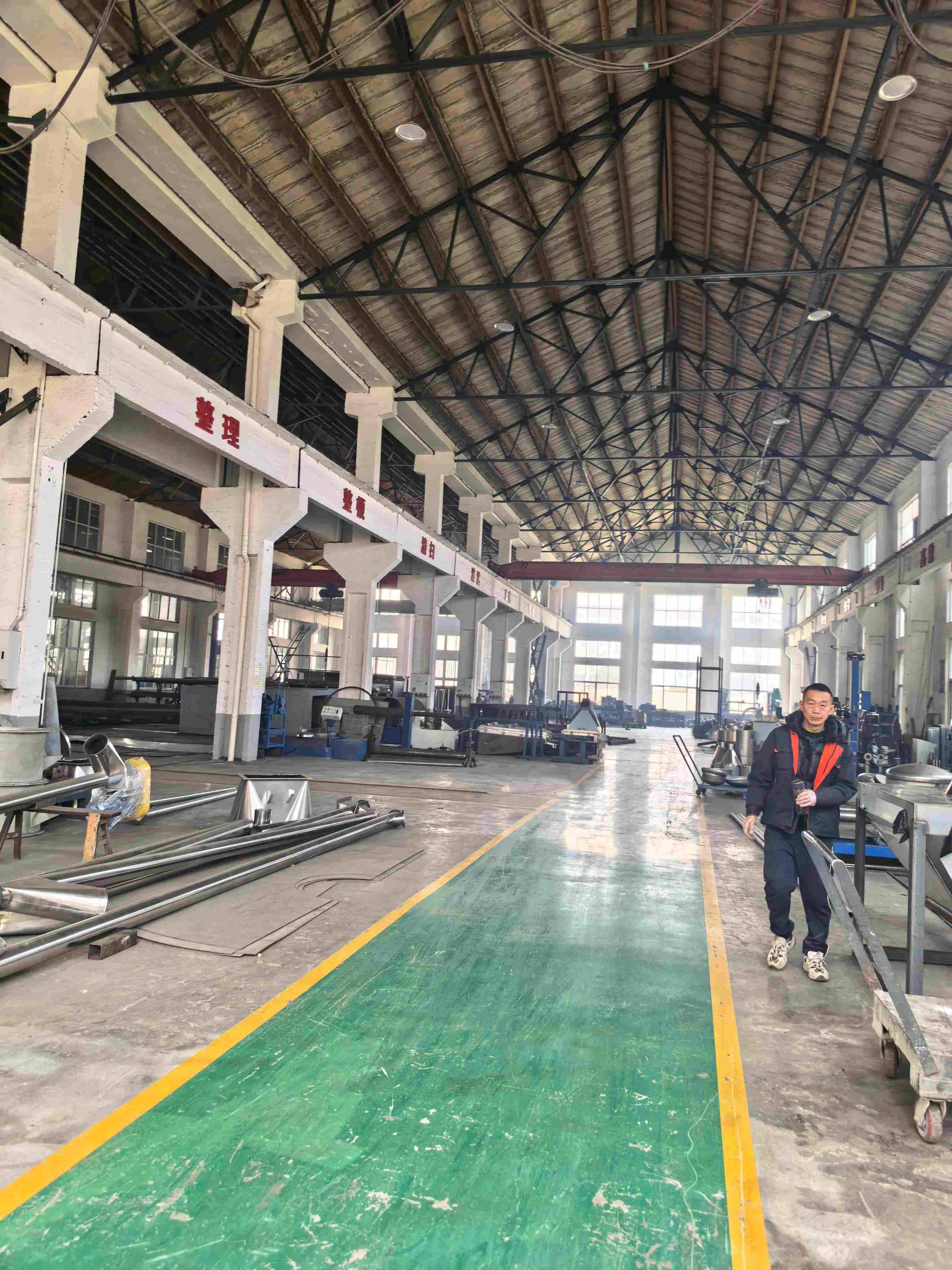
Every microscopic deviation in a high-stakes environment can trigger a cascade of failures that no amount of post-process correction can undo. True precision doesn’t come from tighter tolerances alone—it emerges when measurement systems, environmental controls, and operator intuition merge seamlessly. We’ve seen setups where vibration isolation rivaled observatory standards, yet human error during manual alignment introduced variations no sensor flagged until it was too late. Bridging that gap means treating accuracy as a living discipline, not a specification sheet checkbox.
Instead of leaning on routine calibrations, the most dependable operations now embed real-time feedback loops that adjust for thermal drift, tool wear, and material inconsistencies as they occur. Think of a coordinate measuring machine that cross-references its own readings against a dynamic baseline, flagging its own uncertainty before it becomes a problem. That level of self-scrutiny transforms accuracy from a static goal into an evolving capability—one that doesn’t just meet a standard today but actively defends against the errors tomorrow may bring.
Seamless Integration with Existing Industrial Systems
Industrial environments rarely start from a blank slate. A maze of legacy PLCs, SCADA setups, and custom protocols already hums along the factory floor. Achieving seamless integration means embedding new capabilities without triggering a cascade of hardware swaps or forcing a rewrite of proven logic. It’s about communicating across decades-old serial links as easily as modern Ethernet/IP networks, pulling data from proprietary historians and turning it into actionable insights on a unified dashboard. This layer sits quietly atop the existing hierarchy, respecting the rhythms of production cycles while bridging the gap between isolated automation islands.
Rather than wrapping every device in a new API, the approach leans on protocol mediation and edge-native normalization. An OPC-UA gateway might translate Modbus registers into tag-based streams, while MQTT brokers ferry them to cloud analytics without disturbing local control loops. Configuration is driven by discovery, not manual mapping—auto-sensing the tags, data types, and update rates already configured in the PLC. Maintenance teams see only familiar interface patterns, while IT gains a structured data flow that doesn’t force operational technology into uncomfortable molds.
True cohesion also means adapting to the system’s physical and logical constraints. Bandwidth-cheap backhaul over Wi-Fi 6 may exist next to serial radio links that can only handle a few bytes per second. Integration logic honors those limits, prioritizing critical alarms over bulk logs, compressing payloads, and caching when connectivity dips. It’s a deliberate design that treats brownfield complexity not as a hurdle to overcome, but as the very fabric the solution is woven into—ensuring that the old and the new don’t just coexist, but genuinely reinforce one another.
Robust Design for Demanding Operating Environments
Every component in an industrial device must earn its place through resilience. From the choice of alloys that resist corrosion in salt-laden air to the encapsulation of electronics against fine dust ingress, the engineering philosophy centers on passive survivability. Rather than adding layers of protection as an afterthought, the core architecture integrates shielding, thermal pathways, and vibration damping directly into the substrate. This approach eliminates single points of failure by spreading mechanical stress across multiple load paths, ensuring that a crack or deformation in one area doesn’t cascade into a catastrophic collapse. The result is a system that ages gracefully, maintaining performance even as surfaces degrade and tolerances shift.
Thermal extremes pose a particularly deceptive threat. It’s rarely the steady state that causes failures, but the relentless cycling between high and low temperatures. Materials expand and contract at different rates, inducing micro-shear at interfaces that can eventually separate bonded joints or fracture solder connections. By adopting a symmetric layout of materials around the neutral axis of printed circuit boards and using compliant adhesives with a glass transition temperature well outside the operational range, these stresses are distributed rather than concentrated. This strategy transforms thermal cycling from a destructive force into a mild annoyance, drastically extending the service life in environments where the ambient temperature can swing forty degrees in a single day.
Environmental sealing is often misunderstood as merely keeping water out. True robustness requires managing the microclimate inside the enclosure. Even sealed housings breathe through gaskets as atmospheric pressure changes, drawing in humidity that condenses when temperatures drop. A thoughtful design includes a vent with an expanded polytetrafluoroethylene membrane that allows pressure equalization while blocking liquid water and oleophobic contaminants. Meanwhile, internal desiccants or a slight positive pressure maintained by the device’s own waste heat can push the dew point permanently below the internal temperature. This holistic water management strategy prevents the silent accumulation of moisture that corrodes contacts and fosters short circuits, turning a weatherproof label into genuine longevity.
Enhancing Process Efficiency Through Advanced Metering
Advanced metering technologies are reshaping how industries monitor and manage their core operations. By capturing granular, real-time data on variables such as flow, pressure, temperature, and energy consumption, these systems provide a level of visibility that traditional meters simply cannot match. This detailed insight allows operators to pinpoint inefficiencies—whether it’s a minor leak in a pipeline, a gradual drop in equipment performance, or an unexpected spike in resource use. With this information, adjustments can be made instantly, often through automated controls, minimizing waste and ensuring that processes run within optimal parameters around the clock.
Beyond immediate tweaks, the historical data collected by advanced meters opens the door to predictive analytics. Patterns and trends emerge over time, enabling teams to forecast maintenance needs before a breakdown occurs and to schedule interventions during planned downtime. This proactive approach not only extends the lifespan of machinery but also prevents the costly ripple effects of unplanned outages. Ultimately, integrating advanced metering into a broader digital ecosystem turns raw measurements into a strategic asset, driving continuous improvement and leaner, more agile operations without the guesswork.
Custom Solutions for Complex Industrial Challenges
Off-the-shelf equipment rarely fits the intricate demands of heavy industry. That's why we engineer tailor-made systems built around your operational constraints—whether it's extreme temperatures, corrosive environments, or tight spatial layouts that standard machinery can't accommodate. Our process starts by dissecting your workflow at the ground level, uncovering the friction points and inefficiencies that generic solutions overlook, then designing precision-fit answers that integrate seamlessly with existing infrastructure.
We thrive on the puzzles others avoid: unusual geometries, uncommon material handling, or processes that combine multiple steps into one. By questioning assumptions baked into traditional designs, we often simplify what initially looked like a logistical nightmare. The outcome isn't just a workable fix—it's a streamlined, hardened system that reduces waste and withstands real-world abuse far longer than catalog options.
Collaboration sits at the core of each project. We involve your frontline teams early, because they know the day-to-day quirks better than any blueprint reveals. Prototypes are tested on-site, refined through direct feedback, and only finalized once they prove themselves in the mess of production. That iterative loop turns complex demands into rugged, reliable assets that don't just solve the problem—they make the whole operation feel more coherent.
FAQ
OEM metering units are custom-engineered fluid handling components built to be integrated directly into larger equipment or systems by original equipment manufacturers. Unlike standard, catalog-available flow controllers, they are tailor-made to meet specific performance, dimensional, and interface requirements, ensuring seamless compatibility and optimized functionality within the host machine.
Most precision metering units rely on positive displacement mechanisms—such as gear, piston, or vane pumps—driven by a carefully controlled motor. The motor's speed is regulated to deliver a precise volume of fluid per revolution or stroke. In many advanced designs, closed-loop feedback from flow sensors or pressure transducers allows real-time adjustments, guaranteeing highly accurate and repeatable dosing even under varying process conditions.
They are critical wherever exact fluid delivery is non-negotiable. Common examples include adhesive and sealant application in electronics manufacturing, injection of catalysts or additives in chemical processing, precise lubrication in heavy machinery, reagent dosing in water treatment, and fuel metering in energy systems. Essentially, any sector that demands consistent, small-volume, or high-frequency fluid dispensing benefits from them.
Key considerations include the fluid's characteristics (viscosity, corrosiveness, abrasive properties), required flow range and accuracy, target pressure, duty cycle, and the available space envelope. Integration aspects matter just as much—communication protocols, power supply, and mounting configuration. Long-term reliability, ease of maintenance, and the supplier's ability to customize quickly are also top-tier considerations.
A bespoke unit eliminates adapters, compromise in sizing, and unnecessary features that can introduce leak points, dead volumes, or flow restrictions. It can be designed to match the exact fluid path geometry and material compatibility, reducing wear and pulsation. This leads to tighter process control, longer service intervals, and often a more compact, energy-efficient design—directly enhancing the host system's overall value.
Absolutely. We're seeing a significant push toward smart metering units with integrated IoT capabilities for predictive maintenance and remote diagnostics. Miniaturization continues for medical and laboratory equipment. There's also increased use of advanced materials like PEEK and ceramic components for handling aggressive chemicals, and a growing emphasis on energy-efficient drives to support sustainability goals without sacrificing precision.
Preventive care usually revolves around periodic inspection of seals and wetted parts for wear or chemical attack, verifying the calibration against a known standard, and keeping the fluid clean via filtration. Many modern units are designed with easily replaceable pump heads or cartridges to minimize downtime. Following the manufacturer's guidelines for flushing and storage when changing fluids or during prolonged shutdowns is also crucial.
Conclusion
In the realm of industrial fluid management, OEM metering units have become indispensable for achieving precision flow control. These systems are meticulously tailored to meet the specific fluid handling demands of specialized machinery, ensuring that each drop of liquid is dispensed with uncompromising accuracy. From chemical dosing in pharmaceutical production to adhesive application in automotive assembly, the ability to deliver exact volumes at precise intervals directly impacts product quality and process repeatability. Advanced metering mechanisms, often incorporating positive displacement or mass flow technologies, eliminate variability and provide the consistency needed in critical processes where even minor deviations can lead to costly failures or safety hazards.
Beyond accuracy, seamless integration with existing industrial systems is a hallmark of well-engineered OEM metering solutions. They are designed with robust construction to withstand harsh operating environments, including exposure to corrosive chemicals, extreme temperatures, and high-pressure conditions. This durability minimizes downtime and maintenance, thereby enhancing overall process efficiency. Moreover, the true value of OEM metering lies in custom solutions that address complex industrial challenges—whether it’s synchronizing multiple fluid streams, handling abrasive or viscous media, or incorporating smart sensors for real-time monitoring. By combining tailored engineering with resilient design, these metering units empower manufacturers to optimize their operations, reduce waste, and stay ahead in competitive markets.
Contact Us
Contact Person: Darye WANG
Email: [email protected]
Tel/WhatsApp: 86-13501017897
Website: https://www.fcntd.com/