

Professional Box-type Transformer Essential Guide for Reliable Power Distribution
2026-09-07
What separates a box-type transformer that lasts decades from one that falters in its first storm? It rarely comes down to luck. From coil design to cooling strategy, the details decide whether power distribution stays reliable or becomes a liability. In this essential guide, we break down the engineering realities behind the nameplate—and show why Chang Song builds these units to outlast the harshest conditions. If your grid depends on uninterrupted service, the insights ahead are not optional reading.
When Space Is Tight: Why Box-type Transformers Lead in Urban Grids
In crowded city centres, every square metre counts. Conventional transformer stations demand dedicated plots, fenced enclosures and access roads that simply don't exist between high-rises and under narrow streets. Box-type transformers flip that equation. Their sealed, self-contained enclosures squeeze into sidewalk niches, parking bays or even building basements, turning leftover space into a functioning grid node. A single compact unit can replace a small room full of switchgear, cutting land use by half or more without sacrificing capacity.
Space is only the first hurdle. Urban grids also face strict noise limits, safety regulations and visual-impact reviews. Box-type transformers handle these by design: sound-dampened enclosures keep hum below residential thresholds, fully insulated cable compartments remove exposed live parts, and neutral grey or green housings blend into streetscapes. Because units arrive pre-wired and factory-tested, installation takes days rather than weeks, reducing road closures and labour costs. Modular designs let utilities add capacity later by bolting on another bay, avoiding disruptive rebuilds.
Perhaps the biggest operational gain is proximity. Placing transformation close to load centres shortens low-voltage runs, cutting line losses and voltage drop in dense urban networks. Box-type transformers also make it practical to add distributed generation or EV charging points at street level, since new feeders can tap into an adjacent unit without running cable back to a distant substation. For grid planners, that flexibility is worth more than the saved square metres alone.
Inside the Steel Shell: Components That Keep Current Flowing
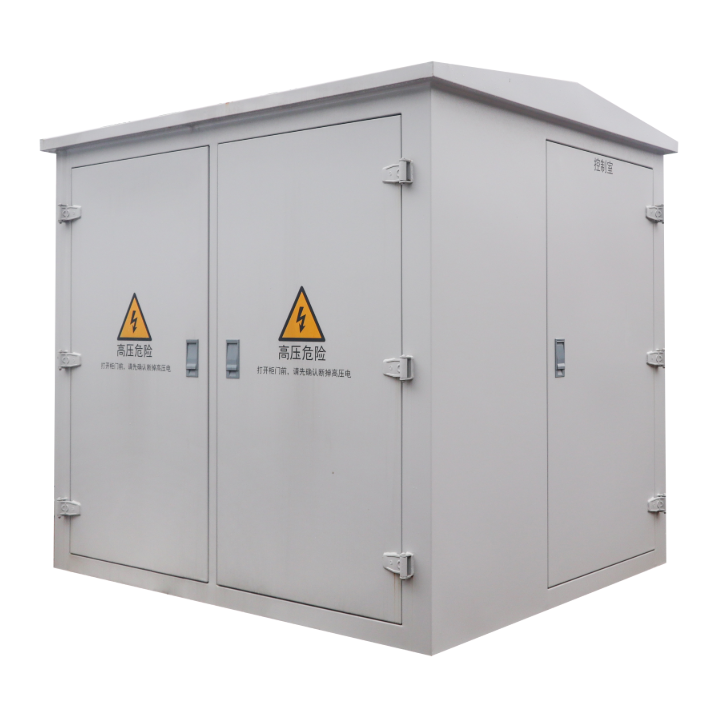
Beneath the rugged steel exterior of an industrial transformer or motor housing lies a carefully arranged network of copper windings and busbars. These conductors do the heavy lifting, channeling electrons from input terminals to output connections without interruption. Each turn of the winding is wound tightly around a laminated core, and the shape, thickness, and cross-sectional area of the copper are chosen not just for conductivity, but for heat tolerance and mechanical stability under magnetic stress. Bolted joints between busbar sections often use silver-plated contact surfaces to reduce resistance at the interface, because even a slight oxidation there can generate enough heat to degrade insulation over time.
Supporting the current path are the unsung insulating and clamping components. Pressboard barriers, resin-impregnated paper, and epoxy spacers keep high-voltage conductors separated from the grounded steel shell, while fiberglass bands and steel bolts hold everything in place during short-circuit surges. These materials must withstand both electric field stress and mechanical vibration without cracking or losing dielectric strength. In many designs, the steel shell itself plays a dual role: it shields the interior from external moisture and physical damage, but it also acts as a return path for stray magnetic flux. That is why internal grounding straps and flux shunts are added, ensuring that any leakage current is safely diverted instead of causing hot spots on the tank wall.
Finally, the cooling and monitoring elements integrated inside the shell keep the current flowing under continuous load. Radiator fins on the outside are only half the story; internally, oil ducts or air channels guide coolant directly over the hottest winding sections. Thermocouples and pressure relays feed real-time data to control systems, and in some modern units, fiber-optic temperature sensors are embedded within the windings themselves. Without these internal pathways for heat and signal, the copper would quickly exceed its thermal limit, insulation would age prematurely, and the entire assembly would fail long before its rated lifespan. The steel shell may look static from the outside, but inside it is a dynamic environment where every component works to maintain uninterrupted conduction.
Heat, Moisture, and Dust: Environmental Threats to Continuous Duty
High ambient temperatures force continuous-duty equipment to shed heat faster than its design allows, shortening insulation life and accelerating lubricant breakdown. A sustained 10°C rise above rated operating temperature can cut the service life of motor winding insulation by roughly half. The problem compounds in enclosed or poorly ventilated spaces where heat has no escape path and internal components begin to thermally degrade.
Moisture works more slowly but with equal damage. Condensation forms on internal surfaces during temperature swings, leading to corrosion, electrical leakage, and eventual short circuits. In humid environments, water vapor penetrates seals and cable jackets, reducing dielectric strength. Dust then amplifies the threat: fine particles settle on cooling fins and filters, restricting airflow and trapping heat, while conductive dust creates leakage paths across terminals and circuit boards.
Together, these three factors create an accelerating cycle. Dust reduces cooling efficiency, heat drives moisture out of materials only to condense again on cooler surfaces, and moisture causes dust to cling to insulation and metal parts. Continuous-duty equipment needs sealed enclosures, filtered ventilation, or active climate control—otherwise environmental stress, not mechanical wear, determines how long it survives.
Rating Realities: Matching Transformer Capacity to Actual Load Patterns
Transformers get sized for a worst-case scenario that rarely shows up in daily operation. The nameplate kVA might assume a hypothetical peak with every motor starting at once, but real load curves tell a different story — short morning spikes, long afternoon lulls, and occasional seasonal surges. When the gap between paper rating and actual demand grows wide, you pay for unused copper and core losses that never earn their keep.
A more honest approach starts with logging half-hour or hourly demand data over several months. You'll often find the transformer runs below 40% of its rated capacity for 80% of the time. That underloading isn't harmless: excitation losses stay constant regardless of load, so a lightly loaded unit wastes a larger share of every kilowatt-hour. On the flip side, undersized units pushed deep into overload during heat waves age faster and risk unexpected tripping. Matching means sizing for the true load duration curve, not the imaginary spike.
Practical fixes range from replacing an oversized unit with a smaller, more efficient core to adding forced-air cooling that buys temporary overload headroom without oversizing the base rating. Some operators loop secondary ties between adjacent transformers, letting them share load during rare peaks while keeping normal operation near the sweet spot of 50–70% loading. The payoff isn't just lower losses — it's a transformer that finally reflects how the building actually behaves, instead of how a spec sheet once guessed it would.
Avoiding Installation Errors That Quietly Shorten Transformer Life
A transformer is often treated as a fit-and-forget component, but a surprising number of failures trace back to the first few hours after mounting. One of the most overlooked mistakes is failing to account for ventilation clearance. Tight enclosures or pushing the unit flush against a wall can raise winding temperatures by twenty degrees or more, and that extra heat doesn't just reduce capacity—it directly accelerates insulation aging. Even a small restriction in airflow around the cooling fins can turn a thirty-year design life into a ten-year reality without any visible warning signs.
Termination torque is another quiet killer. Loose connections on the primary or secondary side create localized hot spots that migrate into the windings over time. Technicians sometimes rely on feel instead of a calibrated torque wrench, leaving bolts under-tightened or, worse, overtightened to the point of damaging the internal lead threads. A simple infrared scan after the first load cycle often reveals these problem joints long before they become catastrophic, yet many installations skip this step entirely and pay for it later with unexplained winding failures.
Moisture ingress during installation is equally damaging but rarely mentioned. If a transformer sits outdoors overnight with open conduit hubs or missing breather plugs, humid air gets pulled inside as the core cools. That moisture condenses on the paper insulation, lowering its dielectric strength permanently. It doesn't take a flood—just one foggy morning with an open fitting can embed a degradation process that shows up years later as a turn-to-turn short. Taking five minutes to seal every opening before walking away is cheap insurance compared to an unplanned outage in the middle of a peak season.
From Reactive Repairs to Predictive Maintenance Strategies
For decades, maintenance teams operated on a simple premise: fix it when it breaks. Reactive repairs meant waiting for equipment failure, then scrambling to restore operations under pressure. This approach often led to unplanned downtime, rushed spare parts orders, and inflated labor costs. While some breakdowns are unavoidable, treating every asset as a surprise event creates a cycle of firefighting that drains resources and erodes reliability.
Shifting toward predictive maintenance changes the conversation from "what failed?" to "what is likely to fail next?" By monitoring vibration, temperature, oil quality, and other condition indicators, teams can spot early warning signs long before a functional failure occurs. This doesn't require a full smart factory overhaul—many facilities start with handheld sensors and monthly trend reviews. The goal is to schedule maintenance only when evidence suggests it's needed, rather than on a fixed calendar or after a costly breakdown.
The real payoff comes when maintenance becomes a strategic lever instead of a cost center. Predictive strategies reduce secondary damage, extend asset life, and let planners bundle work during natural production pauses. Maintenance crews shift from emergency responders to reliability partners. Over time, the data collected feeds better procurement decisions and capital planning, turning a once-chaotic repair shop into a predictable, well-oiled operation.
FAQ
It is rarely just the outer shell. Professional designs focus on thermal stability, corrosion resistance, proper IP sealing, and arc fault containment. They also include accessible test points and are built to handle repeated load cycling without developing hot spots.
Start with your peak demand plus a margin for future expansion, but avoid excessive oversizing since no-load losses still add up. Review the load profile over a normal week, account for motor inrush or harmonic content, then aim for a unit that runs between 60 and 80 percent of its rated capacity at maximum load.
Choose a spot away from flood zones, HVAC exhaust, and areas with heavy dust or chemical vapors. Leave at least one meter of clear space around ventilation openings, keep the foundation level with proper drainage, and face the doors away from the prevailing wind to limit moisture entry.
Routine infrared scans of connections, checking door gaskets, testing pressure relief devices, cleaning or replacing ventilation filters, and measuring insulation resistance. Small issues like oil seepage or darkened silica gel should not be ignored because they often point to developing problems.
It is essential because trapped heat shortens insulation life. Warning signs include frequent high-temperature alarms, discolored finishes around radiators, hot spots on thermal imaging, and reduced loading ability in summer. Adding forced air or improving natural convection may be necessary.
Yes, provided the unit has appropriate protective coatings and sealing. For salt spray, look for a C5-M or equivalent anti-corrosion rating. In dusty industrial sites, filtered ventilation helps keep conductive particles off bushings and insulators.
Look for an arc fault rated enclosure, door interlocks that accept padlocks, pressure relief vents, oil level and temperature gauges with alarm contacts, and clearly visible warning labels. Some designs also offer grounding switches and visible break isolation for safer maintenance.
By moving transformation closer to load centers, it reduces voltage drop and cable losses. Built-in protection and monitoring isolate faults faster, while the sealed enclosure shields components from weather and tampering, which usually lowers outage frequency.
Conclusion
Box-type transformers have become the default choice for dense urban distribution not because they reinvent electrical principles, but because they solve the practical problem of fitting robust switchgear into footprints where every square meter counts. Inside the steel enclosure, busbar geometry, cooling channels, and protective relays are arranged to keep current flowing under conditions that would quickly degrade open-air substations. Yet the enclosure itself works against thermal dissipation, so the real engineering challenge lies in managing heat buildup while keeping moisture and conductive dust away from insulation surfaces—three threats that rarely appear in datasheets but dominate field failure statistics.
A reliable deployment starts with honest load profiling rather than simply oversizing the unit, since lightly loaded transformers accumulate moisture differently and heavily loaded ones suffer accelerated insulation aging. Installation mistakes such as inadequate cable bending radius, poor gland sealing, or incorrect tap settings often go unnoticed until they shorten service life by years. The most effective operators have shifted from fixing failures after they occur to monitoring oil temperature, partial discharge, and cooling fan runtime trends, using that data to anticipate problems before a small hotspot becomes an unplanned outage.
Contact Us
Contact Person: Tonglun Chen
Email: [email protected]
Tel/WhatsApp: 8618906642555
Website: https://www.cncsele.com