
Servo-Driven Sanitary Pad Production Line Solutions: Enhancing Efficiency and Precision in Manufacturing
2026-03-11
In the fast-evolving world of feminine hygiene product manufacturing, precision and efficiency are not just goals—they're necessities. For manufacturers looking to stay ahead, innovative solutions that streamline production while maintaining high-quality standards are key. Enter the servo-driven sanitary pad production line, a game-changing technology that promises to transform the industry. At Womeng, we specialize in harnessing these advanced systems to deliver unparalleled performance on the factory floor. In this blog, we'll explore how servo-driven automation enhances every step of the manufacturing process, from material handling to final packaging. Imagine cutting-edge machinery that reduces waste, boosts output, and ensures consistent product excellence—all while adapting seamlessly to market demands. Ready to discover the future of sanitary pad production? Let's dive into the details and see how Womeng's solutions can set your operations apart, driving growth and innovation in an increasingly competitive landscape.
Advanced Servo Technology in Modern Sanitary Pad Manufacturing
In the evolving landscape of sanitary pad manufacturing, advanced servo technology has become a game-changer, revolutionizing production lines with unprecedented precision and flexibility. Gone are the days of rigid mechanical setups; today's facilities utilize high-performance digital servos that allow for real-time adjustments to speed, pressure, and alignment. This means that even subtle variations in raw materials, such as absorbent cores or adhesive layers, can be accommodated without halting the machinery. Manufacturers are now able to produce pads with consistent quality at faster rates, significantly reducing waste and enhancing overall efficiency. The integration of smart sensors and feedback loops ensures that every pad meets strict hygiene and comfort standards, making these systems indispensable in modern factories.
Beyond mere efficiency gains, this technology enables a higher degree of customization and innovation in product design. For instance, advanced servo drives can precisely control the application of elastic components or the folding of wings, allowing for the creation of more ergonomic and comfortable pads tailored to diverse user needs. In a competitive market where consumers demand better fit and performance, this adaptability gives brands a distinct edge. By leveraging servo-controlled automation, companies can quickly switch between different pad models on the same line, responding to trends without costly retooling. This not only boosts agility but also paves the way for more sustainable practices, as it minimizes material excess and energy consumption through optimized processes.
The human impact of these advancements is profound, as they contribute to safer and more reliable menstrual hygiene products. With advanced servo technology, production becomes less prone to errors that could lead to defects, ensuring that pads reach consumers with consistent absorbency and leak protection. This reliability builds trust and loyalty among users, which is crucial in a sector where quality directly affects well-being. Looking ahead, as research into biocompatible materials and eco-friendly options grows, servo systems will likely play a key role in integrating these innovations into scalable manufacturing, further pushing the boundaries of what's possible in personal care products.
Automated Precision Control for Superior Product Quality
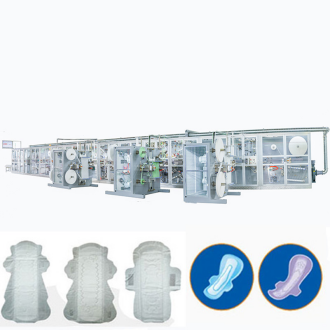
By implementing automated precision control systems, manufacturers ensure every product meets exact specifications without human error. This technology continuously monitors production lines, adjusting parameters in real-time to maintain consistency. Advanced sensors detect even minor deviations, triggering immediate corrections to prevent defects. Such automation not only boosts efficiency but also enhances reliability, making it ideal for industries like electronics and automotive where tolerances are critical. The result is a streamlined process that delivers superior quality by adhering to strict standards throughout manufacturing.
Automated precision control systems utilize sophisticated algorithms and machine learning to refine product quality. These tools analyze vast amounts of data from production cycles, identifying patterns that might indicate potential issues. By predicting and mitigating problems before they arise, the systems reduce waste and rework, saving costs while maintaining high standards. This proactive approach allows companies to adapt quickly to changing materials or designs, ensuring flexibility without compromising on output. It transforms quality assurance from a reactive task into an integrated, forward-looking strategy that supports innovation and customer satisfaction.
In today’s competitive market, automated precision control sets top-performing companies apart by enabling precise customization and scalability. It supports the production of complex or high-volume items with minimal variance, ensuring each unit meets both regulatory requirements and consumer expectations. By automating quality checks, businesses can focus on creative development and strategic growth, rather than manual inspections. This not only elevates the end product but also builds brand trust, as customers receive consistently excellent goods that perform reliably over time.
Boosting Production Efficiency Through Intelligent Line Integration
In today's fast-paced manufacturing landscape, intelligent line integration is reshaping how factories achieve higher production efficiency. By seamlessly connecting machinery, sensors, and software systems, businesses can monitor operations in real-time, identify bottlenecks instantly, and adjust workflows on the fly. This dynamic approach not only reduces downtime but also optimizes resource allocation, allowing teams to produce more with fewer errors.
Unlike traditional setups that rely on manual oversight, intelligent integration leverages advanced analytics and automation. For example, predictive maintenance algorithms can foresee equipment failures, while adaptive routing ensures materials flow smoothly without interruptions. The result is a production environment that feels intuitive—almost self-correcting—leading to significant gains in output quality and speed.
Ultimately, embracing this technology means moving beyond incremental improvements to unlock transformative efficiency. Companies adopting intelligent line integration often report a 20-30% boost in productivity, alongside greater flexibility to meet shifting market demands. It's a strategic shift that turns data into actionable insights, making every step in the manufacturing process smarter and more responsive.
Customizable Solutions for Diverse Manufacturing Needs
In today's fast-paced manufacturing landscape, one-size-fits-all approaches often fall short of meeting unique operational challenges. Our customizable solutions are designed to adapt to the specific requirements of diverse manufacturing needs, whether you're in automotive, electronics, or pharmaceuticals. By leveraging modular designs and flexible configurations, we ensure that your production line runs efficiently, reducing downtime and enhancing overall productivity without compromising on quality or scalability.
What sets our offerings apart is the deep integration of customer feedback into our development process, allowing for tailored adjustments that address pain points directly. Unlike generic systems, our solutions evolve with your business, providing ongoing support and updates that keep pace with industry trends and regulatory changes. This proactive approach not only solves immediate issues but also future-proofs your operations, making it easier to adapt to new materials, technologies, or market demands as they arise.
Through collaborative partnerships and a hands-on understanding of various manufacturing environments, we deliver solutions that are not just effective but also intuitive to use. From initial consultation to final implementation, our team works closely with you to craft strategies that optimize workflows, minimize waste, and boost innovation. By focusing on customization over conformity, we empower manufacturers to achieve greater flexibility and competitiveness in an ever-changing global market.
Innovative Design Features for Enhanced Operational Reliability
One of the standout aspects of cutting-edge systems is their integration of redundant components that work in harmony. These aren't just backups; they're actively engaged, allowing the system to maintain seamless performance even if a part falters. This approach not only prevents downtime but also extends the overall lifespan of the equipment, making operations more robust and predictable.
By leveraging advanced materials and smart sensors, we've developed self-diagnostic capabilities that go beyond routine monitoring. These features enable real-time adjustments, spotting potential issues before they escalate into failures. It's like having a built-in guardian that continuously fine-tunes performance, ensuring every task runs smoothly under varying conditions.
Think of it as a proactive partnership between technology and reliability, where innovation drives consistency. Through modular designs, we allow for easy upgrades and repairs without overhauling the entire system, keeping everything agile and cost-effective. This forward-thinking setup ensures that reliability isn't just a feature; it's a core part of the user experience, day in and day out.
Sustainable Practices in High-Speed Sanitary Pad Production
In today's world, where consumers are increasingly eco-conscious, high-speed sanitary pad manufacturers are embracing innovative sustainable practices to meet demand while minimizing environmental impact. Many factories now integrate renewable energy sources like solar panels into their production lines, significantly reducing carbon footprints. Beyond energy, water conservation measures—such as closed-loop systems that recycle water during the manufacturing process—are becoming standard, ensuring efficient resource use without compromising hygiene standards. These steps not only align with global sustainability goals but also resonate with customers who prioritize green products.
Material innovation plays a crucial role in making high-speed production more sustainable. Manufacturers are shifting toward biodegradable or plant-based materials, such as bamboo or organic cotton, which break down faster than traditional plastics. Some companies are even adopting waterless or low-water technologies for absorbent core formation, cutting down on waste and energy consumption. By rethinking the very composition of pads, these practices allow for rapid assembly lines that are both efficient and environmentally friendly, setting new benchmarks in the industry.
Another key aspect is waste management and packaging optimization. High-speed facilities often generate substantial waste, but many are implementing zero-waste initiatives by repurposing production scraps into other products or composting them. Eco-friendly packaging made from recycled materials, with minimalist designs to reduce excess, further enhances sustainability. This holistic approach ensures that from raw material sourcing to final distribution, every stage of fast-paced production supports a circular economy, making sanitary pads not just accessible but also planet-friendly.
FAQ
Servo-driven systems allow for precise motion control, reducing material waste and improving consistency in pad thickness and shape.
By automating adjustments and using real-time feedback, it speeds up cycles and minimizes downtime, boosting overall output.
Yes, it's designed with flexible programming to switch between product specifications quickly without lengthy setup changes.
Improved precision ensures even adhesive distribution and accurate placement of absorbent layers, enhancing comfort and leakage protection.
Regular checks on servo motors and drives are essential, but smart diagnostics often predict issues, reducing unplanned repairs.
Yes, by cutting material waste and optimizing energy consumption, it supports sustainable manufacturing practices.
With enclosed components and automated controls, it minimizes direct contact with machinery, lowering accident risks.
Initial costs are higher, but long-term savings from efficiency gains and reduced waste can make it a viable investment over time.
Conclusion
Servo-driven sanitary pad production line solutions have revolutionized manufacturing by leveraging advanced servo technology and intelligent integration to enhance efficiency and precision. These systems employ cutting-edge servo technology in modern production, ensuring exact control over material handling and assembly processes. This high level of automation translates to superior product quality, as automated precision control minimizes errors and inconsistencies, delivering pads that meet strict standards for comfort and performance. By boosting production efficiency through seamless line integration, these solutions optimize throughput while maintaining accuracy, making them a cornerstone for manufacturers aiming to scale operations without compromising reliability.
The adaptability of these production lines is further highlighted by customizable solutions tailored to diverse manufacturing needs, allowing businesses to adjust processes for various product specifications and market demands. Innovative design features contribute to enhanced operational reliability, reducing downtime and maintenance costs through robust components and user-friendly interfaces. Additionally, these systems increasingly incorporate sustainable practices in high-speed production, focusing on energy efficiency, waste reduction, and eco-friendly materials, aligning with global environmental goals. Overall, servo-driven lines represent a holistic approach that combines technological innovation with practical benefits, driving forward the sanitary pad industry with smart, resilient, and eco-conscious manufacturing solutions.
Contact Us
Contact Person: Jessie Lai
Email: [email protected]
Tel/WhatsApp: 86-188594442931
Website: https://www.wm-machinery.com