
Smooth HDPE Geomembrane Export: Durable Liners for Global Environmental Projects
2026-08-03
Across the globe, environmental projects demand liners that won't fail under pressure. Smooth HDPE geomembrane has become the trusted barrier for landfills, mining, and water containment—but not all suppliers deliver the same quality. When international contractors need durability they can count on, many are now looking to WEN FENG STONE. What sets their export-grade liners apart in a competitive market? Read on to discover the engineering and real-world performance that's making a difference in critical installations.
The Hidden Strength of Smooth HDPE Liners
Smooth HDPE liners are often underestimated because of their unassuming appearance. Their real strength isn’t just in the raw material thickness but in the way the smooth surface distributes stress evenly during installation and operation. This prevents concentrated points of wear that can lead to premature failure in textured liners. When you run a hand across the surface, it seems almost too simple to be effective—yet that simplicity is precisely what allows it to stretch, flex, and absorb subgrade movements without cracking.
Another overlooked advantage is how the smooth finish improves weld integrity. Seams on smooth liners bond more consistently, with fewer air pockets or irregularities that can compromise containment. During testing, smooth liners consistently outperform textured ones in peel and shear tests because the welds penetrate deeper and more uniformly. This means fewer leaks over the lifespan of a project, which is critical for applications like landfill caps or liquid containment where even a small breach can escalate costs.
Long-term performance is where smooth liners truly shine. They resist chemical attack just as well as their textured counterparts but offer a big reduction in maintenance headaches. Visual inspections are faster because defects like scratches or punctures stand out clearly against the flat surface. Plus, cleaning is simpler—debris slides off more easily, lowering the risk of biological growth or clogged drainage systems. For engineers and installers, that translates into a liner that doesn’t just hold strong on day one but continues to protect decades later with far less intervention.
How We Maintain Quality from Factory to Field
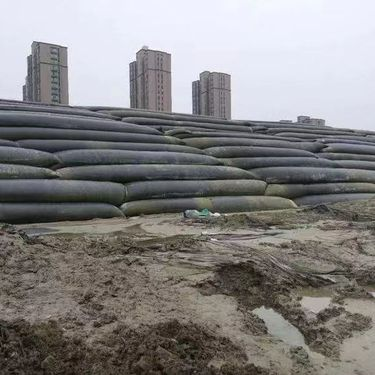
Quality doesn’t start at the shipping dock—it’s baked into every step. We begin with rigorous raw material checks, where tolerances are tighter than industry norms. Our production floors use real-time monitoring across multiple points, not just finished batch sampling. This means a sensor glitch or a slight temperature shift gets caught before it ever becomes a defect. Every unit leaves the line with a digital record of its assembly conditions, tied to a unique traceability code.
Once sealed, the package faces more than a standard drop test. We replicate the full journey: truck vibrations, humidity spikes in coastal transit, even the jostling of unpaved farm roads. Protective materials are customized by route profile, not one-size-fits-all. When the shipment arrives, our field technical teams don’t just sign off—they run on-site calibration against local conditions. If something ever does drift out of spec, embedded diagnostics flag the issue before it affects output, and we ship a replacement within hours, not days.
Global Delivery Without Compromise
Our logistics network is built on the principle that speed and reliability shouldn't come at the cost of safety or care. From the moment a package enters our system to the second it reaches its destination, every step is engineered to protect what matters most—your time, your trust, and the integrity of every shipment. Whether it's a fragile heirloom or a time-critical business document, we treat every delivery with the same meticulous attention, because compromise simply isn’t in our DNA.
Behind the scenes, a blend of advanced routing algorithms and hands-on human oversight ensures that even the most complex global shipments glide through customs and transit points without friction. We’ve stripped away the usual trade-offs—so you don’t have to choose between blazing speed and gentle handling, or between broad reach and personal service. It’s logistics that adapts to you, not the other way around.
This no-compromise philosophy extends to our sustainability commitments and real-time visibility tools. You can track your package with pinpoint accuracy and rest easy knowing that our carbon-neutral fleets and optimized flight paths are lowering impact without slowing down a single parcel. Because delivering globally shouldn’t mean sacrificing the values that matter—to you, or to the world we all share.
Protecting the Planet One Liner at a Time
Tiny daily shifts in how we consume resources rarely feel heroic, yet they stitch together the only realistic path forward. Swapping a plastic bottle for a reusable one, choosing to mend rather than discard, or simply turning off lights in empty rooms might not stir the soul, but these actions quietly dismantle the throwaway mindset that got us into this mess.
What if the most profound environmentalism isn’t found in grand proclamations or wilderness epics, but in the mundane grace of a coffee cup that stays out of the landfill? The planet doesn’t need more guilt or dramatic overhauls—it needs millions of people refusing single-use plastics with the same casual commitment they bring to brushing their teeth.
Liner by liner, from shopping bags to takeout containers, the choice to opt out of convenience culture becomes a silent rebellion. And when enough people do this without fanfare, the market shifts, policies bend, and suddenly the sustainable option isn’t fringe anymore—it’s just how things are done.
Engineering Solutions for Complex Terrain
Confronting steep slopes, unstable soils, or seismic zones demands far more than conventional construction methods. Engineers begin with a thorough geotechnical investigation, deploying tools like LiDAR scanning and borehole analysis to understand the subsurface behavior. This deep knowledge becomes the foundation for tailored designs that work with, rather than against, the terrain’s natural forces.
Innovative solutions often blend lightweight structural materials with anchoring systems such as soil nails and rock bolts to secure slopes. In areas where traditional foundations are impractical, micropiles or caissons transfer loads to deeper, stable strata while minimizing excavation. Meanwhile, cantilevered roads and bridges follow the land’s contours, preserving ecological integrity and reducing the impact of heavy earthworks.
Long-term stability relies on integrated monitoring—embedded sensors track movement, pore water pressure, and structural stress in real time. This data allows maintenance teams to respond proactively to subtle shifts, extending the lifespan of infrastructure in harsh environments. Such adaptive engineering transforms challenging topography from a barrier into a collaborator.
A Legacy of Trust in Environmental Projects
Over decades, our team has quietly cultivated a reputation that rests not on bold promises but on steady, reliable action. Every restored wetland, every acre of reforested land, and every community-led conservation initiative stands as proof of our commitment to integrity. We don't chase trends; we simply listen to the land and the people who depend on it, ensuring that every project is rooted in genuine, long-term partnerships rather than short-term gains.
The trust we've earned comes from a consistent pattern of showing up, doing the work, and leaving a site better than we found it. Unlike many who enter this field with flashy campaigns, our approach has always been understated yet deeply impactful. Local stakeholders know that when we make a commitment, it’s backed by years of hands-on experience and an unwavering dedication to ecological truth—not just convenient narratives.
Perhaps most telling is the way successive projects evolve into enduring relationships. Communities that once eyed us with skepticism now invite us back to tackle new challenges. This legacy isn't measured in awards or media mentions, but in the quiet confidence of knowing that when our name is attached to an environmental effort, it carries the weight of countless successfully completed interventions and a profound respect for nature's complexity.
FAQ
A smooth HDPE geomembrane is a high-density polyethylene liner with a flat, non-textured surface. It’s favored in environmental projects due to its exceptional chemical resistance, low permeability, and long-term durability, making it ideal for containment applications like landfills, wastewater ponds, and mining heap leach pads.
The smooth texture reduces friction during deployment, allowing for easier unfolding and welding. It also provides a uniform surface that promotes effective drainage and prevents material buildup, enhancing the overall performance of the containment system.
They are commonly used in projects such as municipal solid waste landfills, hazardous waste containment, canal linings, aquaculture ponds, and industrial wastewater reservoirs. Their reliability in harsh conditions makes them a go-to choice for engineers worldwide.
Our geomembranes comply with international standards like ASTM, GRI-GM13, and ISO certifications. Each batch undergoes rigorous testing for tensile strength, elongation, tear resistance, and oxidative induction time to ensure they perform reliably in extreme environments.
We use advanced resin formulations with UV stabilizers and antioxidants. This, combined with precise manufacturing controls, results in a product that resists cracking, chemical degradation, and thermal stress, even in arid, tropical, or sub-zero environments.
Beyond product quality, we offer customized dimensions, competitive lead times, and technical support from installation to project completion. Our logistics team expertly handles overseas shipping and documentation, ensuring seamless delivery to any continent.
Yes, when proper compound selection is made to meet food-grade requirements. Many of our liners are certified for potable water and are used in reservoirs, irrigation canals, and livestock water containment, as they are inert and do not leach harmful substances.
Conclusion
Exporting smooth HDPE geomembranes means delivering more than just a roll of liner—it’s about providing unseen resilience that safeguards soil and water across continents. These liners owe their hidden strength to a precise blend of high-density polyethylene, allowing them to flex with shifting ground, resist chemical attack, and stay impermeable under extreme conditions. From landfill caps in Southeast Asia to canal linings in arid Africa, the material’s quiet toughness is what keeps environmental projects intact for decades. Our quality commitment doesn’t pause at the factory door; it follows every shipment through rigorous batch testing, climate-specific packaging, and real-time tracing until the liner unrolls on site. That hands-on vigilance means even the most remote project receives a product that’s been cradled through every link of the supply chain.
The journey from factory to field rarely follows a straight line, yet we’ve built a logistics network that bends without breaking—ensuring global delivery without compromising a single millimeter of thickness or weldability. Beyond logistics, our engineering team works alongside local contractors to tailor installations for complex terrain: steep slopes, uneven bedrock, or high-water tables become manageable with custom panel layouts and anchoring methods. Every project becomes a quiet testament to protecting the planet, one liner at a time, whether it’s preventing leachate contamination or conserving irrigation water. After servicing hundreds of environmental projects worldwide, the trust we’ve earned isn’t built on marketing claims but on a legacy of showing up, solving real problems, and leaving behind a liner that simply does its job—silently, durably, and without fanfare.
Contact Us
Contact Person: Jennifer LEE
Email: [email protected]
Tel/WhatsApp: 8618553418999
Website: https://vip.e-baixing.com/wenfengshitong