

T10 LED Parking Light Bulb Factory: How High-Quality Bulbs Are Made
2026-07-30
Ever wondered what separates a dim, flickering parking light from one that shines brilliantly for years? Behind every reliable T10 LED bulb is a factory that refuses to cut corners—where precision engineering meets uncompromising quality control. At LUXFIGHTER, we pull back the curtain on the intricate process that turns raw components into the dependable glow your vehicle deserves. From chip selection to final testing, discover how true manufacturing excellence is achieved.
Selecting Premium-Grade LEDs and Components
Building a lighting solution that truly stands out starts with one critical decision: the LEDs themselves. Not all diodes are created equal, and the difference between a mediocre and a memorable installation often comes down to chasing the right specs. Look beyond just lumens per watt—dig into the spectral power distribution to ensure the light feels natural and vibrant, and insist on a high color rendering index (CRI) of 90 or above for any space where visual clarity matters. Pay attention to the MacAdam ellipse binning; tighter bins (like 2 or 3 SDCM) guarantee that your warm whites won’t drift into green or magenta territories, keeping consistency across every fixture.
The supporting components deserve just as much scrutiny. A brilliant LED chip on a flimsy board is a failure waiting to happen. Opt for metal-core printed circuit boards (MCPCBs) with thick copper layers and high‑quality dielectric materials—they wick heat away from the junction, extending life and maintaining brightness. Connectors, wires, and solder joints might seem minor, but in constant‑current systems, even a fraction of an ohm’s extra resistance can cascade into efficiency losses and hot spots. Use gold‑plated contacts and oxygen‑free copper wiring for corrosion resistance, especially in damp or outdoor environments.
Finally, treat your supply chain like a partnership, not a transaction. Premium components lose their value if the supplier can’t deliver consistent quality. Audit potential partners for ISO certifications, ask for third‑party LM‑80 test reports on their LED packages, and request a sample reel to stress‑test under your operating conditions before committing. A batch that drifts in forward voltage or color temperature can throw off an entire production run, so building a relationship with a supplier who understands this pain is worth the extra effort.
Precision SMD Assembly for Consistent Output
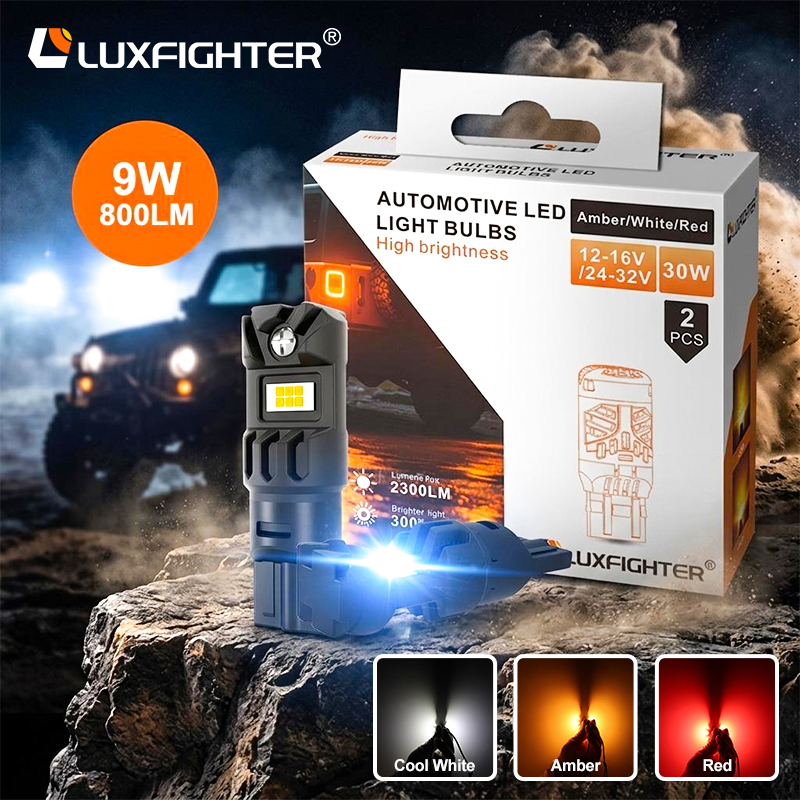
Achieving consistent output in SMD assembly begins with meticulous process calibration. Every parameter, from solder paste application to reflow temperature profiles, is fine-tuned to match the exact specifications of each component. This level of precision eliminates variables that lead to batch variation, ensuring that every board performs identically under real-world conditions. Advanced vision systems and automated optical inspection (AOI) catch misalignments or insufficient solder joints before they compromise reliability, closing the loop on quality without slowing production.
The difference lies in the details: stencil design, placement force, and even the thermal mass of the PCB are accounted for. By treating each assembly as a repeatable scientific process, we move beyond simple component attachment into true performance engineering. The result is a product where electrical characteristics remain stable across thousands of units, reducing field failures and support costs for manufacturers who demand long-term consistency.
Thermal Engineering to Prolong Bulb Lifespan
The longevity of a light bulb often hinges on its ability to shed excess heat. Engineers have long grappled with the delicate balance between brightness and thermal management, recognizing that even small reductions in operating temperature can yield substantial gains in lifespan. By meticulously modeling heat flow using computational fluid dynamics, designers can pinpoint hotspots within the filament or LED assembly and reshape component geometry to promote rapid dissipation. Subtle adjustments, like tweaking the thickness of the glass envelope or reorienting the lead wires, create convective pathways that whisk heat away before it degrades the luminescent materials. The result is a bulb that runs perceptibly cooler to the touch, its internal chemistry shielded from the slow decay that heat inflicts.
Materials science plays a starring role in this thermal orchestration. Advanced ceramics and thermally conductive polymers now serve as heat sinks and substrates, replacing bulkier metal counterparts while offering superior emissivity. In LED designs, the junction between the diode and its mounting board is a critical interface; here, vapor chambers and micro-grooved surfaces leverage phase-change physics to spread heat uniformly across a large area. Even the choice of solder—favoring alloys with high thermal conductivity and fatigue resistance—can delay the formation of microcracks that interrupt electron flow. These innovations operate silently, invisible to the end user, yet they form the backbone of bulbs that promise tens of thousands of hours of illumination without the premature dimming that plagues lesser designs.
Practical manufacturing constraints often require a delicate dance between cost and performance. Air-gap insulation within the lamp base, for example, is a deceptively simple tactic that exploits the poor thermal conductivity of still air to shield the driver electronics from the bulb’s own heat. Meanwhile, adaptive circuitry can dynamically adjust current flow as temperatures climb, throttling output to safeguard sensitive components. Such systems function unobtrusively, preserving the user’s experience while quietly postponing failure. It is this multilayered approach—combining geometry, material, and electronic intelligence—that elevates thermal engineering from a mere challenge to an art form, ensuring that modern bulbs endure long after their ancestors would have surrendered to the relentless siege of heat.
Multi-Stage Quality Checks for Flawless Performance
Achieving flawless performance isn't about luck—it's built on rigorous multi-stage quality checks that leave no aspect unexamined. From the earliest conceptual phases to the final rollout, every component undergoes a series of targeted inspections. This layered approach catches inconsistencies when they're easiest to fix, long before they can snowball into critical failures. Design audits validate alignment with requirements, while peer reviews scrutinize logic and structure for hidden flaws. Each gate acts as a filter, ensuring only work that meets predefined standards moves forward, creating a compounding effect that elevates the overall integrity of the project.
These checks don't just stop at manual evaluation. Automated test suites run exhaustive scenarios against every build, instantly flagging regressions and edge cases that human eyes might miss. Performance benchmarks measure responsiveness under load, stress tests push systems to their limits, and security scans probe for vulnerabilities. Even after passing all prior stages, a final user acceptance phase confirms real-world usability before anything reaches production. The cumulative effect is a release that performs reliably, free of the overlooked details that often slip through single-stage reviews. This methodical rhythm of verification and validation transforms quality from a goal into a guaranteed outcome.
Custom Lens Optics for Uniform Light Distribution
Achieving truly even illumination across a target area demands more than just a high-quality LED—it requires meticulous control over how light exits the fixture. Custom lens optics are engineered to reshape the raw, often uneven output of a light source into a precisely defined beam pattern. By manipulating internal refraction, surface curvature, and material properties, these lenses eliminate hotspots and dark edges that plague generic optics. The result is a smooth, consistent spread of light that enhances visual comfort and ensures every corner of a room or display receives the same luminous intensity.
The design process begins with a deep analysis of the application’s specific needs, including working distance, desired beam angle, and the physical constraints of the luminaire. Advanced modeling software simulates millions of ray paths, iteratively refining the lens profile until the target uniformity is achieved. Prototypes are then precision-machined and tested to verify real-world performance. This level of customization allows designers to tailor the light distribution for challenging scenarios—such as backlighting for signage, where a razor-thin panel must glow without visible striping, or in surgical lighting, where shadow-free, consistent illumination is critical.
Material selection plays a pivotal role in maintaining both optical clarity and long-term durability. High-index optical-grade polymers or glass are chosen based on factors like thermal stability and UV resistance, ensuring that the lens retains its transmissive qualities over thousands of hours of operation. The integration of micro-structures, such as diffractive elements or pillow optics, can further homogenize the beam without sacrificing efficiency. Ultimately, the right custom lens transforms a simple point of light into a sophisticated tool for visual tasks, merging physics and precision manufacturing to deliver a lit environment that feels natural and effortless.
Rigorous Endurance Testing Before Shipment
Every unit we produce undergoes a relentless battery of stress simulations before it ever leaves the factory. We push components far beyond their normal operating limits—cycling temperatures from extreme cold to blistering heat, subjecting assemblies to continuous vibration, and running systems nonstop for days on end. This isn't about checking boxes; it's about uncovering the rare flaw that only emerges under prolonged strain.
Our test protocols don't just simulate typical usage—they replicate worst-case scenarios that most equipment will never encounter. A power supply might be forced to deliver maximum load in a 50°C ambient for 72 hours straight. Mechanical parts are run dry to see how long they hold up. The aim is to identify weak points long before our customers do, and then engineer them out of existence.
Only after passing these grueling trials does a product earn clearance for shipment. We log every test result, trace each anomaly back to its source, and refuse to ship a single unit that shows even marginal deviations. This obsession with pre-shipment punishment ensures that what arrives at your door isn't just built to spec—it’s been hardened by fire, ready for years of dependable service.
FAQ
T10 LED bulbs use much less power while producing a brighter, more focused beam. They also last significantly longer—often tens of thousands of hours—and turn on instantly without the warm-up delay you get with filament bulbs. The color temperature is also more consistent, giving a crisp white or amber light that doesn't fade over time.
Each bulb goes through a multi-stage quality check. Automated optical inspection scans for soldering defects, and every unit is tested for luminosity, current draw, and color temperature. Random samples also undergo vibration and thermal cycling tests to ensure they can handle real-world conditions inside a vehicle.
The housing uses heat-resistant engineering plastics or sometimes aluminum for better thermal management. The LEDs themselves are sourced from top-tier manufacturers to guarantee brightness and longevity. Internally, you'll find high-quality driver circuits with stable constant-current regulation, and the contacts are often gold-plated to resist corrosion.
It starts with SMT assembly, where tiny LEDs and components are placed on a custom PCB. Then the board is reflow-soldered and inspected. Next, the PCB is fitted into its housing, and the assembly is ultrasonically welded or sealed. Each bulb is then burned in for a few hours to weed out early failures before final optical testing and packaging.
LEDs may run cool to the touch, but their internal junctions generate heat that can shorten life if not removed. We use tailored heatsink designs—sometimes passive aluminum fins, sometimes thermally conductive plastic—to draw heat away from the chip. The circuit board layout also helps spread heat evenly, keeping temperatures well within safe limits.
After burn-in, each bulb is placed in an integrating sphere that measures total lumen output and spectral distribution. The data is compared against reference standards. For color consistency, we bin LEDs from the supplier and also verify the final product's correlated color temperature, ensuring it stays within a tight tolerance, like 6000K ±200K for white.
Absolutely. Many customers request modifications such as different connector bases, specific lumen outputs, or unique color temperatures. The factory can also laser-etch logos onto the housing or create completely bespoke designs for OEM applications, with engineering support from our in-house team.
Conclusion
At the heart of every high-performance T10 LED parking light lies a meticulous selection process, where only premium-grade LEDs and electronic components are sourced. These aren't off-the-shelf parts but carefully vetted chips and drivers chosen for their brightness, color accuracy, and long-term stability. Once the components pass inspection, they move to advanced SMD assembly lines where automated pick-and-place machines position each LED with microscopic precision, ensuring every bulb in a batch delivers identical light output without hotspots or shadows. This consistency is critical for parking lights that must meet strict automotive standards, and even slight misalignments are automatically rejected during inline checks.
Thermal management is then fused into the design to prevent early failures—custom heat sinks and thermally conductive materials draw heat away from the LEDs, effectively doubling or tripling the expected lifespan. Each bulb undergoes multi-stage quality verification, from initial current and voltage tests to full photometric analysis that confirms luminous flux and beam angle. Custom optics, shaped through iterative prototyping, produce a wide, uniform light spread that eliminates harsh spots and meets regulatory light distribution requirements. Finally, bulbs face extreme endurance testing: they are cycled continuously in temperature-controlled chambers, vibrated, and subjected to voltage spikes to simulate years of on-road use, shipping only when they've proven their resilience in the toughest conditions.
Contact Us
Contact Person: Gavin Chen
Email: [email protected]
Tel/WhatsApp: (+86)756-6831079
Website: https://www.luxfighter.com/