
Top 10 Corrosion and Scale Inhibitors for Effective Water Treatment
2026-11-03
Most water treatment failures don't start with a dramatic leak. They start with a thin layer of scale or a slow corrosion pit that nobody notices until it becomes expensive. That is what makes inhibitor selection so critical. This post ranks the top 10 corrosion and scale inhibitors that hold up in real cooling towers, boilers, and closed loops. Each option is evaluated for where it works best and where it falls short. If you want to move from standard chemical bundles to a more precise treatment plan, EVO can help you match the right chemistry to your water profile.
Why Skipping Inhibitors Costs More Than You Think
Cutting inhibitor treatment from a maintenance budget feels like an easy win until the first pinhole leak appears. The upfront savings rarely survive contact with reality. Once corrosion gains a foothold, the repair costs tend to multiply: replacing pipe sections, retubing heat exchangers, or dealing with unplanned shutdowns all land far above what a steady inhibitor program would have cost.
There’s also a domino effect that gets overlooked. Scale and rust don’t just sit there; they reduce flow, force pumps to work harder, and cut heat transfer efficiency. That means higher energy bills month after month, which quietly erases any line-item savings from skipping the chemical. By the time operators notice the performance drop, the system often needs mechanical cleaning or chemical cleanup that is far more disruptive than prevention.
The real cost is the loss of control. An unprotected system turns small issues into emergency call-outs, overtime labor, and rushed parts orders. A consistent inhibitor dose keeps failures predictable and manageable. That’s not an expense; it’s the cheaper path when you look at the full lifecycle.
Ten Inhibitors That Earn Their Place in Your System
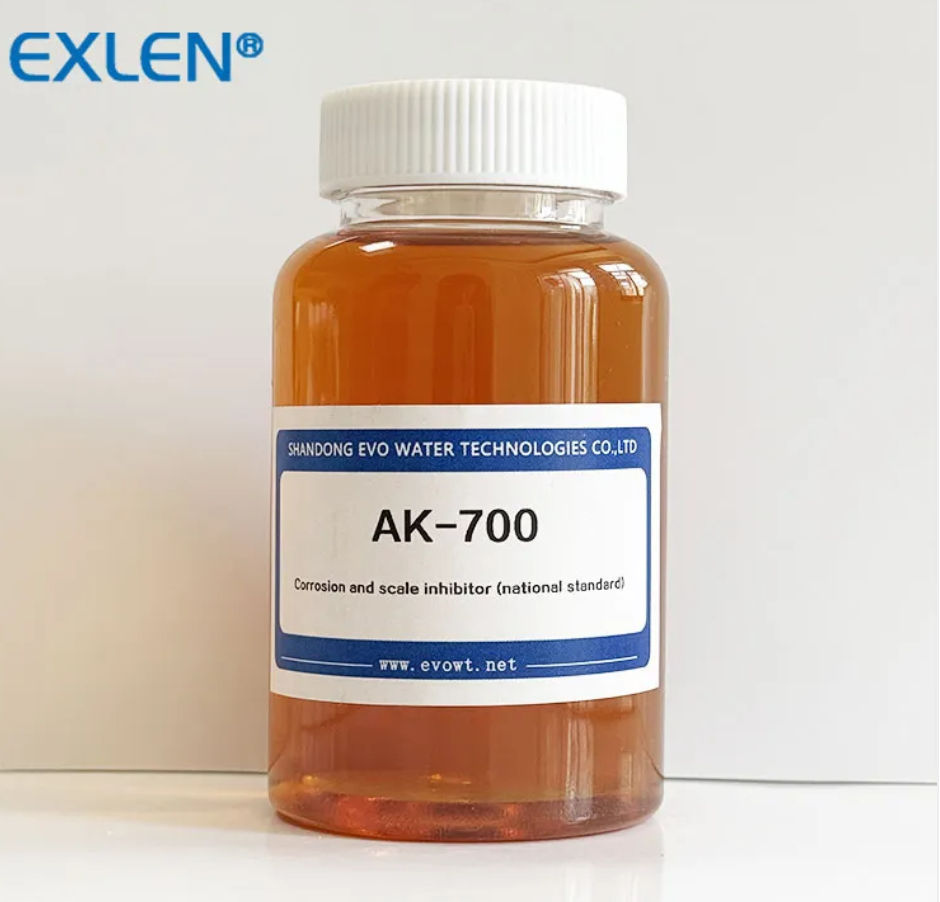
A good inhibitor isn't just something that slows a reaction—it's a tool that buys you time, protects a surface, or fine-tunes a pathway without demanding constant attention. The ten that follow have proven themselves under real conditions, not just in idealized lab runs. Each one tackles a specific failure point, whether it's metal loss in a cooling tower, unwanted polymerization during storage, or an enzyme running too hot in a diagnostic assay.
What separates these keepers from the rest is how they behave when the system drifts. Temperature swings, pH shifts, trace contaminants—most inhibitors fall apart or turn aggressive under those stresses. The ones worth keeping tend to form self-limiting films, or they bind reversibly so the system can still respond to natural feedback. That resilience is why a molybdate or a phosphonate ends up in thousands of operating logs while a cheaper alternative quietly corrodes the pipes.
You'll notice a pattern: the best inhibitors aren't the strongest, they're the most compatible. They don't wipe out every reactive species; they just nudge the kinetics into a safe window. That's the real test—can you leave it in place for six months and still trust the water chemistry, the polymer batch, or the assay results? If yes, it has earned its place.
The Chemistry Behind Corrosion and Scale Control
Corrosion in aqueous environments is not a single reaction but an electrochemical tug-of-war. At anodic sites, iron atoms lose electrons and enter solution as ferrous ions, while cathodic sites consume those electrons through oxygen reduction or hydrogen evolution. This electron flow creates potential differences across the metal surface, and those differences explain why corrosion often concentrates at scratches, crevices, or areas with uneven oxygen access. Dissolved salts, particularly chlorides, attack the protective oxide layer and keep the anodic reaction active, turning a uniform loss into localized pitting that can perforate pipe walls.
Scale formation begins with water chemistry rather than metal reactions. When calcium and bicarbonate concentrations exceed solubility limits, calcium carbonate precipitates. Heat transfer surfaces amplify the problem because rising temperatures drive off dissolved carbon dioxide, which shifts the carbonate equilibrium toward solid deposition. Magnesium, silica, sulfate, and even trace iron can become part of the deposit, creating layered scales with different hardness and porosity. These layers act as insulation, reducing heat exchange efficiency and creating hot spots that further accelerate precipitation.
Effective control requires interrupting both cycles at the molecular level. Corrosion inhibitors may adsorb onto the metal surface as a thin barrier, react with oxygen before it reaches the cathode, or maintain a stable passive film of magnetite. Scale inhibitors such as phosphonates and polycarboxylates work by threshold inhibition: they block crystal nucleation or bind to growing crystal faces, preventing particles from attaching to surfaces. A balanced program also manages pH, alkalinity, and blowdown, because overly aggressive scale inhibition can expose the system to higher corrosion rates. The chemistry works best when it treats the entire water balance rather than a single symptom.
How to Pick the Right Inhibitor Without Guesswork
Picking an inhibitor without guesswork starts with getting familiar with the target's binding site. If you have a crystal structure or even a good homology model, spend fifteen minutes mapping out the pocket—where the hydrophobic patches are, which residues can hydrogen bond, and how deep the cavity goes. Then pull up activity data for known ligands of similar enzymes. Often the difference between a mediocre hit and a strong inhibitor comes down to matching one or two key interactions rather than overall similarity.
Selectivity usually causes more failed experiments than low potency. Before falling in love with an IC50 number, test your top candidates against a small panel of related proteins—even five off-targets will tell you a lot. Some inhibitors look fantastic in a single assay but flatten everything in sight. If you can't run the panel yourself, dig through published profiling data or ask the vendor for their selectivity sheets. A selective compound with moderate potency often behaves better in cells than a promiscuous hammer.
Once you have a few candidates, design a quick validation experiment before scaling up. Compare each inhibitor against a known reference compound at multiple concentrations spanning a wide range. Look for clean sigmoidal curves; weird plateaus or shallow slopes often mean aggregation or non-specific effects. If the data looks suspicious, run a counter-screen with a different readout or an orthogonal binding assay. Trust the inhibition only when it holds up under a second method.
Field-Proven Ways to Keep Your System Running Clean
Most slowdowns come from software you forgot you installed, not from dust in the fan. Every two or three weeks, open the startup manager and kill anything that doesn't need to boot with the machine. The same goes for browser extensions and background helpers that pile up after a few months of normal use. You don't need a fancy optimizer; you just need to see what's actually running and ask yourself whether it earned its place.
Temporary files and caches rarely clean themselves the way vendors claim. Set a repeating reminder to clear out the obvious offenders manually: the downloads folder, thumbnail caches, old installer packages, and log directories that grow without limit. A reboot after the cleanup does more than free memory—it resets leaked handles and gives services a clean slate. It sounds old-fashioned, but field techs still rely on it because it works.
Keep an eye on disk health instead of waiting for a crash. Tools that read SMART data can tell you weeks in advance if a drive is reallocating sectors or running hotter than normal. When you spot that trend, move your data before the drive decides for you. Log files are another quiet killer: set size limits or rotate them on a schedule, because a 40 GB debug log from a forgotten beta app will choke any system, no matter how much RAM you throw at it.
What Most Teams Overlook Until It's Too Late
The most damaging blind spots rarely announce themselves. Teams track velocity, deadlines, and feature counts, yet ignore the quiet erosion of shared context. When a key person leaves, the real cost isn't the notice period; it's the undocumented decisions, the half-remembered reasons for a workaround, the informal escalation paths that never made it into a wiki. By the time a team realizes no one knows why a critical system behaves the way it does, the original reasoning has already vanished. That loss doesn't show up on a burn-down chart until a small incident turns into a multi-week excavation.
A team can claim to value psychological safety while still rewarding the loudest voice in the room. Meetings end with apparent consensus, but the real disagreements happen in side conversations afterwards. Over months, this creates a parallel decision-making process that leaves newcomers confused and veterans cynical. The moment this becomes visible is usually a failed launch or a public blame cycle, not a planned retrospective. The gap between what gets said in the room and what gets decided in the corridor is rarely measured, yet it shapes every major outcome.
Hand-offs are another silent failure point. Between design and engineering, support and product, one sprint and the next—these edges are where information drops without a sound. People assume the next person shares the same mental model, but assumptions don't transfer. A short note or a quick sync feels like overhead, so it gets skipped. Later, the team pays for it in rework, duplicated effort, or a feature that solves a problem nobody actually had. Spotting these gaps early is cheap; waiting until they surface is what makes them expensive.
FAQ
The workhorses tend to be phosphonates like HEDP and PBTC for scale, combined with zinc or molybdate for corrosion. Tolyltriazole is almost standard when copper alloys are present. Many plants also rely on acrylic acid copolymers to keep suspended solids from settling out. The exact lineup shifts with water chemistry, but these five or six classes cover most industrial needs.
Phosphonates have a carbon-phosphorus bond that resists reversion to orthophosphate, which can itself form sludge. They work by adsorbing onto crystal nuclei and blocking further growth, so calcium carbonate and sulfate stay dispersed. This lets them perform at much lower dosages than inorganic polyphosphates under high hardness and alkalinity.
Zinc remains widely used because it forms a quick, robust cathodic film on steel, especially at pH ranges where other inhibitors struggle. Many regions cap zinc discharge levels, so formulators often combine it with phosphonates or polymers to get acceptable protection at lower zinc concentrations. Where discharge limits are very strict, molybdate or silicate blends become more attractive.
Azoles like benzotriazole and tolyltriazole bond directly to copper surfaces, creating a thin, protective film that stops both general corrosion and galvanic attack from more noble metals. They are effective at just a few parts per million and remain stable under typical cooling water temperatures and pH. Without them, copper dissolves and redeposits on steel, causing severe pitting.
Well-chosen polymers, such as carboxylate-sulfonate copolymers, mainly target scale by modifying crystal growth and dispersing particles. They also assist corrosion control indirectly by preventing under-deposit corrosion and keeping metal surfaces clean. Some also act as scale inhibitors for calcium phosphate. They rarely act as primary corrosion inhibitors, but they make the overall program far more reliable.
High calcium hardness and alkalinity push you toward phosphonates and specialty polymers that handle calcium carbonate and phosphate scale. High chloride or sulfate levels call for stronger corrosion inhibition, often with molybdate or zinc. If the makeup water has heavy metals or biological activity, you need an inhibitor that won't feed microbes or degrade quickly. A good program always starts with a full water analysis and Langelier or Ryznar index check.
Molybdates offer strong corrosion protection with much lower aquatic toxicity than chromates, though they cost more. Silicates provide a non-metal option that forms a protective film but requires careful pH control. Natural tannins and lignosulfonates can work as mild scale dispersants, but rarely match synthetic polymers. Blends of polyaspartic acid or polyepoxysuccinic acid are also emerging as biodegradable scale inhibitors.
Conclusion
Many operators learn the hard way that skipping corrosion and scale inhibitors costs far more than the chemical expense itself—unscheduled downtime, heat exchanger replacement, and energy penalties quickly dwarf any upfront savings. The best inhibitors earn their place by doing two jobs at once: passivating metal surfaces while disrupting crystal nucleation. Phosphonates like HEDP and ATMP, along with polymers such as polyacrylates and copolymers, control calcium carbonate and sulfate scales even under stressed conditions. Molybdate and zinc-based blends offer robust corrosion protection in open recirculating loops, while azoles shield copper alloys from pitting. Understanding the chemistry matters because not every inhibitor works across all pH, hardness, or temperature ranges. Choosing without guesswork means matching the inhibitor's functional group to your specific water analysis and metallurgy—not just borrowing a neighbor's recipe.
Field-proven programs rely on more than the right drum: continuous feed, accurate residual testing, and regular coupon monitoring keep the protective film intact. What most teams overlook until it's too late is that inhibitor demand shifts seasonally and after makeup water changes, so a set-and-forget dosing strategy often fails silently. Blends that combine scale inhibition with dispersancy and mild steel corrosion control are frequently the most forgiving in real-world plants. A top ten list only becomes useful when it drives action: verify solubility, check compatibility with oxidizing biocides, and track performance through trends rather than spot checks. Clean heat transfer surfaces and intact piping don't happen by accident—they come from selecting proven inhibitor chemistries and staying ahead of water chemistry swings before they turn into expensive cleanups or unplanned outages.
Contact Us
Contact Person: Fiona Su
Email: [email protected]
Tel/WhatsApp: 8619963724144
Website: https://www.evo-chemical.com/