

Top 10 Fiberglass Geogrid Products for Superior Ground Stabilization
2026-05-21
When it comes to ground stabilization, not all reinforcement solutions are created equal. Fiberglass geogrids have quickly become a game-changer, delivering unmatched tensile strength and long-term durability. As we count down the top 10 products redefining the industry, you’ll see why leading projects trust advanced materials to keep foundations solid. One name consistently rising to the top is WEN FENG STONE, known for pushing the boundaries of performance and reliability. Ready to discover which geogrids truly deliver superior stabilization?
Decoding the Strength: How Fiberglass Geogrids Handle Extreme Loads
Fiberglass geogrids aren't just passive layers in the soil—they actively redistribute stress across vast areas, turning what would be localized failures into distributed, manageable loads. The key lies in their high tensile modulus: when heavy traffic or earth pressures bear down, these grids stretch only minimally before locking the aggregates in place. This stiffness means that even under extreme conditions, the soil structure remains interlocked, resisting deformation long before it reaches critical levels.
What sets fiberglass apart from other geosynthetics is its immunity to creep. Over time and under constant load, materials like polyester might slowly elongate, but fiberglass maintains its shape almost indefinitely. In applications like reinforced retaining walls or highway base courses, this means that the grid will hold the same reliable performance year after year without the gradual sagging that can undermine long-term stability.
Another layer of its load-handling secret is the coating. Typically a polymer-based encapsulation, it shields the glass fibers from chemical attack and moisture—the two things that could otherwise turn brittle glass into a liability. The coating also enhances the bond with the surrounding soil, ensuring that forces are transferred efficiently without slippage. It's this combination of raw tensile strength, dimensional stability, and protective engineering that allows fiberglass geogrids to tame the kinds of loads that would quickly overwhelm conventional reinforcement.
Choosing the Right Geogrid: Factors Beyond Tensile Strength
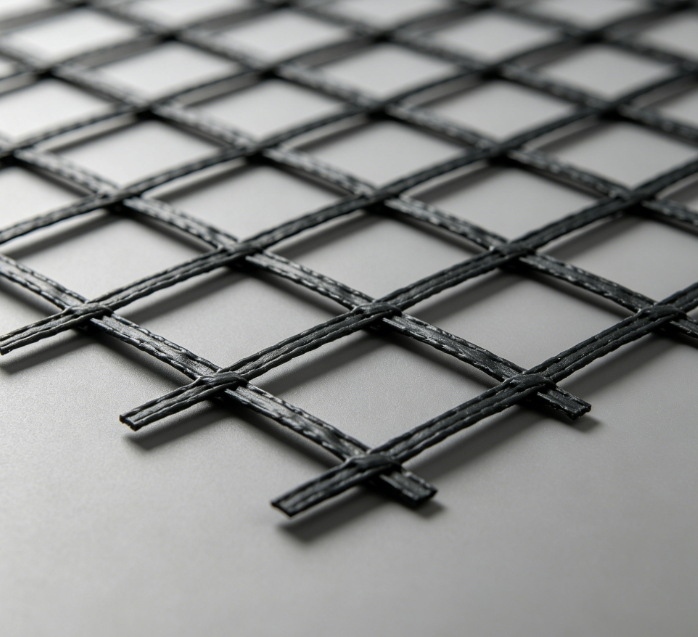
Tensile strength is often the first number engineers reach for when specifying geogrids, but it rarely tells the whole story. The way a geogrid interacts with the surrounding soil can be just as critical as its raw strength. For instance, the aperture size and shape directly influence how well aggregate interlocks with the grid. A product with excellent tensile properties may still underperform if its junctions aren't robust enough to transfer load into the soil without failing locally. Similarly, the flexibility of the geogrid during installation can impact its ability to survive construction stresses, especially when placed over poor subgrades. Overlooking these details can lead to a design that looks strong on paper but falls short in the field.
Long-term performance also hinges on factors that are less obvious at first glance. Creep behavior under sustained loads, resistance to environmental degradation from UV exposure or chemical attack, and the potential for installation damage all shape how a geogrid will behave over decades. A product with high short-term tensile strength might relax excessively under constant load, undermining its reinforcement function. Durability is often dictated by the polymer formulation and manufacturing process rather than a single test value, so demanding comprehensive data from suppliers is essential. Real-world conditions—from freeze-thaw cycles to aggressive soils—can accelerate wear in ways that standardized tests don't always capture.
Finally, don't underestimate the influence of project-specific constraints. The type of fill material, compaction methods, and even the contractor's experience can make one geogrid a better fit than another. A stiffer grid might simplify placement in tight spaces, while a more pliable option could be easier to work with on uneven terrain. Cost considerations often extend beyond the product price to include installation efficiency and the risk of future maintenance. By keeping the big picture in mind—mechanical interaction, long-term resilience, and site realities—you can select a geogrid that genuinely matches the demands of your project, not just the spec sheet.
Real-World Proof: Projects Where Fiberglass Geogrids Saved the Day
On a stretch of highway in the Pacific Northwest that had been plagued by relentless pavement cracking, engineers were running out of conventional fixes. The subgrade was too soft, and the freeze-thaw cycles only made things worse. They opted for a fiberglass geogrid installation between the asphalt layers, and the transformation was almost immediate. Within a single winter, the maintenance calls for that section dropped by over 60%. No major rebuild, no endless patching — just a grid that kept the asphalt from shifting under stress.
A warehouse development in central Texas faced a different kind of headache: the soil underneath the planned parking lot was expansive clay, notorious for swelling and shrinking with moisture changes. Rather than removing and replacing tons of soil, the team placed a high-strength fiberglass geogrid right above the subgrade before pouring the base course. Years later, the pavement shows minimal distortion, while an adjacent section built without the grid needs constant leveling. The owners like to joke that the grid paid for itself before the first truck even rolled in.
Railway embankments in parts of Europe have also gotten a second life from these materials. On a high-speed line where excessive settlement was causing track geometry issues, contractors used fiberglass geogrids to reinforce the ballast layer. The grid’s stiffness prevented the stones from migrating sideways under the pounding of passing trains. The line has now gone through multiple seasons without requiring a major tamping operation — which, for the maintenance crews, was something to celebrate.
The Manufacturer’s Edge: What Differentiates Premium Geogrids
Truly premium geogrids stem from a manufacturer's deep-seated expertise in polymer science and production engineering. It's not just about meeting specs; it's about understanding how raw material selection, precise extrusion control, and advanced forming processes interact to create a grid that delivers consistent, long-term performance. The best producers invest heavily in proprietary testing regimes that go far beyond standard index tests, simulating decades of field stress to validate creep behavior and junction integrity. This internal rigor ensures that every batch resists installation damage, chemical degradation, and sustained loads in a way that generic alternatives simply cannot match.
What often separates the leaders from the pack lies in their ability to innovate around real-world installability. A premium geogrid isn't just strong in the lab—it must unfurl flat without fighting, grip engineered fill instantly, and survive aggressive compaction without snapping. Manufacturers with true engineering edges design their products with an acute awareness of site conditions: rib profiles that lock aggregate in place, apertures sized for optimal interlock, and polymer formulations that stay ductile in freezing temperatures yet retain strength under scorching sun. These nuanced details emerge from closed-loop feedback between in-house civil engineers, field technicians, and material specialists—a collaborative engine that commodity-geogrid producers rarely possess.
Beyond the product itself, a manufacturer's edge manifests in the support ecosystem wrapped around every roll. Leading firms offer more than a data sheet; they provide project-specific design assistance, on-site weld testing, and forensic analysis if issues arise. This partnership model transforms the geogrid from a mere commodity into a performance-assured component of critical infrastructure. When a retaining wall must hold, or a roadway must not rut, the profound difference between a premium geogrid and a no-name sheet becomes obvious—not just in material quality, but in the decades of institutional knowledge and accountability standing behind it.
Common Pitfalls in Geogrid Installation and How to Avoid Them
One of the most frequent mistakes during geogrid installation is inadequate subgrade preparation. If the underlying soil is not properly compacted and leveled, the geogrid can’t effectively distribute loads, leading to uneven settlement and reduced reinforcement. Avoiding this starts with thorough site inspection and removal of soft spots, organic material, and debris. Compaction should meet the specified density, and any necessary subgrade stabilization must be completed before unrolling the geogrid.
Another common pitfall is insufficient tensioning and alignment of the geogrid during placement. A loosely laid or misaligned grid fails to engage with the surrounding soil or aggregate promptly, which can cause slippage or wrinkling under traffic. To prevent this, the geogrid should be stretched and pinned at its edges according to the manufacturer’s guidelines. Regular checks with survey equipment help maintain straight alignment, ensuring the ribs are oriented correctly relative to the load direction.
Improper overlap or connection at roll edges can create weak zones that compromise the entire reinforced layer. Contractors sometimes underestimate the required overlap length or neglect to secure adjacent rolls with mechanical connectors or sufficient aggregate interlock. The solution is to follow project-specific overlap distances—typically 300 to 600 mm—and, where specified, use tie bars or bodkin joints. Careful sequencing of fill placement also prevents the grid from shifting during covering, which safeguards the intended structural continuity.
Sustainability Meets Stability: Eco-Friendly Aspects of Modern Geogrids
Modern geogrids are reshaping the conversation around infrastructure by merging long-term durability with genuine environmental responsibility. These materials, often produced from recycled polymers or bio-based sources, deliver the same tensile strength as traditional options while cutting down on the carbon footprint tied to raw material extraction. Engineers now have the ability to reinforce soil, stabilize slopes, and support heavy loads without defaulting to resource-intensive methods, making geogrids a quiet but powerful ally in green construction.
What sets today's geogrids apart is not just their recycled content but how they reduce the need for excessive earthwork and imported fill. By locking aggregate in place and improving load distribution, they make it possible to use locally available, lower-quality soils that would otherwise be discarded. This approach slashes transport emissions and preserves natural landscapes, turning what was once a straightforward civil engineering solution into a strategy for minimizing site disturbance. It's a practical shift that aligns with lean construction principles, where efficiency and ecological thinking function side by side.
The durability angle also feeds directly into sustainability gains. High-quality geogrids resist chemical degradation, biological attack, and UV exposure, which translates into fewer replacements and less maintenance over a project's lifespan. When roads, retaining walls, and embankments last longer without intervention, the total embodied energy of the structure drops significantly. Add in the growing use of polymer blends that maintain performance while incorporating post-consumer waste, and the result is a product category that genuinely advances circular economy goals without compromising on engineering confidence.
FAQ
A fiberglass geogrid is a geosynthetic material made from high-strength glass fibers coated with a protective polymer. It reinforces soil by interlocking with aggregate particles, distributing loads more evenly and reducing settlement. This increases the bearing capacity of weak soils, making it ideal for roads, parking lots, and foundations.
Fiberglass geogrids offer exceptionally high tensile strength at very low elongation, meaning they resist stretching under load better than most polyester or polypropylene grids. They also have excellent resistance to creep, biological degradation, and chemical attack, making them suitable for long-term applications in challenging soils.
Look at the tensile strength at specified strain levels, junction efficiency, coating durability, aperture size relative to your fill material, and the manufacturer's track record. Also confirm it meets relevant standards like ASTM or ISO for your intended application, such as pavement reinforcement or base stabilization.
Yes, they are widely used for asphalt reinforcement to control reflective cracking and extend pavement life. The high modulus of fiberglass significantly stiffens the asphalt layer, reducing stress at crack tips. Install them between the old pavement and new overlay using a tack coat for best results.
Proper subgrade preparation, correct overlap between adjacent panels (typically 12–24 inches), and adequate embedment depth matter. The grid must lie flat without wrinkles. Backfill with well-graded, angular stone and compact in lifts to achieve full interlock, avoiding direct heavy machinery traffic on uncovered grids.
Request independent test reports for tensile strength, junction strength, and chemical resistance. Check the coating’s UV stability for exposed installations. Field-load tests or trial sections can also confirm performance under your specific conditions. Reputable suppliers often have case studies or third-party certifications.
By reducing the required thickness of granular base layers and extending the service life of pavements or foundations, fiberglass geogrids can cut overall project costs by 20–40%. They also minimize maintenance frequency, downtime, and the need for excavating and replacing unstable soils, delivering long-term savings.
They enhance railway trackbeds by stabilizing ballast and subballast, reinforce embankments over soft ground, support retaining walls, and improve load distribution below storage yards and crane pads. Even in mining and landfill infrastructure, they help manage heavy loads and prevent soil failure.
Conclusion
Selecting the right fiberglass geogrid can make or break a ground stabilization project, and the top products on the market today share a few unmistakable traits. They don’t just rely on impressive tensile strength numbers—they earn their reputation through consistent performance under cyclic loads, resistance to installation damage, and long-term creep behavior. Engineers who’ve seen these materials in action, from reinforcing soft subgrades beneath heavy-haul roads to stabilizing steep slopes after unseasonable rains, know that real-world resilience matters more than any lab report. The best geogrids feature precisely coated glass fibers, robust junction integrity, and aperture geometries that lock reliably with compacted fill, preventing lateral movement even when groundwater conditions turn hostile.
But a product alone isn’t a solution—manufacturer support, technical data transparency, and a clear understanding of site-specific demands separate a smart specification from a costly gamble. Top-tier suppliers back their grids with rigorous quality controls, third-party certifications, and field advisory services that help crews avoid the all-too-common missteps like poor overlap lengths or under-compaction at the bearing layer. Meanwhile, a quiet revolution is reshaping the industry’s priorities: the most advanced geogrids now integrate recycled glass content and low-carbon manufacturing, offering a pathway to earn sustainability credits without compromising on stiffness or durability. In the end, the fiberglass geogrids that truly stand out are those that align engineering confidence with environmental accountability, proving that superior stabilization and ecological sense can reinforce one another.
Contact Us
Contact Person: Jennifer LEE
Email: [email protected]
Tel/WhatsApp: 8618553418999
Website: https://vip.e-baixing.com/wenfengshitong