

Top 10 Plastic Corrugated Boxes: The Ultimate Guide to Durable Packaging
2026-06-10
If you think all plastic packaging is flimsy, wait until you explore the world of plastic corrugated boxes. They're the unsung heroes of durable shipping, effortlessly blending lightweight design with surprising toughness. At ShiTeng Packaging, we've seen these boxes revolutionize the way businesses protect their goods. In this guide, we're counting down the top 10 standout options and telling you exactly why each one earns its place. Ready to rethink what plastic can do? Let's dive in.
Why Plastic Corrugated Outperforms Cardboard
Plastic corrugated signs hold up beautifully where cardboard quickly crumbles. A sudden downpour or morning dew spells disaster for paper-based boards, causing them to warp, delaminate, and lose all structural integrity. In contrast, polypropylene sheets shrug off moisture entirely. They won’t soak up water, grow mold, or turn soft. That inherent water resistance makes them the clear choice for outdoor events, construction sites, and any environment where humidity hangs in the air. You can count on them to stay flat, vibrant, and readable for weeks—not hours.
Durability doesn’t stop with water. Cardboard edges dent easily, corners crush, and a single windy day can snap a sign clean in half. Plastic corrugated, though lightweight, has a tough, ribbed core that distributes impact and resists bending. It bounces back where cardboard would stay bent. When you’re stacking signage for transport or repeatedly installing and removing displays, that resilience saves time and money. No one wants to reprint halfway through a campaign because the materials couldn’t handle real-world use.
Over the long haul, the cost argument shifts in plastic’s favor, too. While cardboard might seem cheaper upfront, its short lifespan often demands multiple replacements. Think of a seasonal display reused year after year: plastic corrugated looks near-new with a simple wipe-down, whereas cardboard yellows, frays, and invites pests. Add in the printing flexibility—vivid colors adhere better and resist fading—and the message stays crisp without special coatings. It’s a smarter investment that keeps your brand looking professional, no matter what the weather or wear throws at it.
Hidden Strengths of Fluted Plastic Design
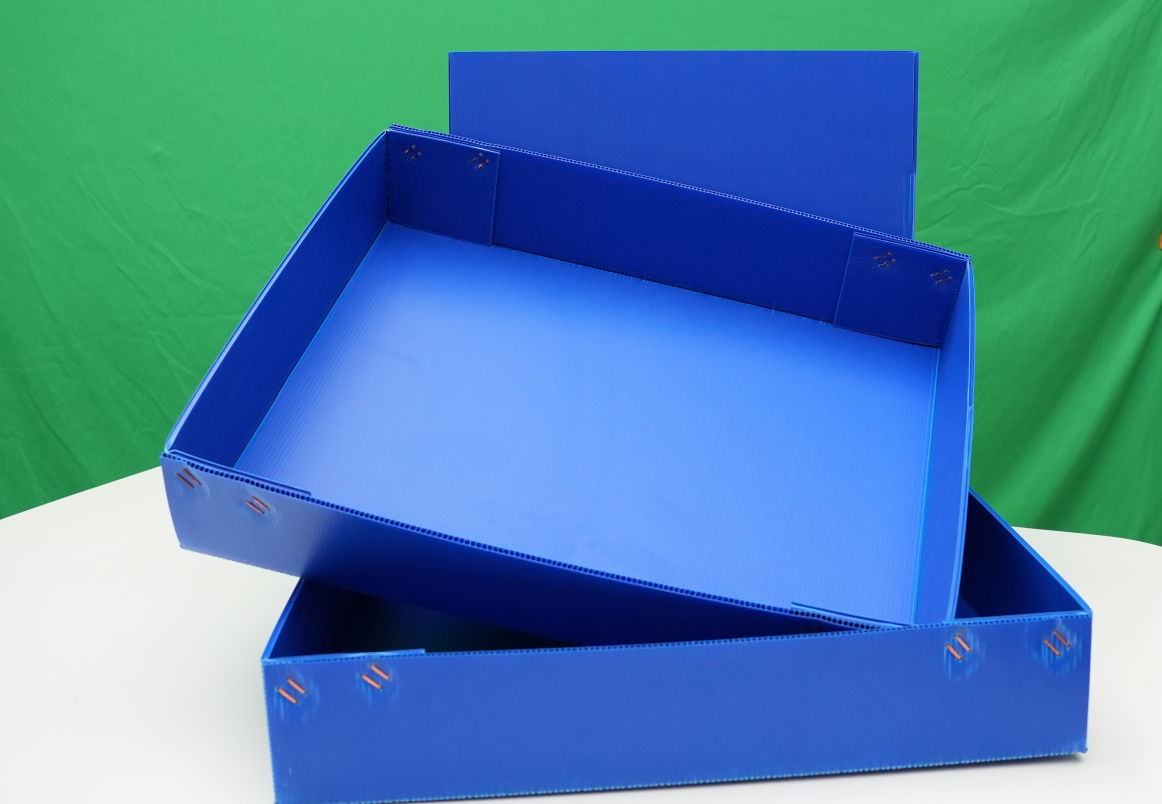
Fluted plastic often flies under the radar, recognized mainly for temporary signage or packaging. Yet its real genius lies in how the twin-wall structure works silently—the hollow channels don't just cut weight, they create a cushion of air that diffuses impact across the panel. Smack it with a hammer and you'll hear a dull thud, not a crack; that's the flutes turning point loads into dispersed energy. This same geometry makes it surprisingly forgiving when twisted or bent, springing back rather than snapping, which is why it outperforms solid sheets in applications where vibration, flex, or rough handling are everyday realities.
Beyond pure toughness, the material hides clever chemical and surface properties. It shrugs off most oils, solvents, and moisture without swelling or softening, so a panel left in a damp basement or splattered with workshop fluids stays dimensionally stable. Printers also discover that the slight waxy skin takes inks differently than any paper-based board—direct UV printing bites in just enough to resist scratching, while screen prints sit vividly against the subtle gloss. These aren't the headline features you'd put in a brochure, but for anyone fabricating parts, jigs, or long-term protective layers, they quietly turn fluted plastic from a cheap stopgap into a strategic choice.
Industries That Rely on These Tough Containers
From construction crews hauling tools across muddy sites to military units securing gear in hostile environments, these rugged storage units have become silent workhorses. The daily abuse they endure isn't just about drops or scrapes—it's about surviving months of rain, dust, and constant shuffling without cracking open or letting moisture seep in. When a job site spans six months of unpredictable weather, you quickly learn which containers are merely labeled “tough” and which ones actually earn that badge by protecting what’s inside when everything else is falling apart.
Agriculture is another arena where there’s no room for failure. Fertilizers, pesticides, and even harvested crops often sit inside heavy-duty bins exposed to brutal sun, sudden temperature swings, and corrosive elements. A cracked lid isn’t just an inconvenience—it can mean a lost batch or a safety hazard. Likewise, logistics firms that ship cross-border deal with constant stacking, forklift jabs, and the occasional drop from a loading dock. They don’t have time to baby their equipment. The containers that stick around are the ones that shrug off a five-foot fall and keep stacking neatly the next morning.
Choosing the Right Thickness for Your Load
Getting the thickness right for whatever you’re hauling or supporting isn’t just a numbers game—it’s about understanding how your load behaves under stress. A piece that’s too thin might flex or crack long before you expect it to, while overdoing it adds unnecessary weight and cost. The sweet spot sits where material properties, span length, and the type of load—whether static, dynamic, or concentrated—all come together. For example, a thick steel plate might handle a distributed weight beautifully, but if you’ve got point loads or vibrations, you need to think about stiffness and fatigue, not just brute strength.
Different materials react in their own ways, and thickness can shift the equation dramatically. Wood, for instance, can bow over time if it’s not sufficiently deep for the span, even when the initial weight seems manageable. Metals might give you a higher strength-to-thickness ratio, but welding thin sheets without distortion becomes a craft in itself. Talk to anyone who’s built a loading platform or a shelving system, and they’ll tell you that real-world conditions—like temperature swings or moisture—force you to build in a healthy margin beyond the textbook calculation. It’s often smarter to bump up a gauge or two than to gamble on a perfect-world scenario.
When you’re in doubt, leaning on established guidelines or talking to someone who’s handled similar loads can save a lot of trial and error. Many industries put out straightforward charts that map load capacities to thickness and span, and these are worth checking even if you’re doing a small project on your own. If your setup involves moving parts or frequent disassembly, remember that wear and tear will gradually reduce the effective thickness, so starting a bit heavier can extend the life of your gear. Ultimately, the right choice isn’t about chasing the minimal acceptable number, but about matching the material’s limits to the way you’ll actually use it day to day.
How Coatings and Additives Boost Longevity
Coatings create a physical shield between the material and environmental stressors—moisture, UV rays, and abrasive particles. By blocking these elements, they dramatically slow down the wear process that normally leads to cracks or corrosion. It’s not just a surface layer; modern formulations bond at a molecular level, so the protection becomes part of the substrate itself rather than a temporary film.
Additives take that foundation further by targeting specific vulnerabilities. For instance, UV stabilizers absorb and dissipate harmful radiation before it can degrade polymer chains, while anti-corrosion agents form a passive layer that interrupts electrochemical reactions. These aren’t generic solutions—they’re tailored to how the base material fails, addressing weak points that generic coatings alone can’t handle.
The real magic happens when coatings and additives work in tandem. A well-designed system uses multiple mechanisms: a tough outer layer resists abrasion, while embedded inhibitors slowly release to repair micro-damage. This layered defense keeps materials performing far beyond their raw counterparts, often doubling or tripling useful life in harsh conditions.
Sustainability Angle You Haven't Considered
Most sustainability conversations revolve around energy use and physical waste, but there's a quieter form of resource depletion that rarely gets discussed: cognitive sustainability. Every time a team burns mental energy on unclear processes, redundant meetings, or overly complex tools, they're drawing from a finite well of focus and creativity. This isn't just about burnout—it's about the long-term viability of how we think and collaborate. When organizations treat attention as an expendable resource, they erode the very capacity needed to innovate on the environmental challenges we face.
What would it look like to design workflows that conserve mental energy rather than drain it? It might mean paring back real-time notifications that fracture deep work, or rethinking how we measure productivity so that constant context-switching isn't rewarded. Some teams have started implementing “quiet hours” without any digital interruption, not as a wellness perk, but as a core sustainability practice. The result is often more original thinking and less rework—two things that directly cut down on wasted time, materials, and emotional toll. In that sense, protecting cognitive resources becomes a multiplier for every other sustainability effort.
There's a hidden feedback loop here: exhausted minds default to short-term, convenient choices—think single-use everything, from plastic packaging to disposable ideas. By safeguarding the mental environment, we're not just being kinder to people; we're actively creating the conditions where more deliberate, regenerative decisions become the norm. It's a shift from asking “how do we get people to care about sustainability?” to “how do we sustain the minds that will build it?”
FAQ
Unlike cardboard which loses integrity when exposed to moisture or rough handling, plastic corrugated boxes hold their shape through impact, humidity, and repeated use. The twin-wall plastic construction resists tearing and crushing far better than fiber-based materials, making them a long-lasting choice for supply chains that demand reliability.
Absolutely. Manufacturers often offer options to add dividers, special coatings, or cutouts for handles and ventilation. You can also choose from various colors and branding prints. Many companies provide design support to tailor boxes exactly to your product dimensions and workflow, so you aren’t stuck with a one-size-fits-all solution.
Cleaning is straightforward—typically just washing with mild soap and water or a gentle pressure wash. Because the material is non-porous, it doesn’t absorb odors or stains easily. For tougher grime, diluted disinfectants or steam cleaning won’t degrade the box structure, making upkeep simple between cycles.
Yes, they’re built to handle substantial weight when properly engineered. Reinforced bottoms and rigid sidewalls allow them to carry components, automotive parts, or heavy machinery accessories without buckling. Many versions hold hundreds of pounds, rivaling wooden crates but with less weight and no splintering risk.
Standard inventory includes popular pallet-sized footprints and smaller hand-held totes, but custom sizing is very common. Suppliers typically work with your specs to produce exact interior dimensions, eliminating wasted space and reducing the need for extra protective fillers. Just provide your load requirements and they’ll adjust the flute thickness and wall count accordingly.
They inherently repel water and resist many acids, oils, and solvents that would quickly break down cardboard. This makes them ideal for wet environments, cold storage, or chemical handling. While no box is fully impervious to every chemical, the polypropylene or polyethylene used often shrugs off spills that would ruin fiber-based packaging.
Logistics, agriculture, pharmaceuticals, and electronics manufacturing often see big gains. Because they can be reused dozens of times, industries with closed-loop distribution or regular internal transfers cut waste and material costs. Perishable goods shippers also appreciate the hygienic, easy-to-sanitize surfaces that meet strict cleanliness standards.
Conclusion
Plastic corrugated boxes have quietly reshaped industrial packaging by solving cardboard’s biggest weaknesses—moisture, impact, and short lifespan. Their fluted design isn’t just a hollow copy of paper-based structures; the ribs are engineered to absorb shock while staying lightweight, a hidden advantage that keeps sensitive electronics or heavy auto parts from shifting during transit. Many industries, from food processing to pharmaceutical logistics, now depend on these containers because they shrug off water, chemicals, and rough handling. When selecting a box, thickness isn’t a one-size-fits-all decision—a 3 mm wall might handle lightweight goods, while double-wall 6 mm panels become necessary for stacked storage or forklift abuse. Additives like UV stabilizers and antimicrobial coatings extend longevity further, allowing boxes to survive repeated washdowns or years of outdoor exposure without cracking.
Beyond brute durability, plastic corrugated offers a sustainability story that goes unnoticed: unlike wax-coated cardboard, these boxes can be reused dozens of times before recycling, slashing single-use waste in closed-loop supply chains. Some variants incorporate recycled content without sacrificing stiffness, challenging the assumption that plastic is always the less eco-friendly choice. The real benefit isn’t just surviving a trip—it’s replacing disposable habits with a system where packaging becomes a durable asset, not a cost to discard after one delivery.
Contact Us
Contact Person: Mr. Ge Man
Email: [email protected]
Tel/WhatsApp: 8613710506492
Website: https://www.shitengzx.com