

Top Laser Safety Gloves for Ultimate Hand Protection
2026-11-16
When you’re working with high-powered beams, even a split-second lapse in protection can leave lasting damage. Your hands are on the front line — aligning optics, handling fiber, or cleaning lenses — and ordinary gloves just won’t cut it. That’s where LASERPAIR steps in, redefining what laser hand protection should feel like. In this guide, we’re moving beyond basic specs to explore gloves that combine certified defense with real-world dexterity, so you can focus on precision instead of risk.
What Makes a Glove Truly Laser-Safe?
Ordinary work gloves might block a splinter, but laser light demands a completely different level of protection. The danger isn't just the bright flash—it’s the concentrated energy that can burn through standard materials in a fraction of a second. A truly laser-safe glove acts as a engineered barrier, using dense, multi-layer fabrics often infused with reflective particles that scatter the beam’s energy before it can focus on a single spot. This scattering effect, rather than just absorbing the heat, is what prevents catastrophic seam failure and keeps the hand shielded during a direct hit.
Certification is a quiet guarantee that the glove has been tortured in a lab. Look for the EN 207 rating, which tests not just optical density but the glove’s ability to survive a direct exposure for several seconds without melting, igniting, or letting light through when stretched over a knuckle. What separates a gimmick from a genuine safety tool is that full-hand construction—right down to the stitching—must carry the same protective rating. You’ll often feel a satisfying heft and see a subtle, almost metallic sheen in the weave, clues that the polymer matrix is loaded with fire-resistant aramids and carbon-based blockers rather than a superficial coating that flakes off with sweat.
Fit decides whether protection turns into a false sense of security. If the glove is so bulky that you end up removing it for delicate alignment tasks, it has already failed. Modern laser-safe designs prioritize second-skin dexterity, using seamless 15-gauge or 18-gauge knits that snug down without binding across the palm. The cuff matters too—a snug, ribbed wrist closure keeps the glove anchored during fast retraction from a work area, preventing that accidental gap of bare skin right where the beam might wander. Ultimately, the truest mark of safety is that after ten minutes of wearing it, you forget it’s there, but the laser never will.
Material Breakdown: Finding the Right Shield for Your Skin
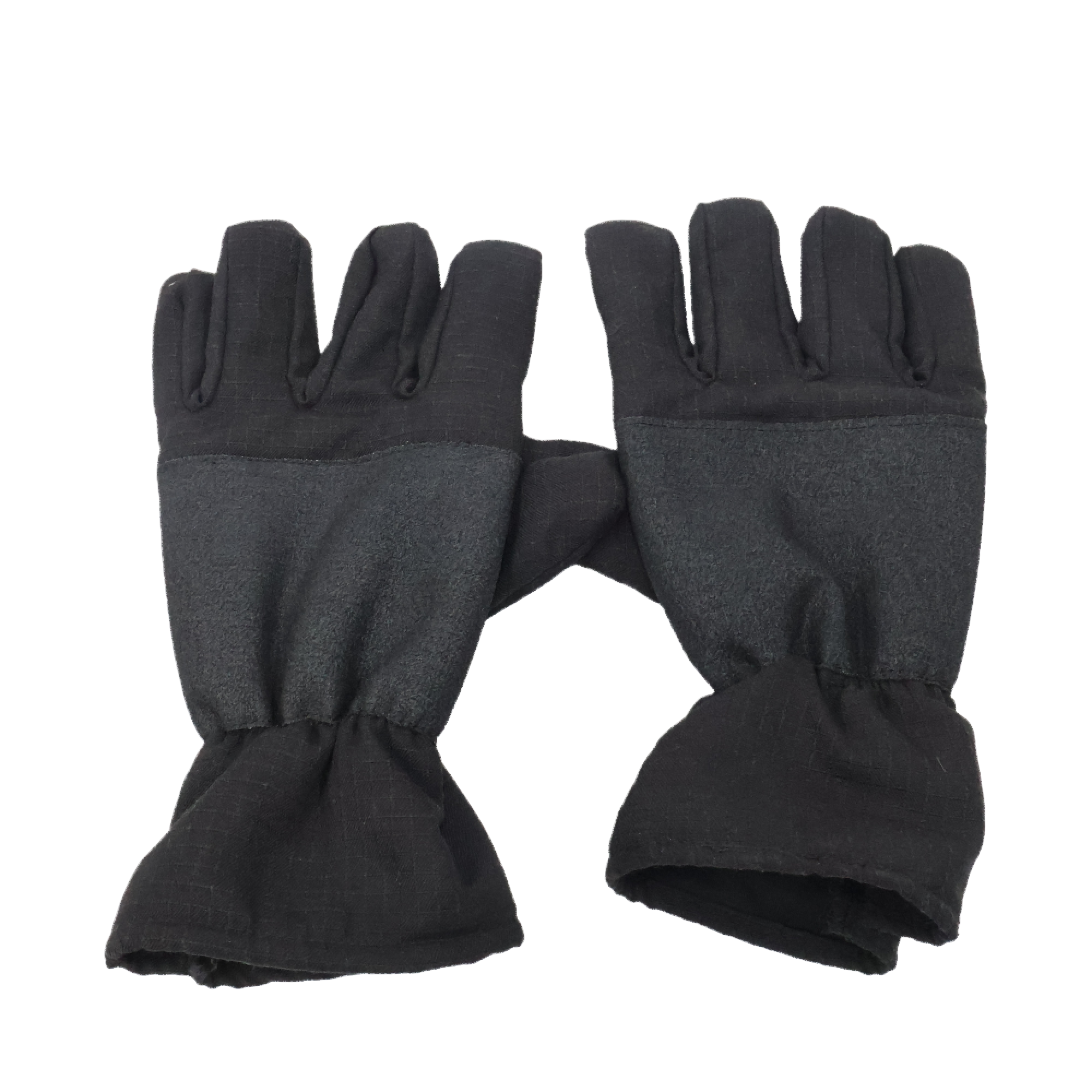
Your skin’s first line of defense isn’t just a layer of cells—it’s a living fabric woven from lipids, proteins, and moisture. Cotton, silk, and synthetic blends each interact with this fabric differently, tugging at its natural balance or letting it breathe. Picture a tightly woven silk pillowcase gliding against your cheek versus a rough wool scarf chafing your neck; the difference isn’t just tactile, it’s biological. The right material respects your skin’s pH, doesn’t leach dyes, and wicks away humidity without stripping your natural oils.
Beneath the marketing buzzwords like “derm-approved” and “non-comedogenic,” there’s a simple truth: synthetic fibers, like polyester, often trap heat and bacteria, creating a microclimate that can provoke breakouts or irritation. Natural options, such as organic cotton, offer breathability but can absorb moisture too aggressively, leaving skin parched. The sweet spot? Blended textiles that marry the durability of synthetics with the softness of nature, finished with minimal chemical treatments. Think of it as choosing a partner for your skin—someone who supports without smothering.
Ultimately, your shield is worn daily, washed repeatedly, and expected to perform silently. Instead of chasing trends, focus on the weave density, fiber origin, and how the fabric behaves when humid. Remeber that even the purest linen can undo its benefits if laundered with harsh detergents. Your skin’s health isn’t just about what you apply to it, but what you allow to rest against it hour after hour.
When Standard Cut Gloves Aren't Enough
We all reach for the trusty cut-resistant gloves when the job calls for it—sheet metal handling, glass work, general fabrication. They’re the first line of defense, and they’ve prevented countless trips to the ER. But there are moments on the shop floor when the standard level 3 or even level 5 glove starts feeling more like a false comfort than actual protection. You know that instant when the blade slips, the burr catches just right, or a stamping edge comes down with a force that turns a cut into a crush. That’s when you realize the rating on the label doesn’t tell the whole story.
The problem isn’t always about the glove material failing at the surface. It’s usually the mechanics of the hazard—a serrated edge that saws through fibers, a thin gauge metal that flexes and slices across the palm, or repetitive contact that gradually breaks down the knit until one day, it simply parts. In these situations, typical gloves are like bringing a bike helmet to a motorcycle crash. What you really need isn’t just a higher ANSI cut score; you need a different architecture altogether. Think reinforced thumb crotches, padded dorsal protection against pinches, or engineered yarns that maintain their structure when wet or oily, because a glove that loses 40% of its integrity once it’s soaked in coolant is basically a sponge with a warranty.
I’ve seen welders swap their gloves three times a shift after finding pinholes in the fingertips from slag that a standard cut glove never stood a chance against. I’ve watched mechanics pull off supposedly “high-cut” gloves because the material bunched up under a ratchet, leaving their knuckles exposed to the sharp edge of a chassis rail. The fix isn’t just buying a glove with a bigger number. It’s about matching the specific threat—abrasion, puncture, pinch, vibration—with a glove that’s built from the ground up for that cocktail of risks. When standard stops working, it’s time to stop treating gloves like a commodity and start thinking of them as engineered safety systems.
Fit and Touch Sensitivity: Why You Can’t Sacrifice Dexterity
The moment you lose the ability to feel surface texture or pressure changes, your hands become guessing machines. Whether you're threading a needle, adjusting a tiny screw, or simply buttoning a shirt, the feedback loop between your fingertips and your brain depends entirely on a snug, second-skin fit. Gloves that bunch at the seams or slip on the palm disrupt that loop, turning fine movements into clumsy attempts. True dexterity isn't just about freedom of movement—it's about the uninterrupted conversation between touch and action.
Many designs prioritize padding or weatherproofing at the expense of sensitivity, but that trade-off is rarely necessary. Modern materials can deliver both protection and almost bare-handed awareness. A well-fitted fingertip lets you detect the edge of a coin, the vibration of a fishing line, or the faint texture of a fabric. Without that precision, even simple tasks demand more concentration and force, making every motion slightly off. The goal isn't just to cover hands, but to extend their natural capability without compromise.
Signs Your Current Hand Protection Is Falling Short
You start noticing small cuts, abrasions, or chemical burns on your hands even after a routine shift. This isn’t just bad luck—it’s a clear signal that your gloves aren’t holding up to the specific hazards you face daily. Maybe the material is too thin for the sharp edges you handle, or the coating degrades faster than expected when exposed to certain oils or solvents. When your skin bears the evidence of repeated minor injuries, it’s time to question whether your current hand protection is truly matched to the task, rather than just assuming any glove will do.
Another red flag is the constant need to replace gloves mid-task or halfway through a shift. If workers are regularly swapping out pairs because of tearing, loss of grip, or uncomfortable fit, the cost adds up quickly—not just in materials, but in lost time and focus. Discomfort often gets dismissed as a minor complaint, but stiff, sweaty, or poorly fitted gloves make people less likely to wear them consistently. When compliance drops, the risk rises. The right hand protection should feel like a natural extension of the hand, not a clumsy afterthought that hinders dexterity and precision.
Pay attention to how your gloves react to the environment over time. Some materials swell, stiffen, or crack when exposed to heat, cold, or certain chemicals, even if they initially seem fine. If you’re finding gloves becoming brittle after a few uses or losing their grip pattern prematurely, the protection is degrading in ways you can’t always see. This hidden failure can leave you exposed to risks that the original testing never accounted for. Real-world performance data—gathered from your own floor, not a lab—often tells a different story than a spec sheet.
Matching Glove Specifications to Your Laser's Wavelength
Not all laser safety gloves are created equal, and the most critical initial step is verifying that the glove's optical density (OD) rating corresponds to the precise wavelength of your laser system. A glove labeled with an OD of 6+ at 1064 nm offers robust protection for Nd:YAG applications but might prove dangerously transparent if you're working with a 532 nm frequency-doubled beam. Manufacturers typically provide detailed attenuation curves and wavelength-specific certification data—these are the documents you’ll want to scrutinize rather than relying solely on a generic “laser safe” stamp.
Beyond the numerical ratings, you’ll need to consider how the material itself interacts with your laser’s wavelength over time. Some polymers and coated fabrics degrade faster under high-repetition-rate visible or ultraviolet exposure, leading to a quiet erosion of protection that won’t show up on a quick visual inspection. If your setup involves a tunable laser or you routinely switch between wavelengths, it’s worth holding a pair of gloves in reserve that are specifically validated for the lower end of your range, since many materials that block infrared beams effectively become much less reliable in the blue and green portions of the spectrum.
Even seemingly minor shifts in wavelength can move a laser line outside a glove’s ideal protection window, so cross-checking the full spectral bandwidth of your source—especially with diodes or ultrafast systems—prevents surprises. A practical habit is to pair your gloves with an active monitoring routine: test them against the beam’s actual output at the point of use, not just the manufacturer’s nominal wavelength, and store them away from UV exposure and heat that can accelerate spectral drift in the material.
FAQ
Standard work gloves are built for physical hazards like cuts or impacts, but laser safety gloves are specifically engineered to block or reflect specific wavelengths of light. They use specialized coatings and materials, often layered, to prevent the beam from penetrating and burning the skin or causing deeper tissue damage. You won't get that optical shielding from a typical leather or mechanic's glove.
It all depends on your laser's wavelength and power. You need to match the glove's protection range to the exact nanometers your laser operates at. Start by checking the laser's safety manual for the required OD, then confirm the gloves are tested for that same wavelength. A higher OD isn't always better if it's for the wrong range, so precise matching is key.
Absolutely. Modern materials like nano-particle infused fabrics or thin, multilayer films can deliver high protection without the bulk of old-style rigid gloves. Don't equate stiffness with safety. Check the test data and certification marks instead of relying on thickness. You're looking for proven attenuation, not just a rugged feel.
Grip and tactile feedback are crucial, especially in precision work. Look for gloves with textured surfaces, reinforced fingertips, or conductive elements if you use touchscreens. Heat dissipation matters too in high-power settings. A glove that shuts out a laser but makes you drop a tool isn't truly safe. Breathable fabrics can also keep hands cooler, making you less likely to remove them in a dangerous zone.
Yes, they can. Surface scratches on the protective layer, chemical exposure, or constant flexing may reduce their blocking ability. Even ambient UV can break down some coatings. Visual inspection before each use is vital. If you see cracks, delamination, or discoloration, retire the glove. Treat them as a consumable item with a finite lifespan, not permanent armor.
No glove is designed to withstand a direct, continuous hit from a high-power cutting beam. These gloves are meant for accidental, fleeting exposure, like a reflection or scatter, not a steady-state focused beam. The intense heat will burn through almost instantly. Proper beam control, enclosures, and administrative controls are your real safeguards. The glove is a last line of defense, not a substitute for safe handling practices.
Always follow the manufacturer's instructions because wrong cleaning can strip the protective layer. Typically, a mild soap and water wipe with a soft cloth works. Avoid alcohol or abrasive cleaners. Store them flat or hung, not crumpled, away from direct sunlight and heat sources. Using a dedicated pouch or box keeps them dust-free and prevents accidental contact with sharp objects that could scratch the delicate surface.
Conclusion
Finding top-tier laser safety gloves goes far beyond picking a pair with a high optical density rating. What truly makes a glove laser-safe is the synergy of material science and thoughtful design. The right shield for your skin isn’t just about blocking a single wavelength—it demands a nuanced material breakdown. For instance, polycarbonate-coated fabrics can brilliantly reflect CO2 laser beams, while tightly woven aramid blends or micro-porous leather excel at diffusing scattered near-infrared radiation. However, many professionals mistakenly think standard cut-resistant gloves offer adequate protection. Those gloves are engineered to resist mechanical blades, not intense thermal and photonic energy, which can instantly slice through or embrittle them. A genuine laser-safe glove must withstand direct beam exposure for a specified time without igniting, melting, or allowing dangerous transmission, while also covering wrists and seams completely.
Yet protection alone isn’t enough—if you can’t feel what you’re doing, you risk fumbles that can be just as dangerous. That’s why fit and touch sensitivity are non-negotiable. The best gloves are form-fitting with minimal bulk, allowing you to manipulate fine optics, adjust beam alignment, or handle hot substrates with absolute dexterity. Sacrificing tactility for safety often leads to users removing their gloves out of frustration. Signs your current hand protection is falling short include visible pinholes, stiffening after heat exposure, a loss of grip texture, or a vague, disconnected feel during delicate tasks. Ultimately, you must match glove specifications to your laser’s wavelength precisely; a glove designed for a 1064nm fiber laser is completely wrong for a 10.6µm CO2 system. The top solutions combine wavelength-specific blocking materials with an ergonomic, second-skin fit, ensuring ultimate hand protection that feels like a natural extension of your own skill.
Contact Us
Contact Person: Jenny
Email: [email protected]
Tel/WhatsApp: +86 13537713281
Website: https://www.laserpair-safety.com/