

Top Steel Cord Conveyor Belts for Reliable Heavy-Duty Performance
2026-11-24
Anyone who has watched a conveyor belt snap under full load knows the real damage rarely stops at the belt itself. For long hauls, high tension, and abrasive material, steel cord conveyor belts earn their place by resisting elongation and carrying massive loads without losing tracking. Yet not every steel cord belt delivers the same reliability. Below, we look at the features that actually matter in heavy-duty service—and where YUFENG fits into the picture.
Where Steel Cords Actually Prove Their Worth
The first place steel cord earns its keep is exactly where most drivers never look: beneath the tread of a radial tire. A tightly packed belt of brass-coated cord keeps the contact patch stable at speed, limits tread squirm under heavy loads, and gives a damaged tire a better chance of holding air long enough to reach the shoulder. The difference is hard to see until you push a fully loaded van through a long curve and notice the steering stays calm instead of wandering.
Away from passenger vehicles, the real payoff becomes more obvious. On long-haul conveyor systems in mines and ports, steel cord carries tension over distances where textile reinforcement would stretch too much and demand constant take-up. It also resists the kind of rip that starts small and tears through a lighter belt in minutes. The cord itself becomes the backbone, while the rubber is only there to grip the material and protect the steel.
The same principle shows up in high-pressure hydraulic hoses and heavy-duty timing belts, where steel cord keeps the hose from ballooning under pressure spikes and holds belt pitch stable over thousands of hours. In those conditions, the benefit is not just strength. It is predictability: the component behaves the same way on the first shift and the thousandth.
Cord Alignment Choices That Extend Belt Life
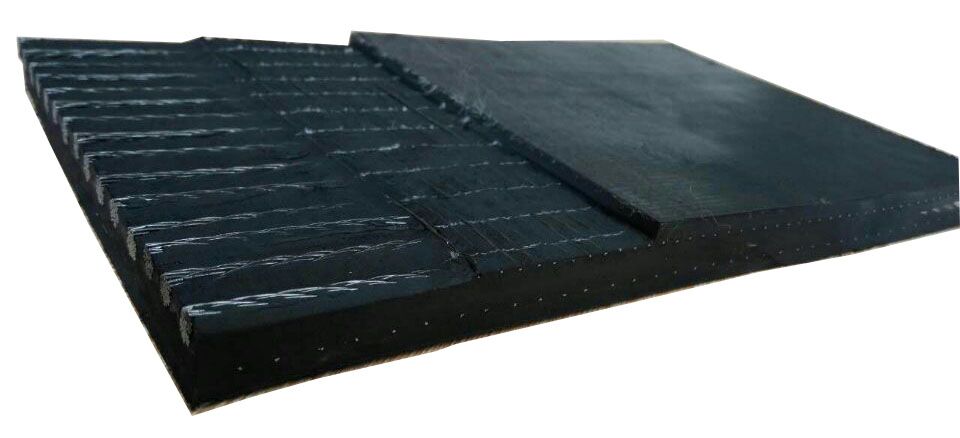
Cord angle is rarely a one-size-fits-all decision. A low lay angle distributes bending stress over a longer section of each cord, which slows the small fatigue breaks that begin near the belt edges. A high angle can make tracking more stable on crowned pulleys, but it also focuses load into a shorter working area. Checking the angle against the smallest pulley in the drive usually uncovers whether the belt was originally built for flexibility or for lateral stiffness.
The relationship between adjacent cord layers often gets overlooked. If the layers are not mirrored, the belt carries a slight twist memory and drifts toward one side of the pulley, shaving rubber off the edge long before the carcass loses strength. During replacement, marking the old belt's direction and matching the splice orientation prevents a subtle mismatch that a standard tension test cannot see.
In abrasive environments, cord alignment also changes how the cover responds to cuts. A centered load path keeps cuts from opening into the cord line, where grit and moisture can travel deep into the carcass. Shifting the alignment slightly instead of stepping up to a thicker belt often buys more running hours while avoiding extra weight and shaft load.
Splice Weak Points That Trigger Avoidable Downtime
Most unplanned outages trace back to a handful of fragile junctions that get overlooked during routine checks. Loose terminations, worn mechanical splices, and poorly dressed fiber slack are common culprits. Instead of waiting for a fault to announce itself, crews can inspect these transition zones with a simple tension test and a visual scan for micro-bends. A splice tray that shifts under vibration or a connector with visible dust accumulation is already telling you where the next failure will happen.
The real issue is that many teams treat splice points as set-and-forget connections. Temperature swings, moisture ingress, and repeated handling slowly degrade the bond until a minor disturbance breaks it completely. Replacing old gel-filled closures with dry-seal designs, or applying strain relief to tight buffer tubes, can remove the hidden stress that eventually snaps a fiber. The goal is not to add more monitoring but to make the weak points physically incapable of failing under normal load.
Downtime rarely comes from the big, obvious equipment failures. It comes from the small, unprotected transitions that have been ignored for months. By prioritizing the handful of splices that carry the most traffic and giving them dedicated slack loops, proper labels, and periodic re-polishing, you turn a recurring headache into a stable section of the network. The savings show up not in a report, but in the silence of a system that never needs an emergency callout.
Cover Compounds Built for Abrasion and Shock Loads
The real test of a cover compound isn't how it looks on a spec sheet. It's what happens when a jagged chunk of ore carves across the belt at 4 a.m. Compounds built for abrasion and shock loads blend two traits that normally fight each other: a hard, cut-resistant surface and enough internal give to absorb blunt force without tearing. The trick usually comes down to polymer selection and carbon black dispersion.
In high-impact zones, fine cracks often start just below the surface before visible wear appears. That's why formulations lean on reinforcing fillers and processing oils that keep the matrix flexible under repeated stretching. Some compounds use a slightly lower hardness than pure abrasion grades, trading a little surface polish for deeper energy absorption. That shift reduces gouging and chunk-out when heavy, sharp-edged material drops onto the belt.
A practical way to judge these compounds is to ignore the label and watch the failure pattern. If a cover chips away in small flakes, it's probably too brittle. If it stretches and tears in long strips, it lacks cut resistance. The better compounds sit in between—dull enough to resist slicing, elastic enough to swallow impact, and consistent from batch to batch so that performance doesn't drift after a supplier change.
What Continuous High-Tension Conveyors Reveal About Durability
Continuous high-tension conveyors have a way of exposing weaknesses that short-cycle tests never catch. When a belt runs for months near its rated limit, minor misalignments in the frame or slight differences in splice curing stop looking trivial. They accumulate into edge wear, uneven stretch, and sudden shutdowns that force maintenance teams to rethink what durable actually means.
What often gets overlooked is that durability under constant tension is less about the belt's breaking strength and more about how the whole line manages load transfer. Idler spacing, pulley diameter, and take-up behavior matter just as much as the cover compound. On machines that run around the clock, a small resonance or a stiff splice can turn normal movement into repeating stress that shortens component life far earlier than expected.
The best lessons come from observing failure patterns after thousands of hours. Belt tracking drift, lagging wear concentrated on one side, and recurring bearing temperatures usually point to one or two root causes rather than material defects alone. That is why these conveyors are useful references: they show durability as a system property, not a single part specification.
Specifying Belt Strength for the Loads You Actually Move
Many belt selection guides still lean on a single maximum load number pulled from a motor nameplate or a rough worst-case guess. That habit leads to belts that are either heavier than they need to be, or, in less obvious cases, too light for the way material actually hits the belt. Strength should start with the load profile the belt sees during normal running, not the theoretical peak that appears once a month for a few seconds.
Look at what the belt is doing when it starts, stops, and absorbs surges. A conveyor that accelerates gently with a controlled feed needs a different margin than one that gets slug-fed from a crusher or receives sharp impacts at the loading point. The rating should account for those force spikes where they occur, while allowing a lower base safety factor for steady-state hauling.
It also helps to treat the splice and the carcass separately. A belt can look strong enough on paper yet fail early because the splice sees repeated flexing at a transition point. Match the tension member to the actual operating tension, then give the splice enough room to handle the same peak without turning every splice into a weak point. That approach keeps the system straightforward and avoids paying for strength that never gets used.
FAQ
The steel cords carry nearly all the tension without stretching much, so a single flight can run for kilometers without needing transfer points. Fewer transfers mean less spillage, less power demand, and fewer places for damage to start.
Ask about cord diameter, spacing, and the rubber penetration between cords. Tight, consistent spacing with full rubber coating helps prevent cord movement and corrosion; cord diameter also affects impact resistance and troughing.
In sharp rock or ore, a cut-and-gouge-resistant cover with high elongation pays off more than a basic abrasion grade. Look for covers designed for high-impact service, and consider a breaker layer under the top cover if the feed is jagged.
Use galvanized cords and keep edges sealed, especially if washdown or acidic water is present. Any cut or exposed cord should be repaired quickly, because water travels along the cord once it gets inside.
Watch for uneven cover wear, exposed or corroded cords, edge damage, repeated tracking corrections, and splice gaps or cracks. A splice that starts opening is usually the last warning before a costly shutdown.
Do a close visual check at least monthly and a more detailed inspection after severe weather or a tension upset. If the conveyor uses an online splice monitoring system, review those readings weekly.
A belt is only as strong as its splice. If cords are misaligned, under-cured, or contaminated during joining, the splice can retain only a fraction of the belt's rated strength and may fail without much warning.
Belt tension, motor load, alignment, and splice elongation over time are the most useful. Cover thickness scans at fixed points also help, because they show wear rates before the belt reaches the replacement threshold.
Conclusion
Steel cord conveyor belts earn their keep in operations where fabric plies simply fall short—long overland runs, aggressive gradients, and sustained tension that punishes weaker carcasses. The real advantage shows up in how cord alignment is specified. Rather than treating every belt as a commodity, plants that match cord pitch and diameter to the system's troughing angle and pulley diameters get measurably longer service life. The difference rarely comes from the steel itself; it comes from deciding how the cords sit, how the rubber bonds around them, and how edge zones are protected before the belt ever leaves the warehouse. On high-tension conveyors, those choices become impossible to hide. Belts that survive are the ones built with enough stiffness to track cleanly without fighting the structure, plus compounds that resist gouging from sharp primary crushed material and the repeated hammer of drop impacts.
Splice design remains the quiet factor in uptime. Even a correctly rated belt can be undone by a splice area where cord spacing shifts, skim rubber migrates, or step lengths are guessed rather than calculated from working tension. Durable operations treat the splice as a continuation of the carcass, not a repair. That mindset carries into cover selection. Abrasion-resistant compounds with moderate elongation consistently outlast harder covers when loading is violent because they absorb shock instead of cracking. Specifying belt strength also works better when it starts from the loads actually moved—peak tonnage, lump size, starting and stopping forces—rather than a generic margin. Together, these details separate a belt that merely meets a data sheet from one that holds up season after season.
Contact Us
Contact Person: Jayce
Email: [email protected]
Tel/WhatsApp: 8615318787602
Website: https://www.yuphengbelt.com/