
Top Woven Geotextile Solutions for Stronger Ground Stabilization and Drainage
2026-09-10
Ever watched a roadway crack apart after just one rainy season? Ground stabilization failures aren't just inconvenient—they're expensive. Woven geotextiles quietly solve this by locking soil in place while letting water drain through. Yet most spec sheets gloss over how fabric choice determines whether your project lasts decades or fails early. From high-tensile polypropylene weaves to silt-fighting filtration grades, the right fabric turns weak subgrades into load-bearing foundations. Before you finalize your next civil or landscaping spec, let's unpack the woven geotextile options that actually hold up—no overselling, just field-tested performance. For engineers who need reliable, project-specific guidance, JInseed Geosynthetics Solution has been mapping these choices to real-world ground conditions for years. Ready to see what separates a truly stable base from a future repair bill?
Woven Geotextiles That Lock Aggregate in Place
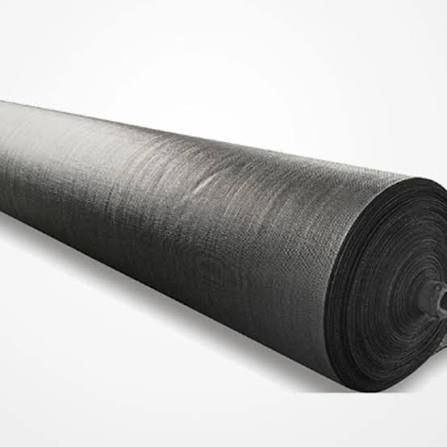
Woven geotextiles aren’t just a layer between soil and stone. The tight, interlocked weave creates thousands of tiny pockets that grip angular aggregate particles and hold them firm, even under repeated traffic or surface loads. Instead of shifting sideways under pressure, the stones stay locked in their original position, preserving the intended grade and preventing rutting long after installation.
What makes this locking effect stand out is the way the fabric’s high tensile strength distributes stress across the entire plane. Each pull from a turning wheel or a sudden braking force gets shared among neighboring strands, so no single point carries the burden alone. The result is a stable, unified surface where the aggregate behaves like a tightly packed matrix rather than loose, individual pieces.
Field installations show the difference clearly: roads and parking pads built with woven geotextiles maintain their crowning and edge lines season after season, while untreated bases develop dips and migration patterns within months. By mechanically confining the stone, these fabrics extend the service life of the surface without adding extra layers or thicker sections of aggregate.
Keeping Water Moving While Soil Stays Put
When rain hits bare, compacted ground, it doesn’t soak in—it sheets off, picking up silt and clay as it goes. The real trick isn’t holding water still; it’s giving it a clear path that doesn’t double as an erosion chute. That means designing for flow rate and surface roughness at the same time.
A shallow swale lined with dense native grass can carry a surprising volume of water while the stems and roots filter out suspended soil. For steeper slopes, a series of small rock check dams or buried gravel trenches wrapped in geotextile does similar work: the water keeps moving, but the soil particles drop out before they leave the site. Even a thick layer of arborist wood chips can buy enough time for a downpour to percolate rather than run off.
Over a season or two, the difference shows up below ground. Earthworm burrows and decayed root channels open up, letting water sink in where it falls. What used to be a muddy gully becomes a damp, stable sponge—and the soil, instead of ending up in the nearest storm drain, stays put and keeps doing its job.
Building on Weak Subgrades Without Over-Excavating
Weak subgrades often trigger a costly reflex: cut out the soft material and haul in engineered fill. But excavation and disposal can eat up budget and shut down access for weeks. Instead, treat the existing soil as a starting point. Lime or cement stabilization can dry out wet, plastic clays and turn them into a stiff working platform within days. For loose, sandy subgrades, a modest dose of fly ash or Portland cement fills voids, boosts bearing capacity, and nearly eliminates the need for trucking in replacement stone.
Geosynthetics offer another route that keeps the weak layer in place. A high-strength geogrid set between the subgrade and base course intercepts shear planes and spreads wheel loads over a much larger footprint, letting you reduce the thickness of the aggregate above. In saturated conditions, a nonwoven geotextile works as a separator and filter, stopping fines from pumping up into the stone while letting water escape laterally through edge drains. This combination often delivers the same long-term support as a deep over-excavation, without the mess.
For sites where settlement is the main worry, lightweight fill can change the math. Swapping part of the intended fill with expanded clay, foamed glass, or geofoam lowers the net stress on the weak stratum, cutting both immediate and consolidation settlement. Pair that with a compacted granular platform and controlled moisture at the subgrade surface, and you get a stable, durable base that works with the existing soils rather than against them.
The Hidden Layer That Stops Pavement Cracks Before They Start
Most pavement failures don't begin at the surface. They start deep in the asphalt, where repeated traffic loads and temperature swings create stress points that eventually work their way upward. The hidden layer—often a geotextile fabric or stress-absorbing membrane—sits between the old roadbed and the new overlay, acting as a buffer that absorbs movement before it can turn into a visible crack.
This interlayer doesn't just add thickness. It creates a separation that stops existing cracks from reflecting straight through the fresh asphalt. Water is kept from seeping down, and the membrane flexes just enough to dissipate energy that would otherwise tear the pavement apart. Over time, that means fewer potholes, less patching, and a road surface that stays smooth well past its expected lifespan.
What makes it effective is the timing. Once cracks have already reached the top layer, repairs become reactive and expensive. Installing the hidden layer during resurfacing gives the road a fighting chance before damage spreads. For high-traffic corridors and bridge decks, it's one of the quietest but most valuable upgrades in modern paving.
From Gravel Driveways to Highway Shoulders
A gravel driveway might seem like a modest starting point, but the same principles that keep it stable and pothole-free scale up to some of the most demanding stretches of asphalt. Whether it's a home entrance or a highway shoulder, the goal remains identical: create a surface that sheds water, resists erosion, and stands up to daily traffic without constant patching.
The transition from residential to highway-scale projects isn't just about adding more material. It calls for a sharper focus on compaction, drainage angles, and edge support. On a driveway, a slight crown might be enough. On a shoulder, you're dealing with higher speeds, heavier loads, and the constant pull of passing vehicles, which means every layer has to be placed with tighter tolerances.
What often gets overlooked is how much these two worlds inform each other. Techniques refined on small-scale jobs—like using reclaimed asphalt or adjusting aggregate size for better binding—frequently find their way into highway maintenance. In that sense, the gravel driveway isn't a lesser project; it's the testing ground for what works on the open road.
Installation Habits That Make or Break Ground Stabilization
How you handle the base before any grid or mat goes down sets the tone. Too many crews skip the proof roll or run it only in dry spots, then wonder why the surface starts rutting after a few rains. You want moisture at the right level—not dust, not mud—and compaction done in lifts, not one heavy pass. If you rush this step, no product on top can save you.
Another habit that quietly ruins jobs is ignoring edge treatment. Ground stabilization fails first where traffic enters and exits, or where water runs along the perimeter. A few extra minutes to taper the edges, add a small berm, or extend the aggregate beyond the load path keeps the whole system locked in. Crews who treat edges as an afterthought always end up chasing soft spots later.
Finally, watch how materials are placed. Dropping aggregate from too high or spreading it with a bucket that tears the subgrade creates weak lenses. Walk the grade after the first lift, fix any rutting or mixing before adding the next layer, and don’t let trucks drive on exposed geotextile. Small habits like these separate a pad that lasts a decade from one that needs rework before the project even closes out.
FAQ
Woven geotextiles offer high tensile strength and low elongation, which helps distribute loads across soft soils and prevents rutting or sinkholes. Their tight weave separates aggregate from subgrade while still letting water pass through, so the structure remains stable without trapping moisture.
They act as a filter layer: the pores are small enough to hold fine soil particles in place but large enough to let water flow laterally or downward. This keeps the base course free of fines and maintains permeability, reducing waterlogging and preserving load-bearing capacity.
Yes, they are often placed between the subgrade and the aggregate base. This prevents intermixing of soil and stone, so the pavement won't develop soft spots. For light to moderate traffic, a standard woven fabric with good puncture resistance works well.
Woven fabrics are typically stronger in tension and better for reinforcement, while nonwovens are usually more effective for filtration and drainage. For ground stabilization that needs both load distribution and water flow, many projects combine a woven layer for strength with a nonwoven layer for filtration.
Roll the fabric directly on the prepared subgrade, pulling it taut but not overly stretched. Overlap adjacent rolls by at least 12 to 18 inches, and secure the edges with pins or staples. Avoid driving directly on the fabric; place aggregate in a way that pushes the geotextile forward rather than tearing it.
Yes, high-strength woven geotextiles can be used as reinforcement layers in slopes and walls. They add tensile resistance to the soil mass, allowing steeper grades and reducing erosion. The key is to select a product with the right long-term design strength for the specific slope geometry.
Check the apparent opening size to ensure it matches the surrounding soil, the grab tensile strength for reinforcement needs, and the permittivity for water flow. Also consider UV resistance if the fabric will be exposed for more than a few days before covering.
Conclusion
Choosing the right woven geotextile often comes down to how well it locks aggregate while letting water pass through. A fabric that holds crushed stone in place does more than just prevent rutting; it keeps the base layer from mixing with soft subgrade, which means you avoid the slow failure that comes from pumping and migration. On sites with weak soils, this approach can be a practical substitute for over-excavating. Instead of hauling out poor ground and importing fill, a high-strength woven layer spreads loads across a wider area. The result is a firmer working platform and a base that drains without carrying soil particles along with it. That hidden separator is what stops pavement cracks from appearing early—long before traffic loads become heavy.
The same principles hold whether you're working on a gravel driveway or a highway shoulder. What changes is the scale, not the basics: a taut, wrinkle-free installation with properly overlapped seams and enough fabric turned up at the edges. Skipping those details can undo the benefits of an otherwise well-chosen geotextile. Roll direction matters, as does keeping the fabric free of punctures before aggregate is placed. When installers take time to position the material correctly and cover it before UV exposure becomes a concern, the system behaves as intended. Water drains, soil stays put, and the finished surface gets a longer, quieter life with fewer unexpected repairs.
Contact Us
Contact Person: Jerry Qiu
Email: [email protected]
Tel/WhatsApp: +65 84265294
Website: https://www.jinseed-geo.com