

Which Reliable PTFE Guidewire Should You Choose?
2026-10-04
Ask any interventionalist what keeps them up at night, and a flimsy guidewire probably isn't the first thing they'd mention—until it fails mid-procedure. The difference between a smooth case and a stressful one often comes down to the PTFE guidewire you pick. But with so many 'reliable' options promising the same thing, how do you actually choose? INT has been quietly building a reputation, and it's worth knowing exactly what sets it apart before you reach for the next wire.
What Really Makes a PTFE Guidewire Reliable?
Reliability in a PTFE guidewire isn’t about a single spec on a data sheet. It comes down to how the coating holds up after repeated passes through tortuous anatomy. A thin, even PTFE layer with proper bonding survives friction without peeling or bunching near the tip. If the coating starts to degrade, you feel it immediately—the wire drags, control suffers, and the case gets harder than it needs to be.
Another often-overlooked factor is the core-to-coating interface. A smooth transition between the nitinol or stainless core and the PTFE jacket prevents micro-gaps where fluid can seep and compromise performance. Add in consistent distal tip shaping and honest torque transfer, and you get a guidewire that responds the same way on the first pass and the tenth. That kind of predictability is what experienced operators actually mean when they say a wire feels reliable.
The Overlooked Specs That Affect Guidewire Control
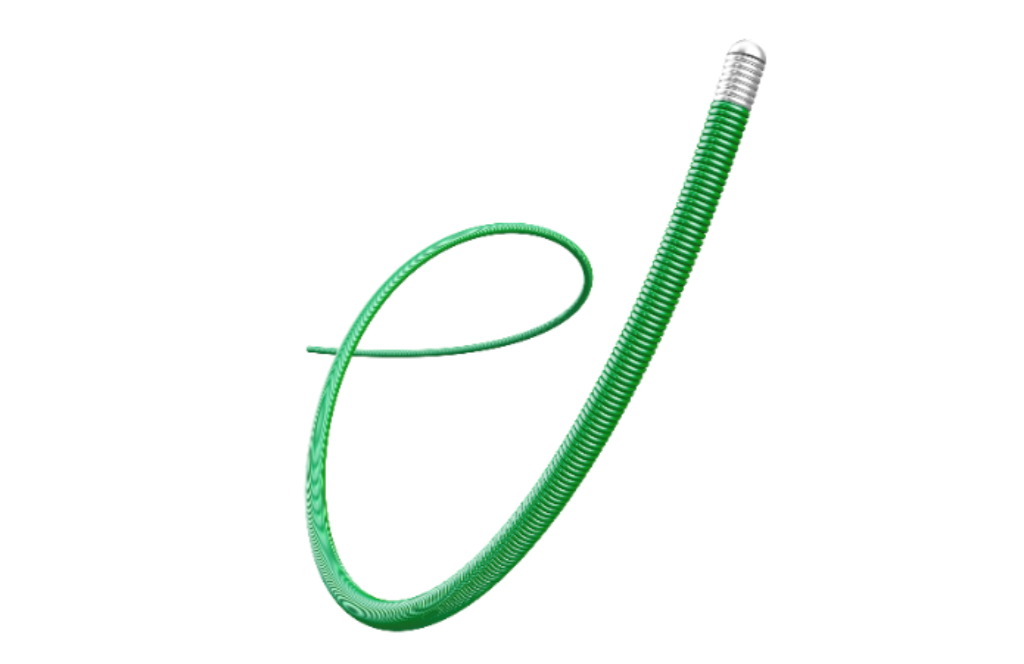
Torque response and tip load get most of the attention, but a few hidden specs quietly shape how a guidewire actually behaves in your hands. Take the taper profile of the core wire, for instance. The way it transitions from a thicker proximal section to a fine distal tip isn't just a dimensional footnote. A sudden drop in diameter can create a hinge point where the wire wants to whip or store energy unpredictably, especially when you're working through tortuous bends. That subtle geometric shift often does more to determine control than the overall stiffness rating listed on the packaging.
Coatings are another area where the missing details matter. It's not just about being lubricious; it's about how that surface behaves after repeated passes through a calcified lesion or a sharply angled vessel. A hydrophilic coating that starts to wear unevenly can leave spots where friction changes dramatically, making the wire feel sticky or inconsistent. Even small variations in coating thickness can alter the clearance between the wire and the inner lumen of a microcatheter, which changes the tactile feedback during advancement and retraction.
What most people rarely check is the heat treatment and cold-working history of the core material itself. Two wires with identical diameters can feel completely different if one has been drawn and annealed differently. The internal grain structure affects torsional stiffness, yield behavior, and the point at which the wire transitions from elastic to plastic deformation. This is why some wires store torsional energy like a spring and release it in a sudden jump, while others give a smooth, predictable rotation. Understanding those unlisted processing details can give you a much clearer sense of how a guidewire will respond when you need precise tip placement.
PTFE vs. Hydrophilic Coatings: Where Each Excels
PTFE coatings, with their famously low surface energy, shrug off water, oils, and most contaminants without breaking a sweat. That makes them the go-to choice for cookware, industrial molds, and any application where sticking is the enemy. But this same non-stick quality becomes a liability when you need a surface that actually invites water to spread and cling. Enter hydrophilic coatings, which actively pull moisture across their surface, creating a thin, even film that resists fogging and promotes lubricity in wet environments.
Hydrophilic formulas truly shine in medical devices like guidewires and catheters, where a slick, hydrated surface reduces friction and improves patient comfort. They also dominate anti-fog applications on lenses, mirrors, and camera housings. PTFE, by contrast, remains the undisputed champion of dry lubrication and chemical resistance, excelling in bearings, seals, and high-temperature food processing. Choosing between them comes down to one simple question: do you want water to bead up and roll away, or do you want it to spread out and do some work?
There are even hybrid approaches that layer a hydrophilic topcoat over a PTFE base, giving you both low friction and controlled wetting. But for most real-world projects, the distinction is clear-cut. If the goal is release, stain resistance, or dry sliding, PTFE is tough to beat. If the goal is moisture management, lubricity in aqueous conditions, or optical clarity under condensation, a hydrophilic coating is the smarter play.
How to Spot a Guidewire That Will Fail Early
Most guidewires don't snap without warning. The first sign is often a change in how the tip responds when you torque it. If a wire that used to track smoothly through a tortuous vessel suddenly needs more rotation to get the same tip deflection, or if the distal segment starts to lag behind your hand movement, that's not just resistance—it's early plastic deformation. The core has begun to yield, and the wire is now working against itself with every push.
Coating changes are easier to miss but just as telling. Run the wire between your fingers under good light, not just at the tip but along the proximal shaft too. Any dull patch, peeling, or uneven gloss means the hydrophilic layer has been compromised. Once that surface integrity is gone, friction climbs fast, which forces you to apply more force, which accelerates fatigue exactly where the wire is weakest. If you see a whitish stretch mark near a previously curved segment, retire the wire. That's a fatigue hinge waiting to open.
Resting shape gets ignored even more often. A guidewire that comes out of the package with a gentle curve but now holds a kinked angle or a corkscrew set has already lost its elastic memory. It may still cross a lesion today, but it's no longer predictable. In high-risk cases, that unpredictability is what turns a routine exchange into a dissection or a lost tip.
Matching Guidewire Stiffness to Your Procedure
Choosing a guidewire based on stiffness is less about picking the stiffest option and more about reading what the vessel will tolerate. In tortuous anatomy, a floppy or soft tip often gets you further because it can deflect off plaque and bend through curves without digging in. Save the extra-stiff wires for straight segments or when you need serious push to cross a chronic total occlusion.
The procedure itself shifts the stiffness requirement. A diagnostic coronary angiogram rarely demands anything beyond a workhorse wire with a gentle transition. But moving a stent or a bulky device through calcified peripheral vessels changes the equation—there, a stiffer shaft prevents buckling and keeps the tip from prolapsing, though you still want a softer distal segment to avoid vessel injury.
It also helps to match stiffness to the access route. Radial approaches often benefit from a wire with a slightly stiffer body to overcome the bends at the subclavian and aortic arch, while a soft tip protects the small radial artery. If you find yourself having to torque excessively, that's usually a signal the wire is either too floppy for support or too stiff for the curve.
Real-World Feedback from Interventionalists
Interventionalists rarely hold back when a device adds friction to their workflow. One recurring note from cath lab staff is that the sheath's transition zone can feel stiff during radial access, especially in patients with tortuous anatomy. A few operators mentioned that a softer, more graduated tip would reduce the subtle catching sensation they occasionally feel while navigating the subclavian. These aren't dramatic failures—just moments of extra torque or a second-long adjustment that breaks the rhythm of a case.
Another theme that keeps surfacing in post-procedure debriefs is the balance between pushability and kink resistance. Some physicians praised the device for holding its shape under tight bends, but others pointed out that the enhanced column strength makes the distal segment slightly less forgiving when re-sheathing a stent. One interventional fellow described it as 'feeling more like a guide extension than a standard access sheath'—which can be a compliment in straight aortoiliac segments, but a mild nuisance in heavily calcified iliacs.
The most actionable feedback, however, centers on the hub ergonomics. Shorter-handed operators reported that the rotating hemostatic valve requires a firmer grip than expected, especially when gloves are wet with contrast. A few suggested adding micro-ridges or a textured collar for one-handed tightening. Interestingly, several nurses noted that the sidearm stopcock orientation feels intuitive on the bench but slightly awkward when the sheath is already in the groin and the table is draped. These are small, real-world frictions that don't show up in bench testing but matter after the third case of a long day.
FAQ
PTFE lowers friction against the catheter lumen and vessel wall, so the wire tracks through tortuous anatomy with less resistance. It also reduces thrombus formation and gives you a smoother exchange when swapping devices over the wire.
Terumo's Glidewire line is a common first choice for many interventionists because of its consistent coating and tip flexibility. Boston Scientific's Zipwire and Cook Medical's Roadrunner also perform well when you need a dependable workhorse wire.
Use a straight tip when you need precise steering through a tight lesion or bifurcation. Go with a J-tip or angled tip if you're crossing irregular plaque or want to reduce the risk of subintimal dissection while advancing.
For coronary work, 0.014-inch wires are the standard because they match balloon and stent catheter inner lumen sizes. Peripheral interventions often use 0.018 or 0.035-inch wires to gain more stiffness and support in larger vessels.
Not if you account for the extra length. Longer wires (180 cm or 260 cm) are needed for exchanges and when you work through long sheaths or from a femoral approach. Control depends more on the core material and tip shaping than on total length alone.
Check the inner diameter of your catheter and the outer diameter of the wire. Most PTFE guidewires list their diameter in inches. A 0.014-inch wire works with most microcatheters, but you should also confirm the wire's stiffness and coating won't bind inside a particularly narrow lumen.
Nitinol cores give a PTFE guidewire shape memory and kink resistance, which is valuable in tortuous vessels. Stainless steel cores offer more pushability and torque control but can take a set if bent sharply. Choose based on the anatomy you're crossing.
The coating can wear or peel if you aggressively torque the wire against a calcified lesion or reuse it after cleaning. This can leave particles behind, so inspect the wire before use and avoid excessive force in tight calcified segments.
Conclusion
Choosing a dependable PTFE guidewire isn't just about picking a familiar brand—it hinges on understanding the materials, coating behavior, and the subtle design choices that directly shape your control in the vessel. A truly reliable guidewire starts with a smooth, uniform PTFE coating that reduces friction without flaking under repeated torque. But overlooked specs like core taper profile, distal tip shape, and coil pitch often matter more than the coating itself. A gradual taper gives you tactile feedback and prevents sudden prolapse, while a balanced distal stiffness lets you navigate tortuous anatomy without sacrificing pushability. PTFE excels in non-hydrophilic settings where you need predictable, moderate lubricity and less risk of a slippery wire jumping out of a lesion, whereas hydrophilic coatings shine in highly stenotic or occluded segments where extreme lubricity overcomes resistance. The giveaway of an early failure is often a visible kink near the tip or a stiff transition zone that transmits too much force. Matching stiffness to the procedure means a softer, floppy tip for diagnostic access and a stiffer body for intervention or device delivery.
Real-world feedback from interventionalists consistently highlights three things: a wire that holds its shape after multiple passes, a coating that doesn't peel or leave residue, and a predictable one-to-one torque response. Many users prefer a PTFE guidewire with a radiopaque marker band near the tip and a core made from nitinol or stainless steel that resists permanent deformation. They also frown upon wires with excessive distal floppiness that turns into a whip, or proximal ends that kink at the torque device. Ultimately, the reliable choice is one you can trust across different anatomies—not just the cheapest or the most heavily marketed. Look for a guidewire that offers consistent performance over repeated use, has a proven track record in real cases, and lets you feel the vessel wall without losing your place. That balance of durability, control, and coating integrity is what separates a workhorse guidewire from one you'll abandon halfway through a case.
Contact Us
Contact Person: Jeffrey
Email: [email protected]
Tel/WhatsApp: 86-0633-2230056
Website: https://www.sd-intmedical.com